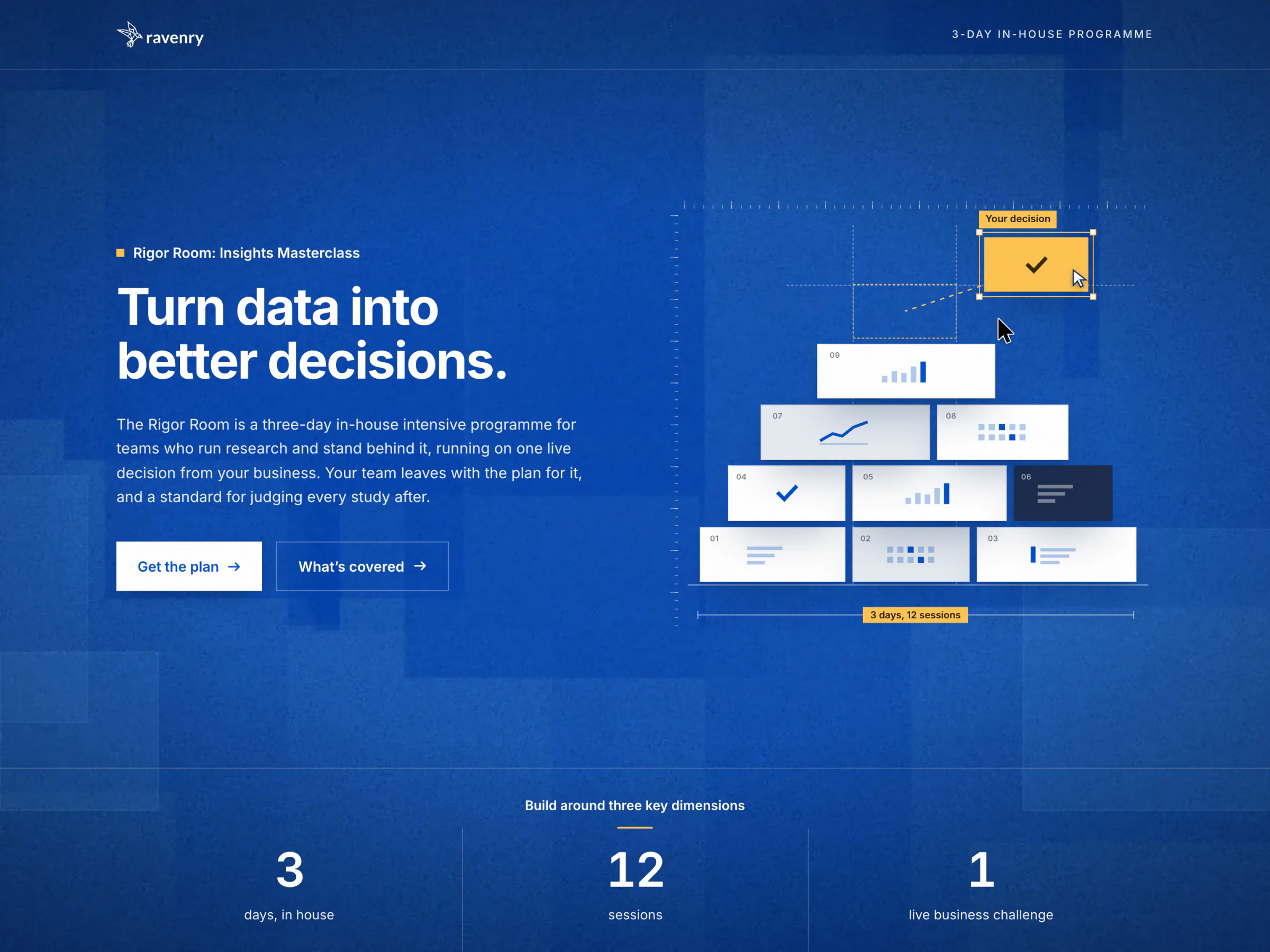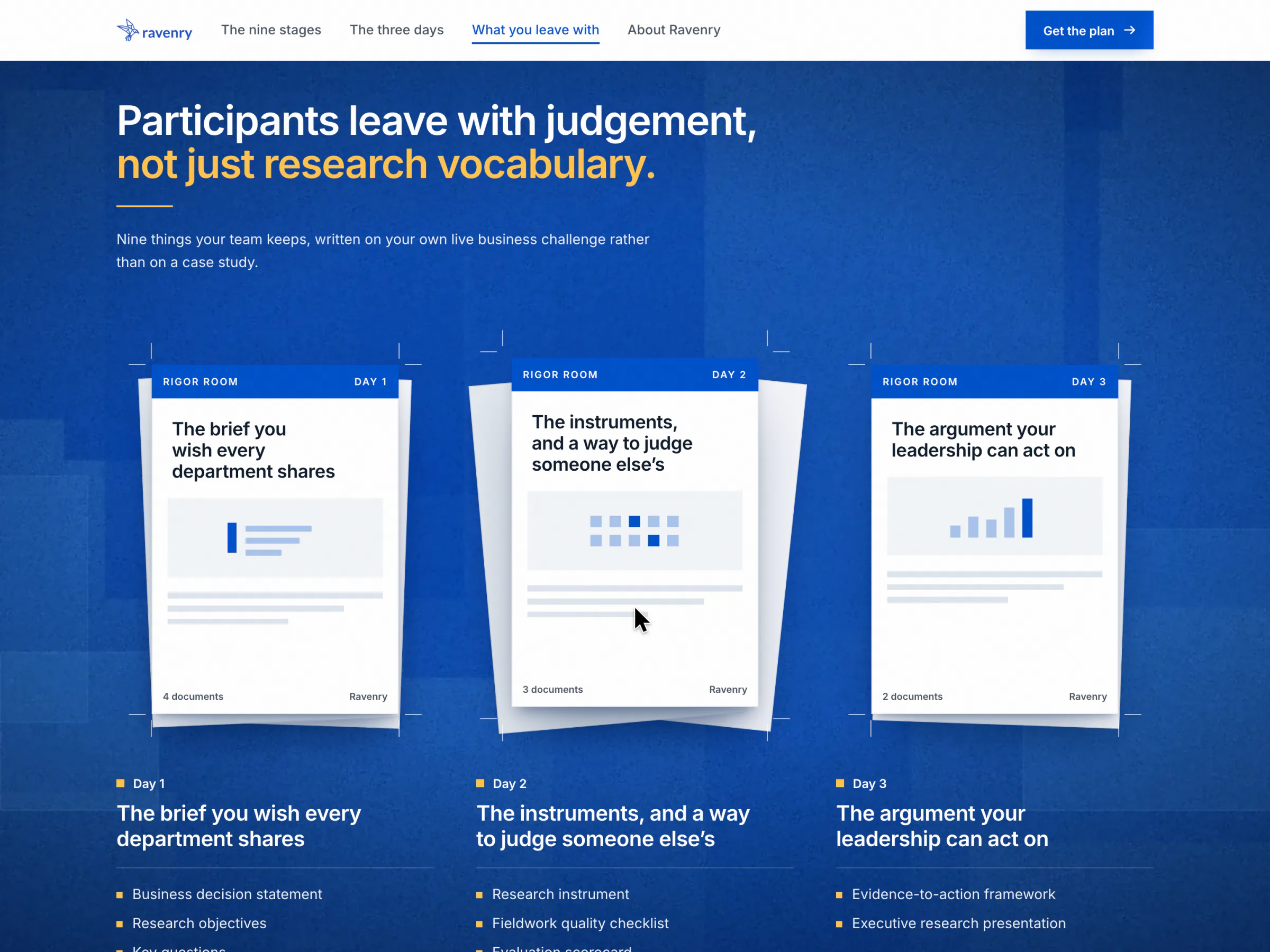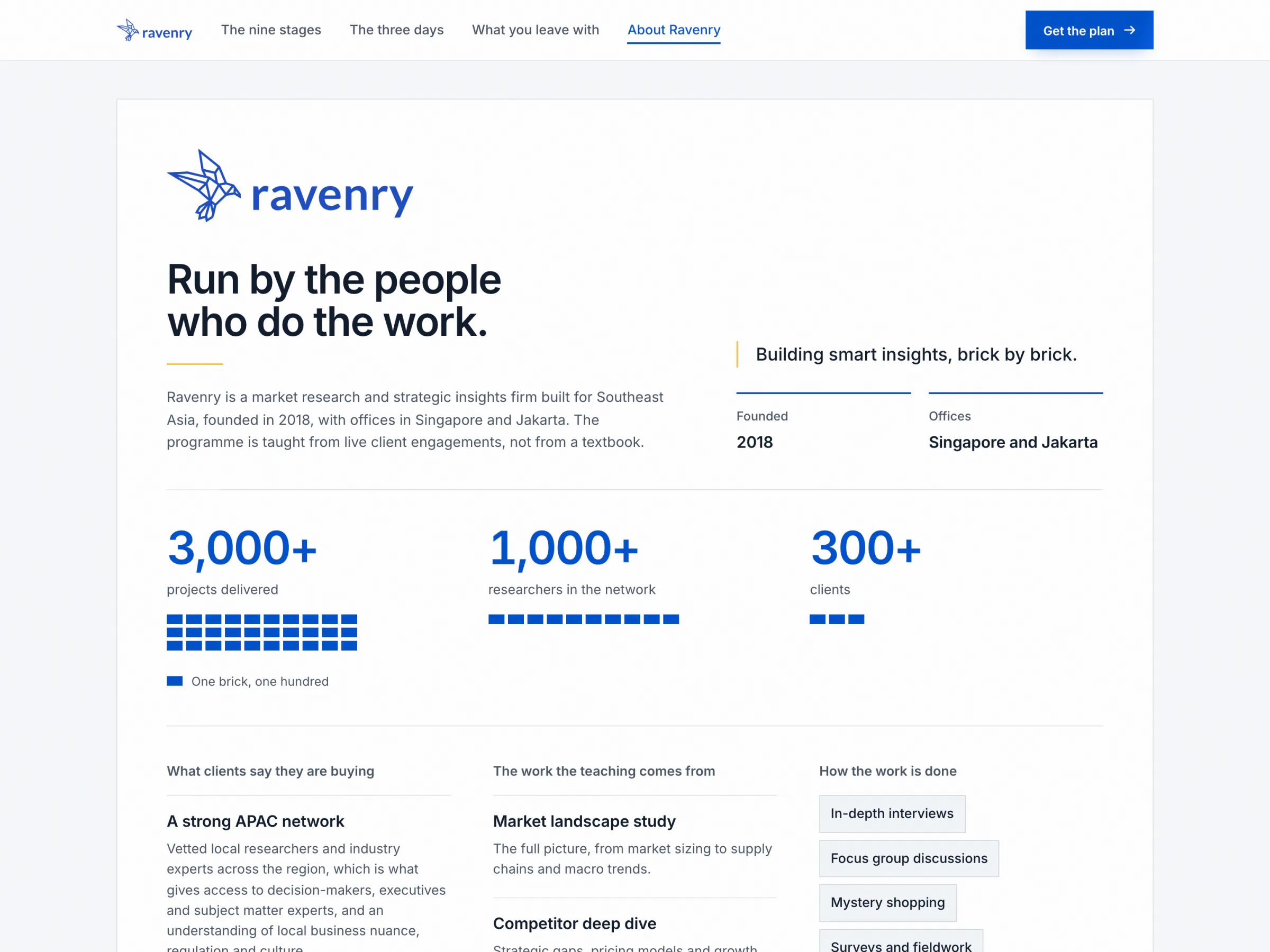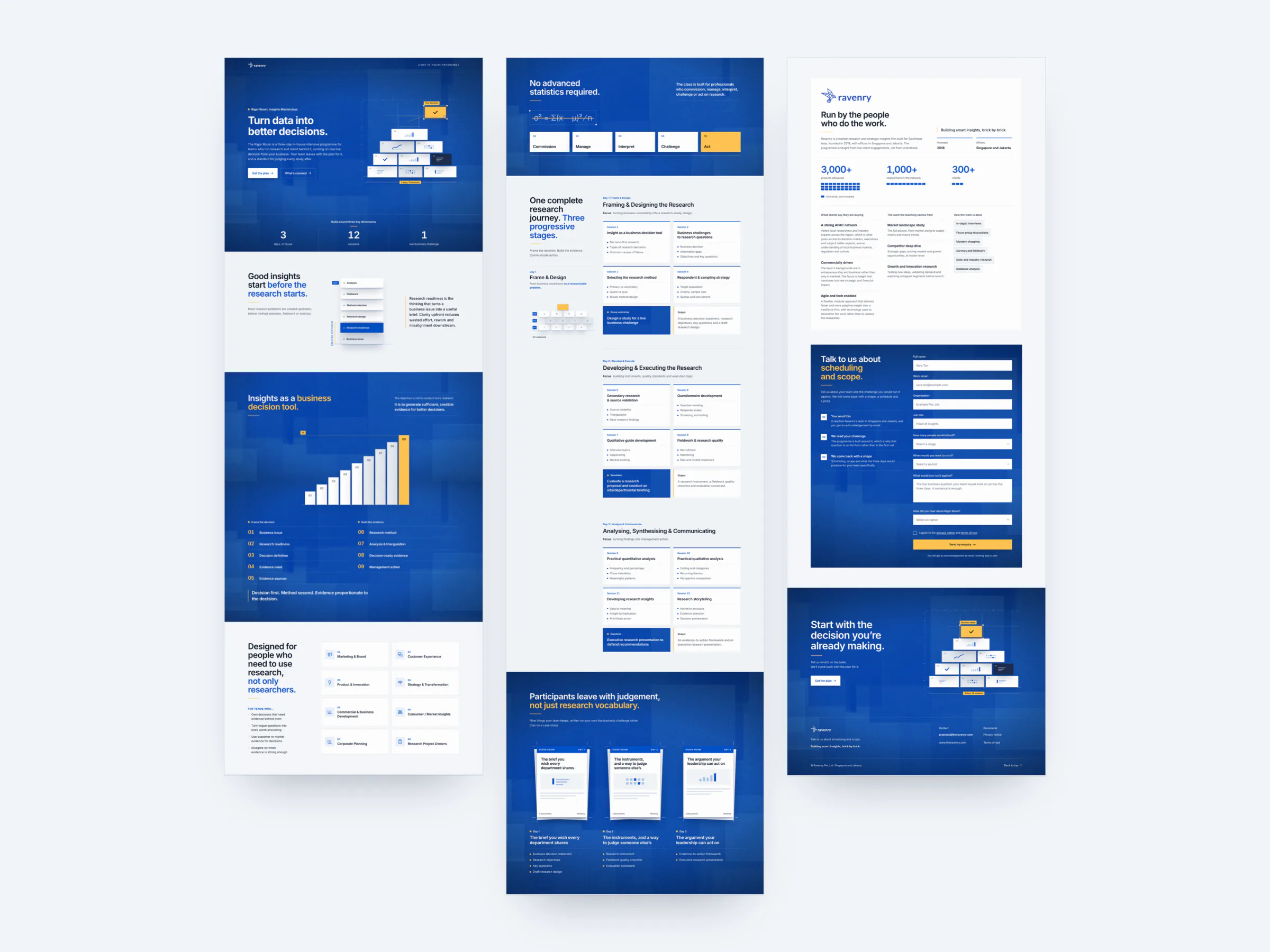
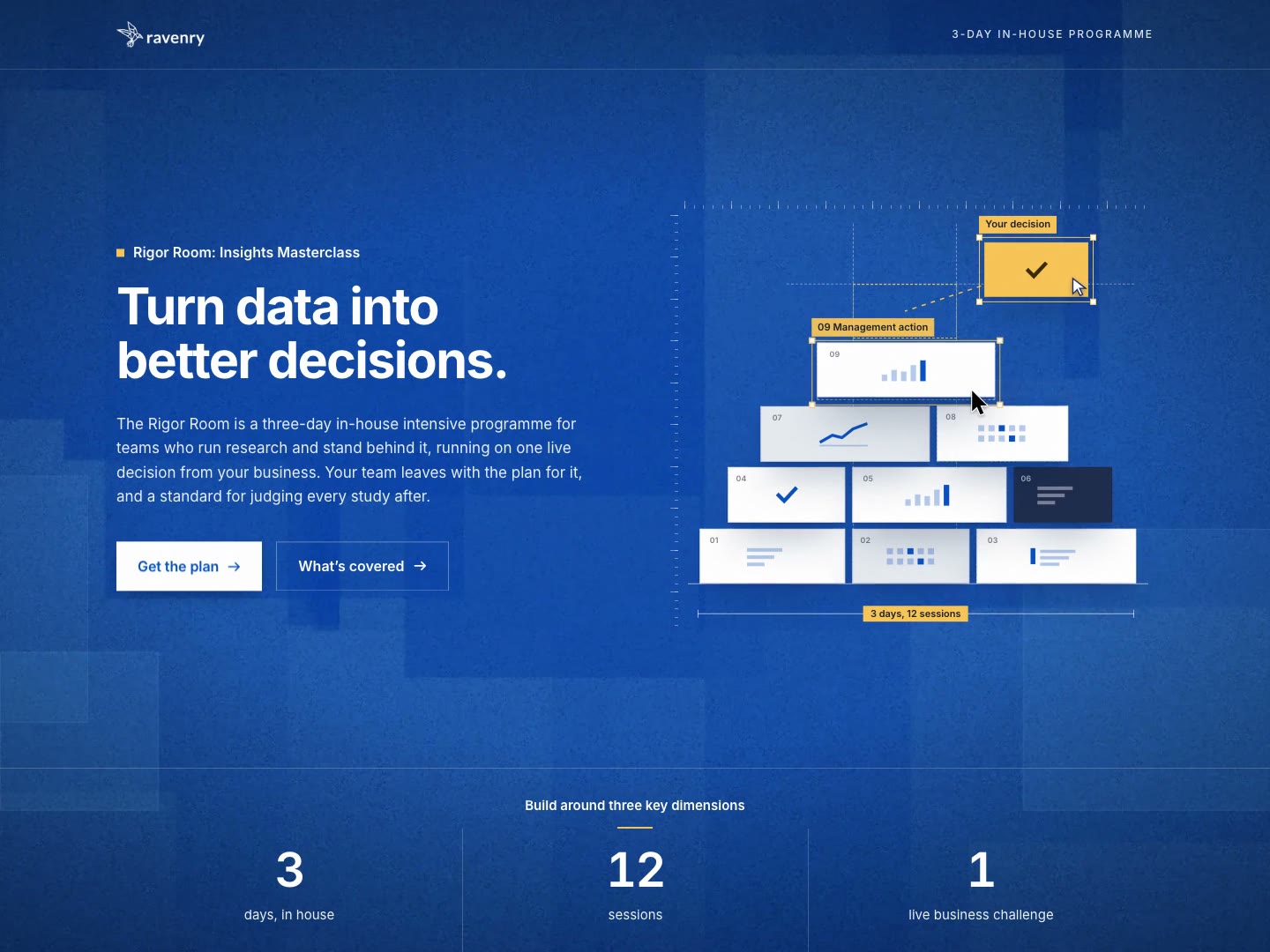
The landing page for Ravenry's three-day insights masterclass, built around one live decision from the buyer's business.
Chosen by the client and live at masterclass.theravenry.com.
Project facts
- Role
- Product design and direction. Built with AI coding sessions under my direction.
- Timeline
- 3 weeks, 16 September to 6 October 2026
- Built with
- Claude Code
- Codex
- Playwright
- ffmpeg
- Stack
- Next.js 16
- React 19
- TypeScript
- Tailwind CSS 4
- GSAP
- Lenis
- Zod
- Supabase
- Resend
- Vercel
A Masterclass Sold as a Conversation
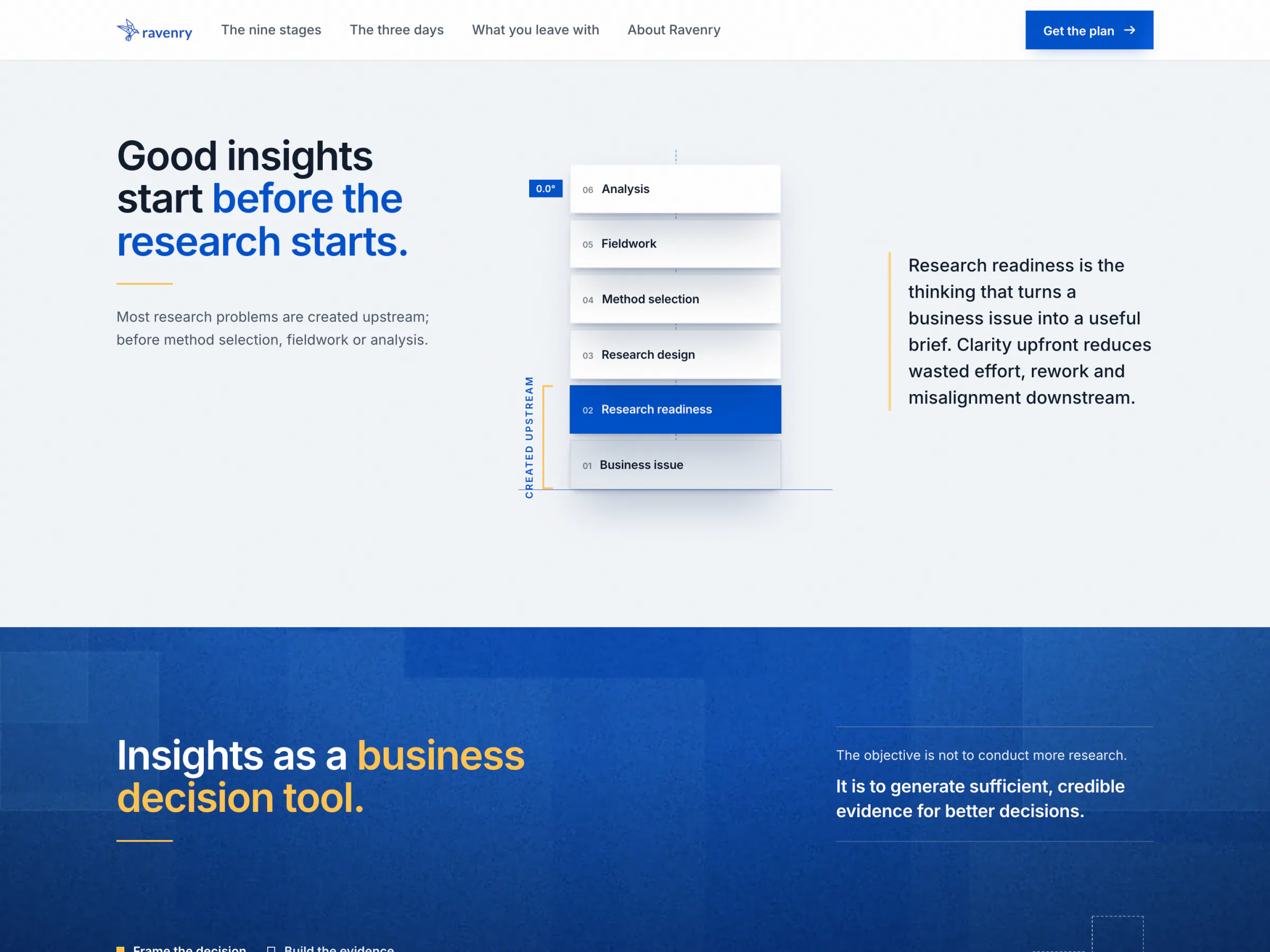
Rigor Room is Ravenry's in-house programme for teams who commission, manage, interpret, challenge or act on research. It runs for three days and twelve sessions, all on one live decision from the buyer's own business. Its argument fits in a sentence from the programme itself: most research problems are created upstream, before method selection, fieldwork or analysis.
The brief arrived as two sales-deck PDFs and Ravenry's 2026 company profile. The decks carried four overlapping models of the same idea: a three-step chain, a nine-step chain, an eight-step spine and a grid of three days by four sessions. A page can only make one argument at a time, so the nine stages became the argument, the twelve sessions became the curriculum, and the eight steps were left out.
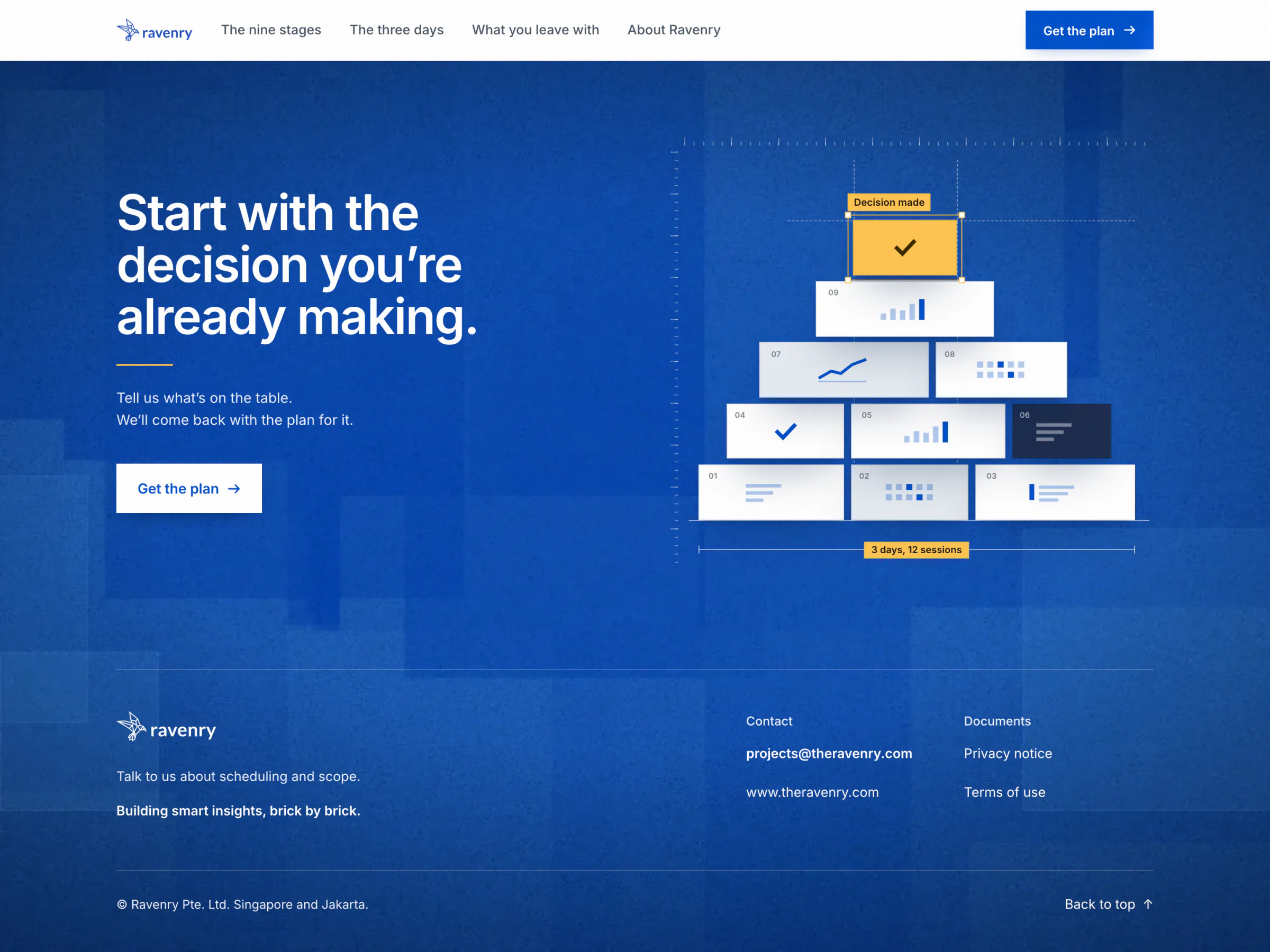
The buyer is not signing up for a webinar. A head of insights or strategy is committing three days of a team's time, and urgency or scarcity would make that buyer close the tab. So the page asks for a conversation, not a seat: no date, no price, no countdown, and every button reads "Get the plan".
It was the second campaign on Ravenry's campaigns platform, after the Ravenry × SWDA report page, and the first one built in Ravenry's own brand rather than a partner's.
From a Question to a Plan, in Five Moves
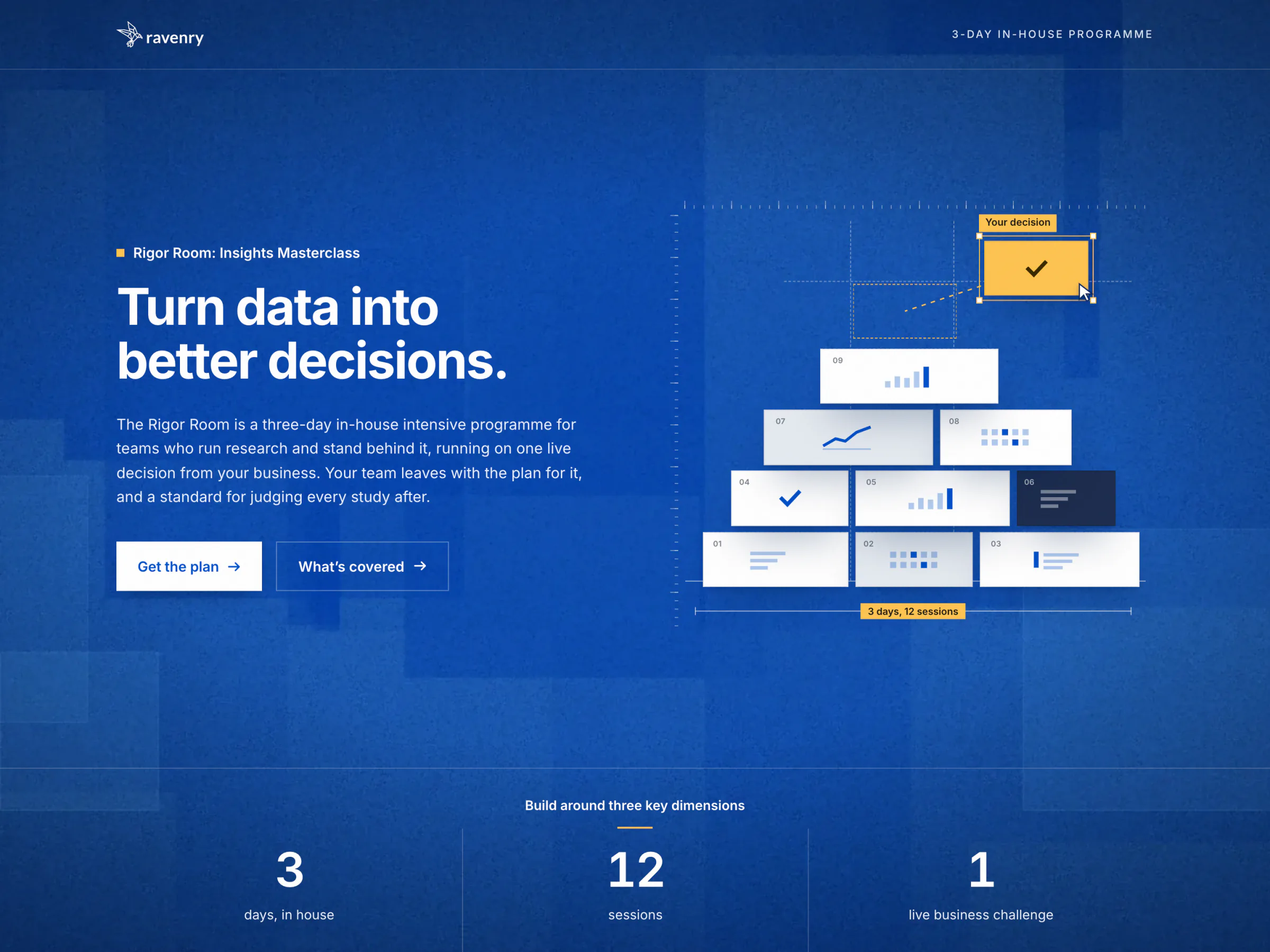
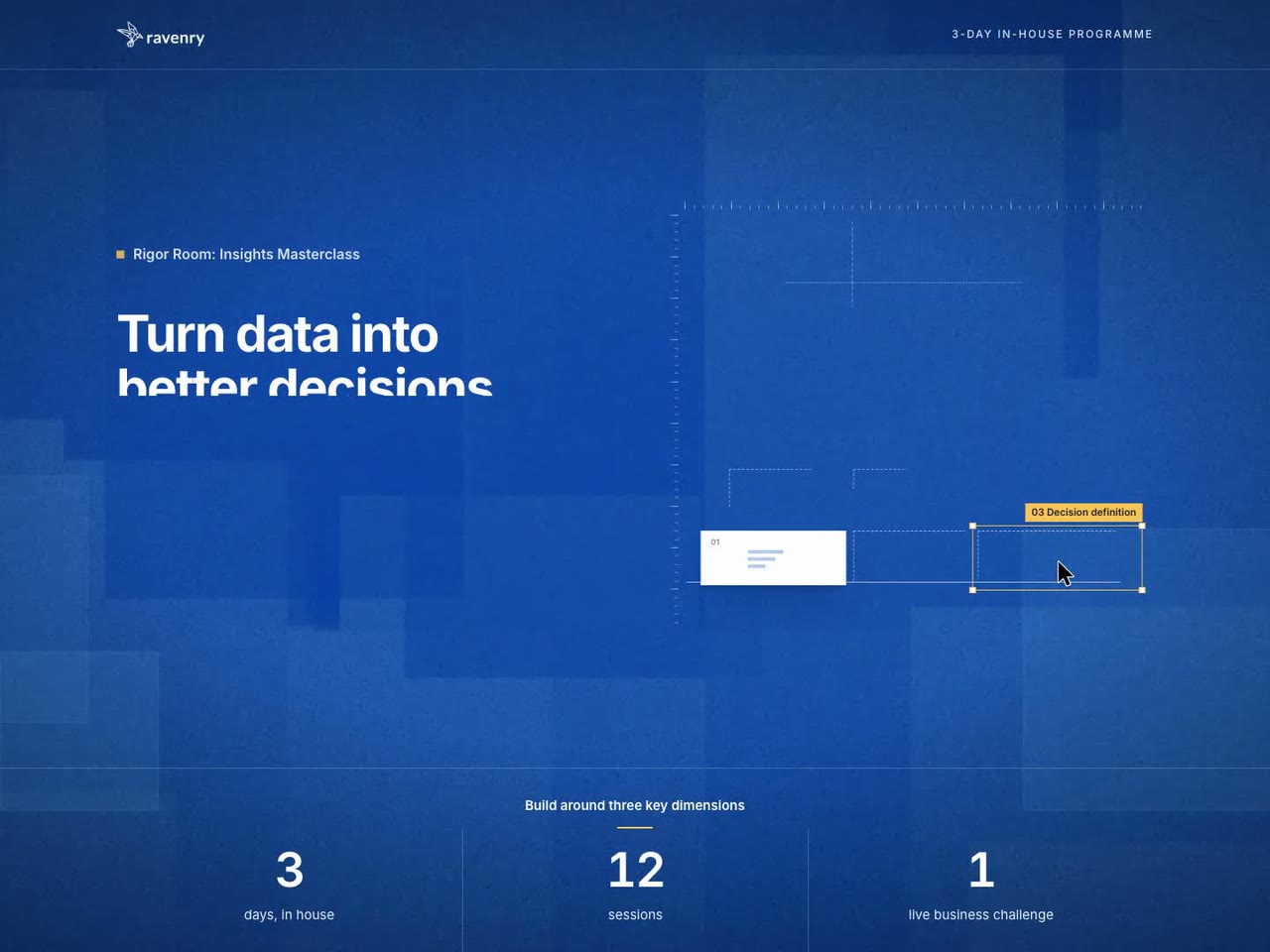
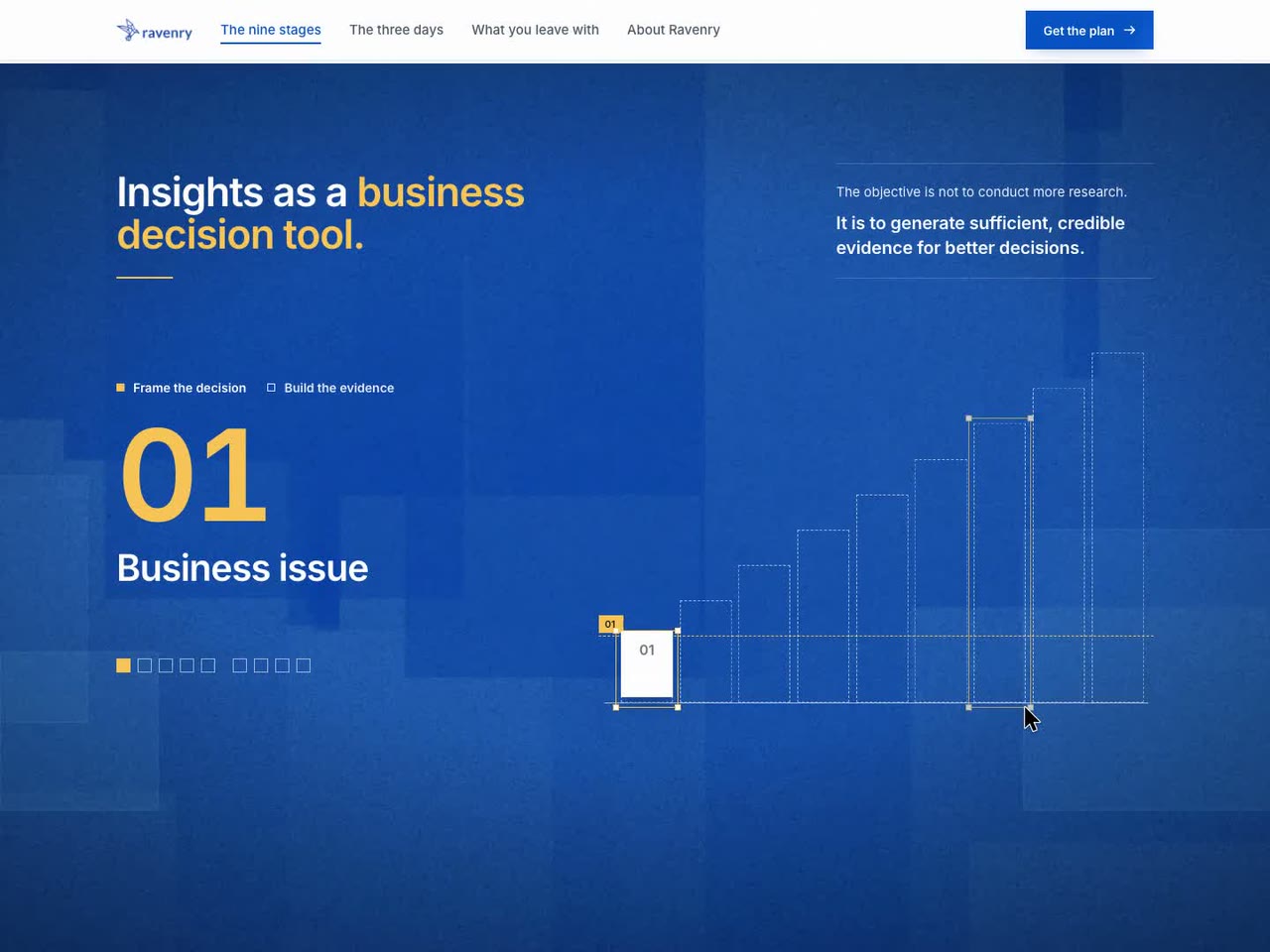
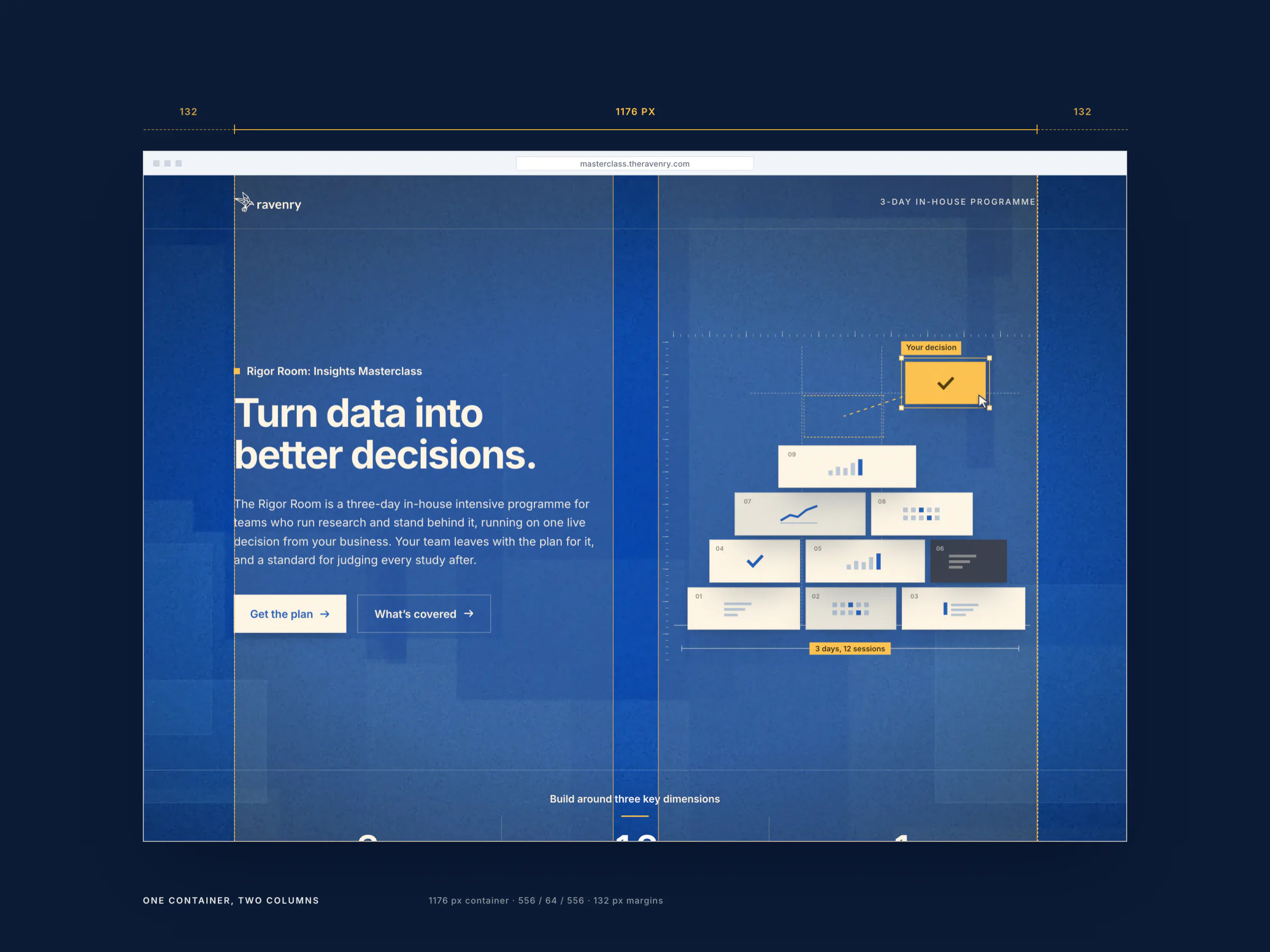
- Land on the decision. The headline sits beside a tower of the nine stages. The amber decision hovers above it in a selection box, then is dragged into its slot as the reader scrolls on.
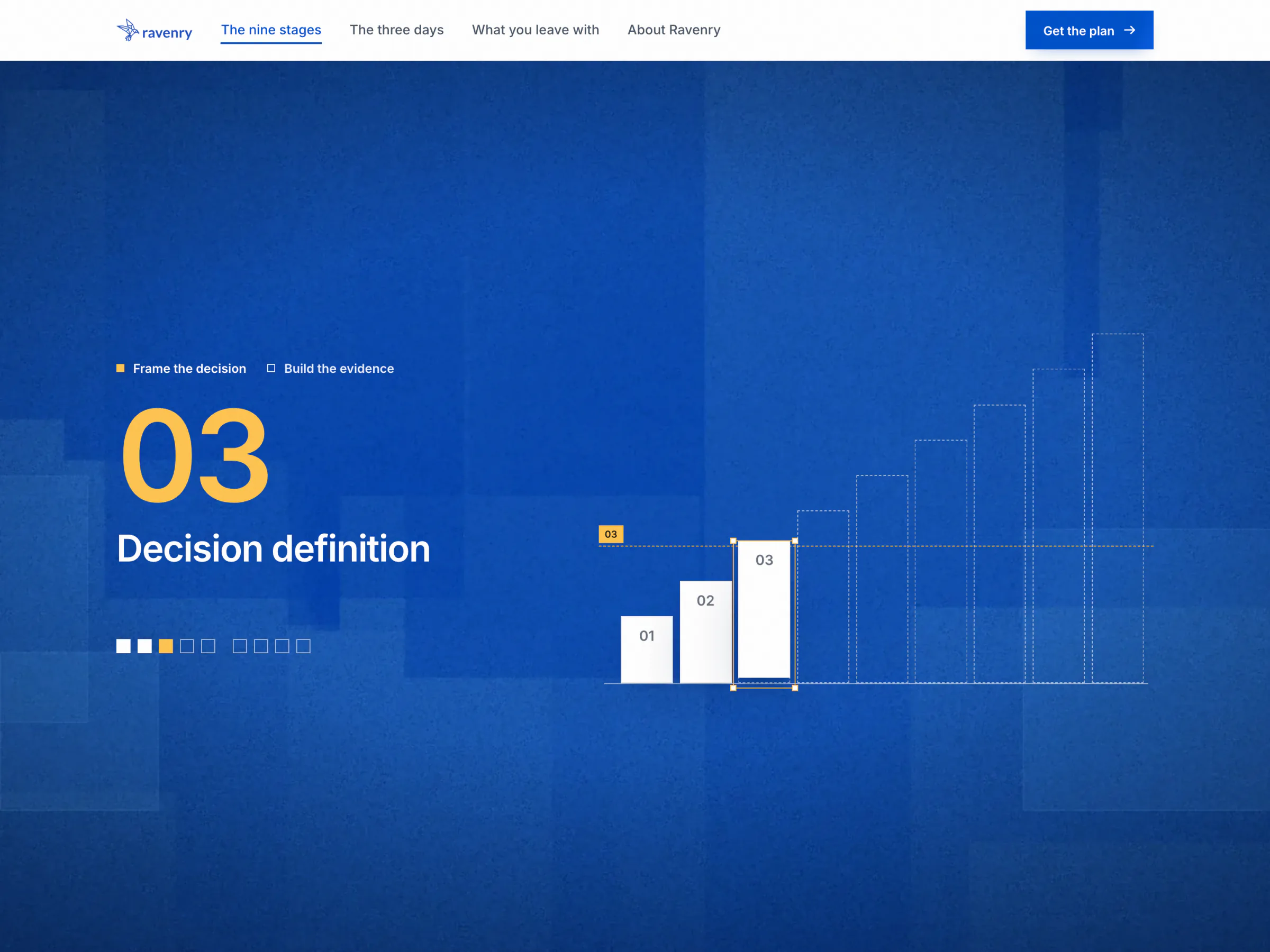
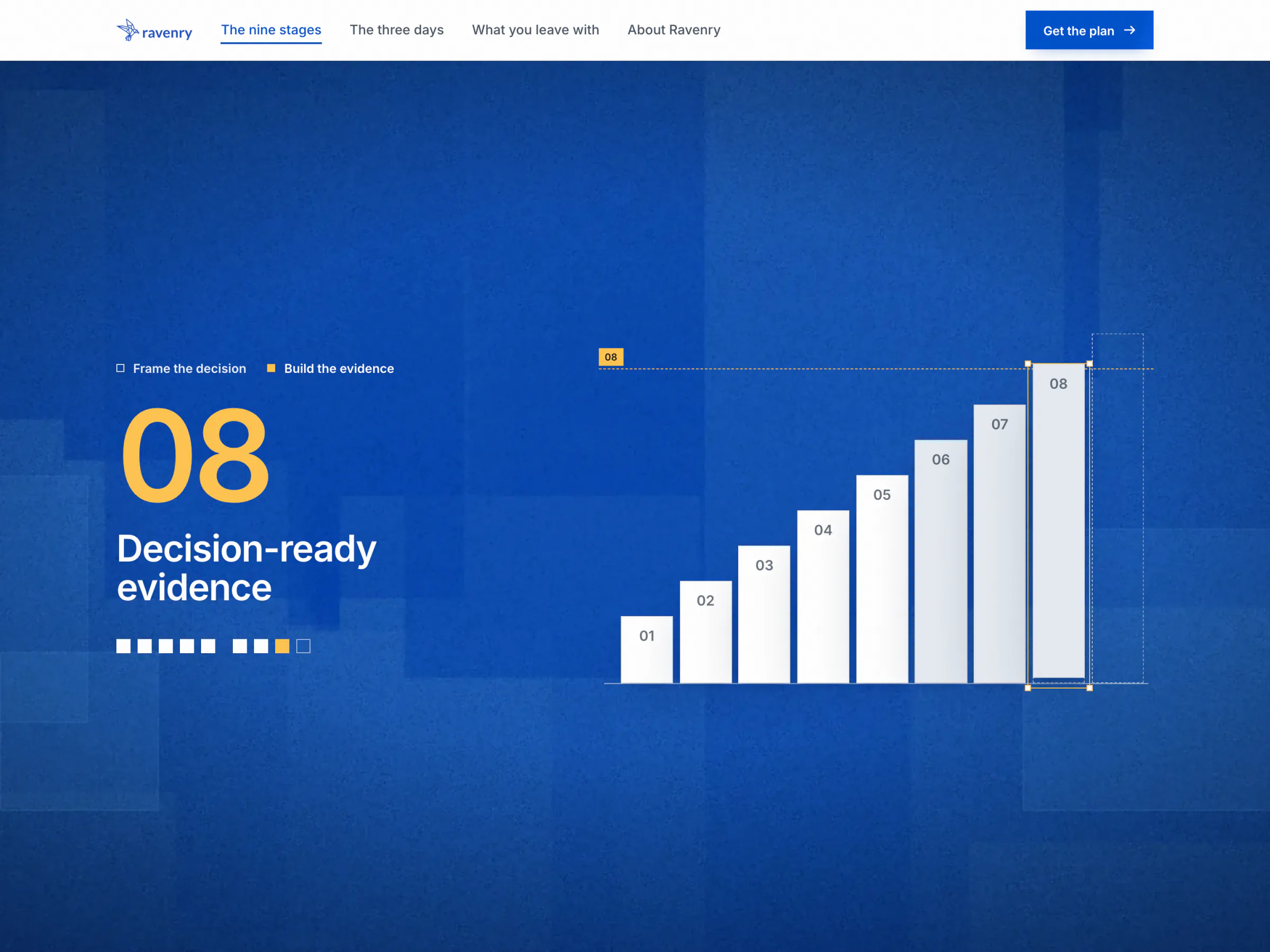
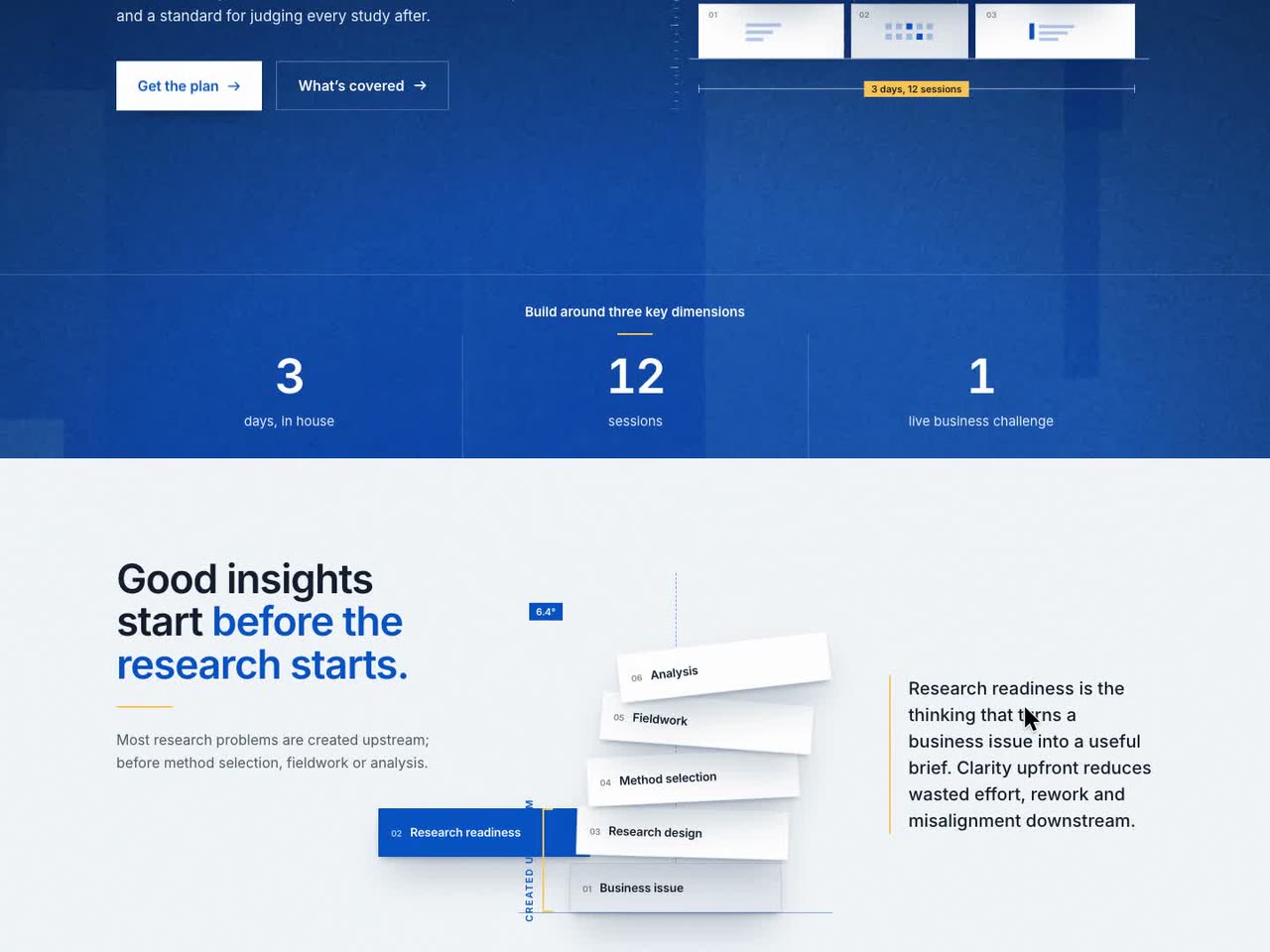
- Follow the argument. A stack built without research readiness leans; readiness slides in and the stack straightens, its readout counting down to 0.0°. Then the nine stages pin to the screen and build one by one.
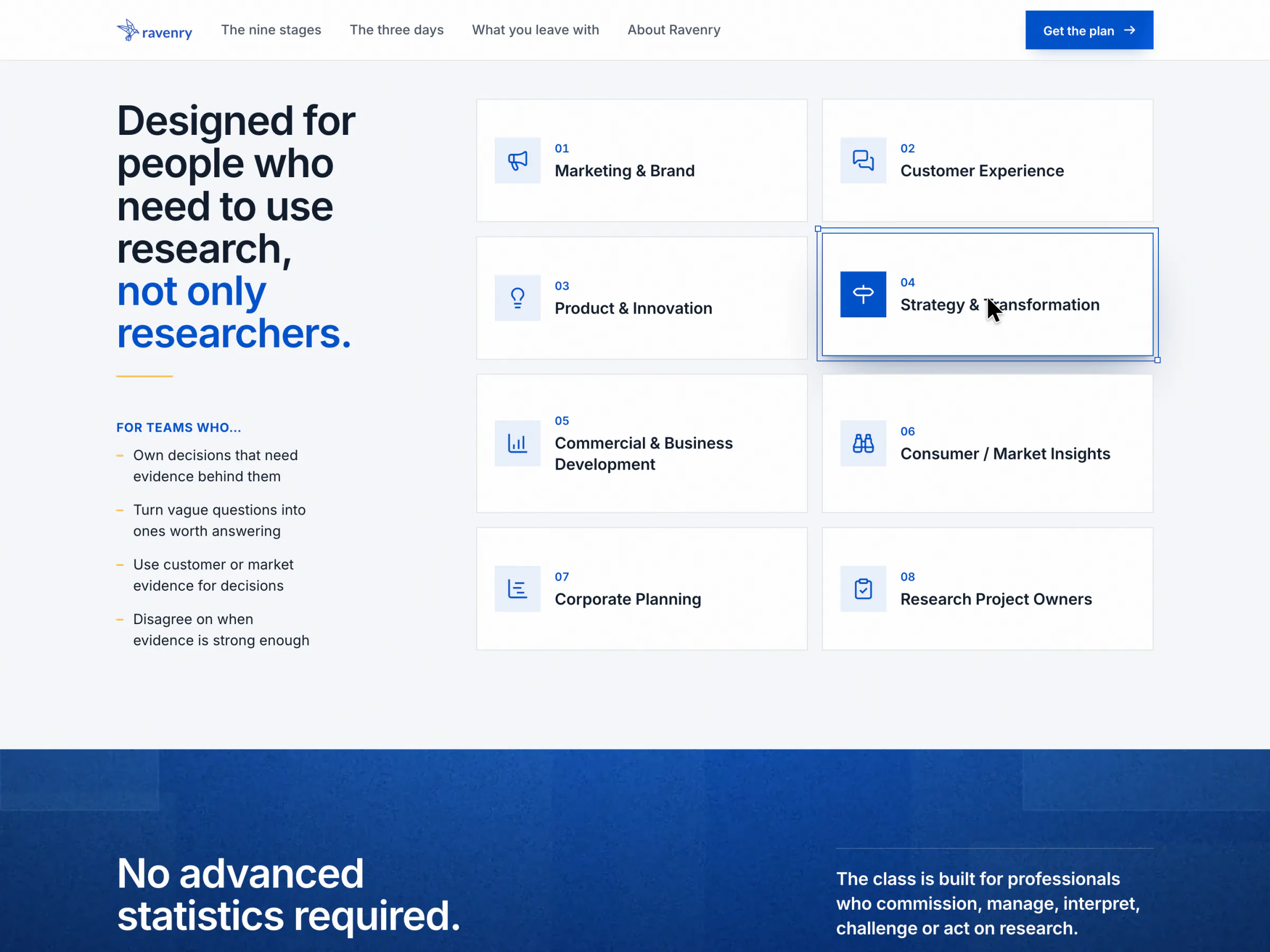
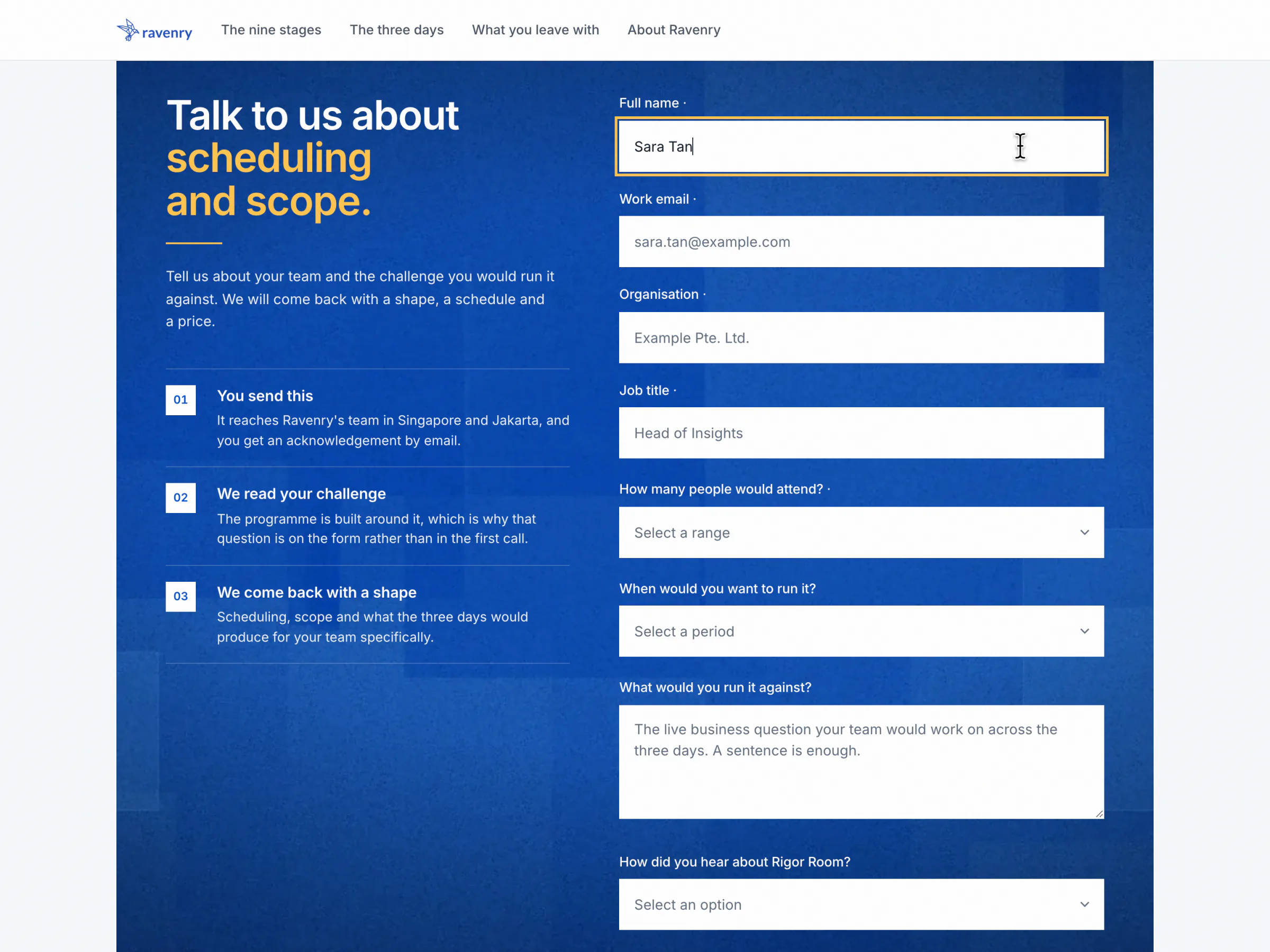
- Find yourself. Eight roles, from Marketing and Brand to Research Project Owners, and a reassurance in plain words: no advanced statistics required.
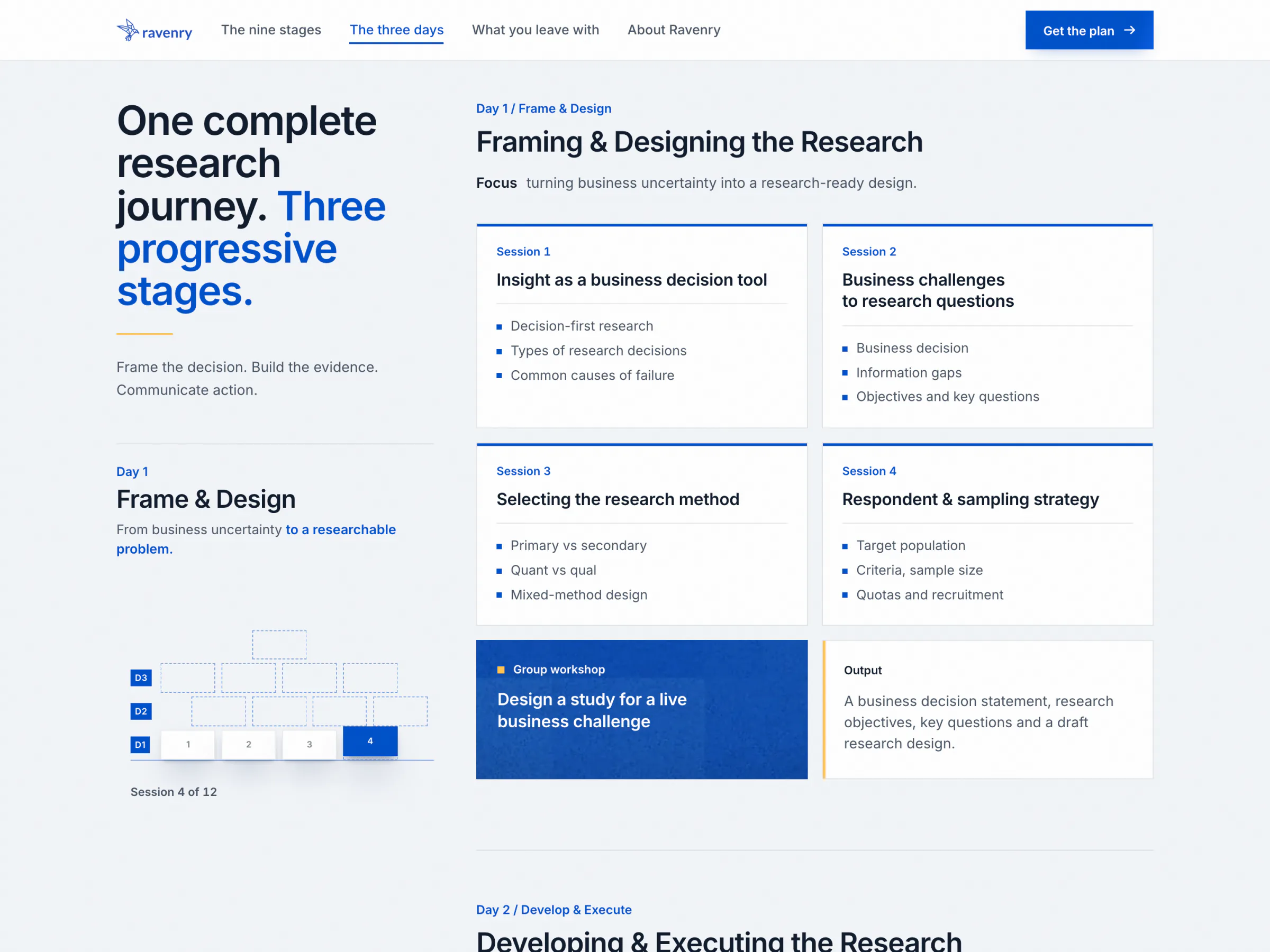
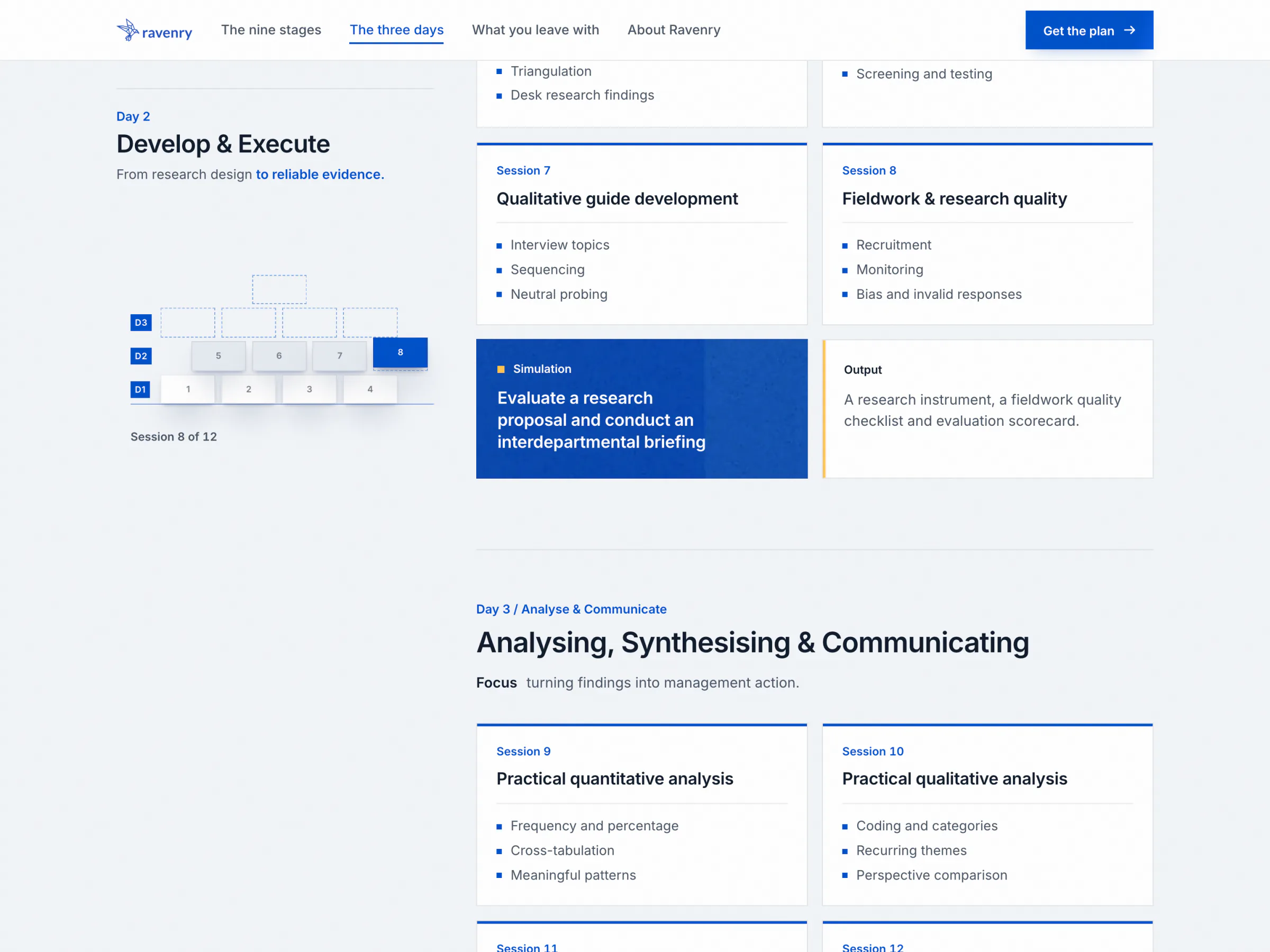
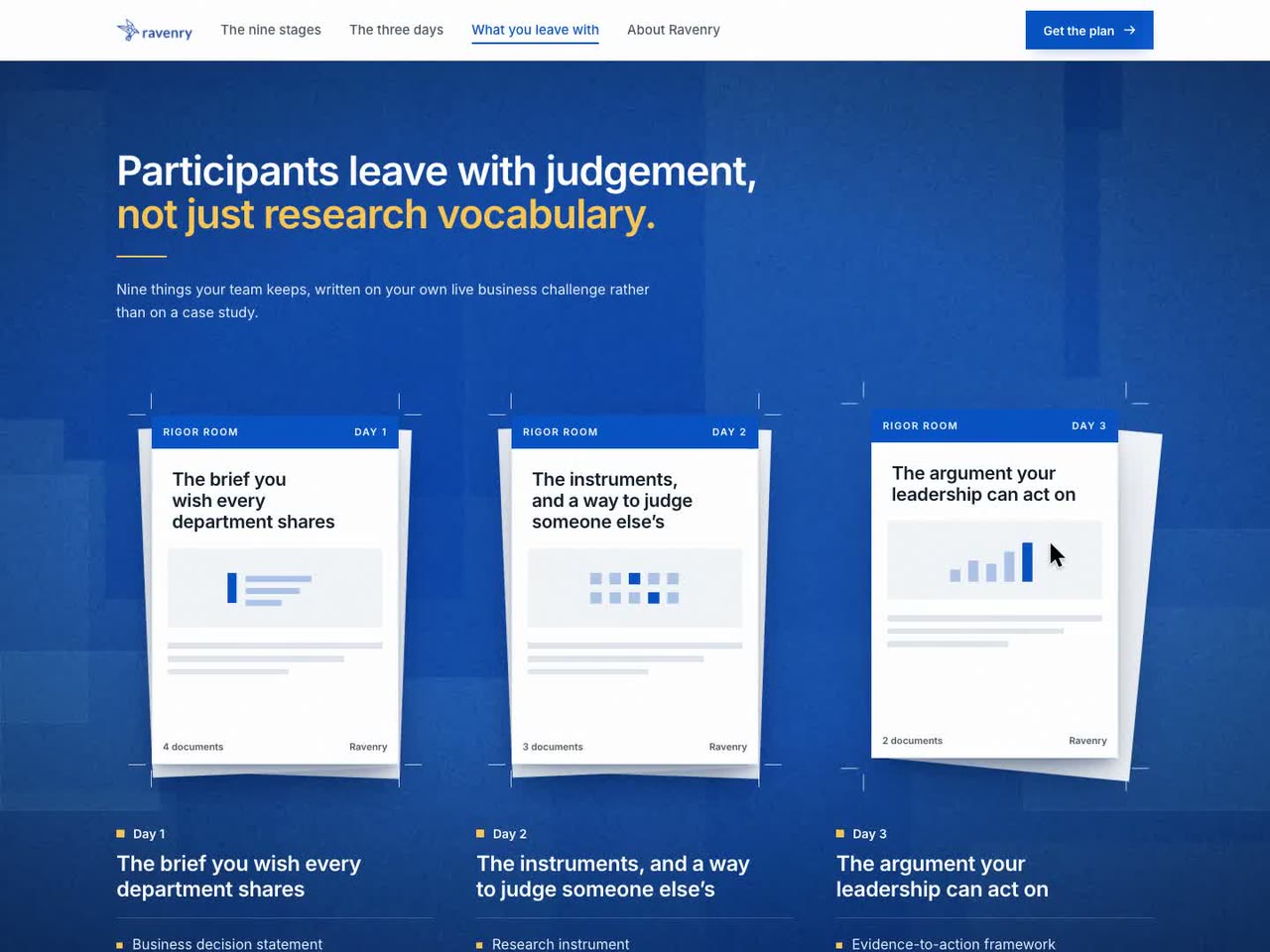
- See the three days and what you keep. Twelve sessions fill a wall as they are read, and nine documents fan out in three stacks, one per day.
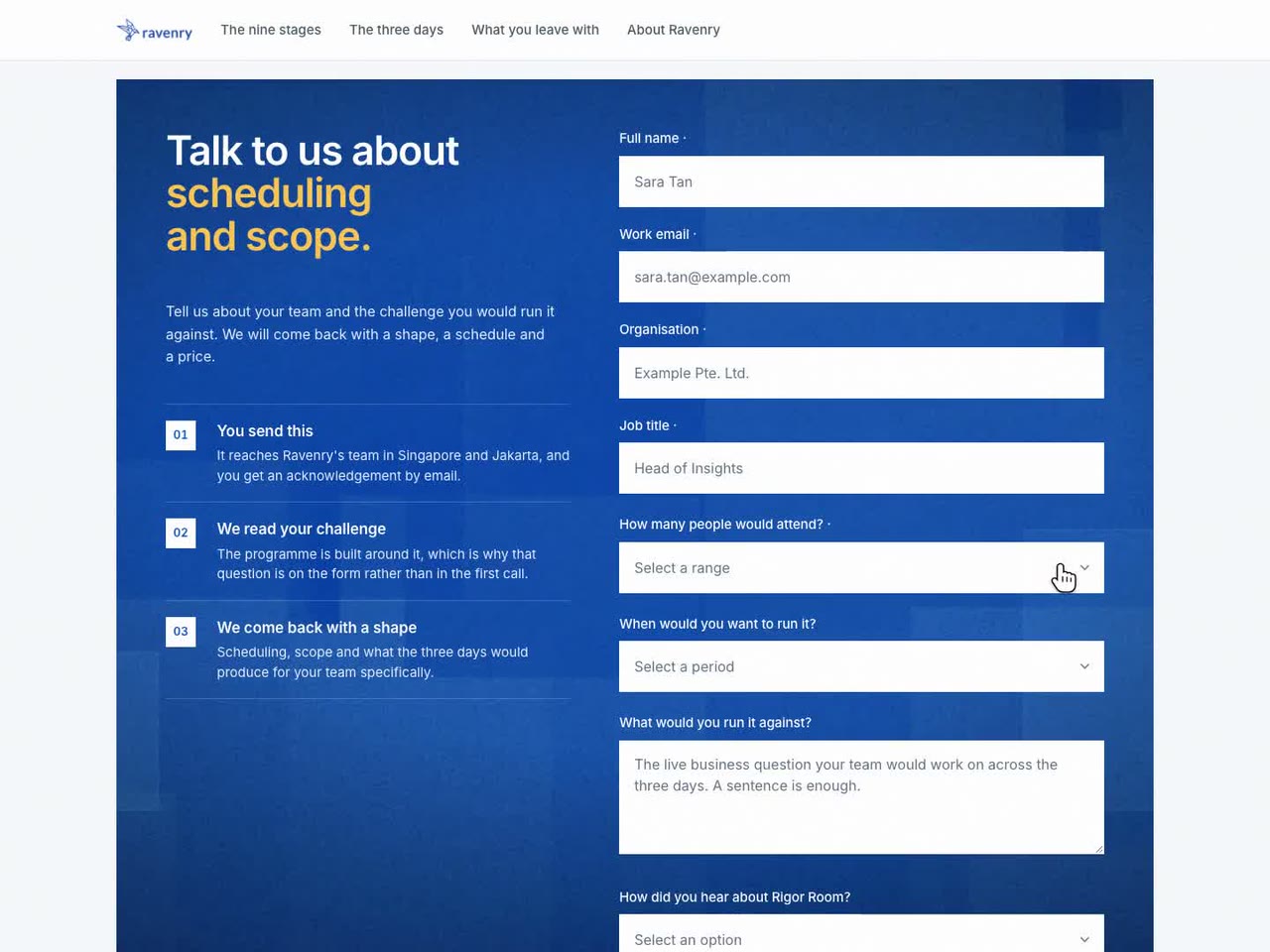
- Get the plan. Every call to action scrolls to one enquiry form at the end of the page. No popup, no second copy of the form.
Readers Find Themselves Before the Curriculum
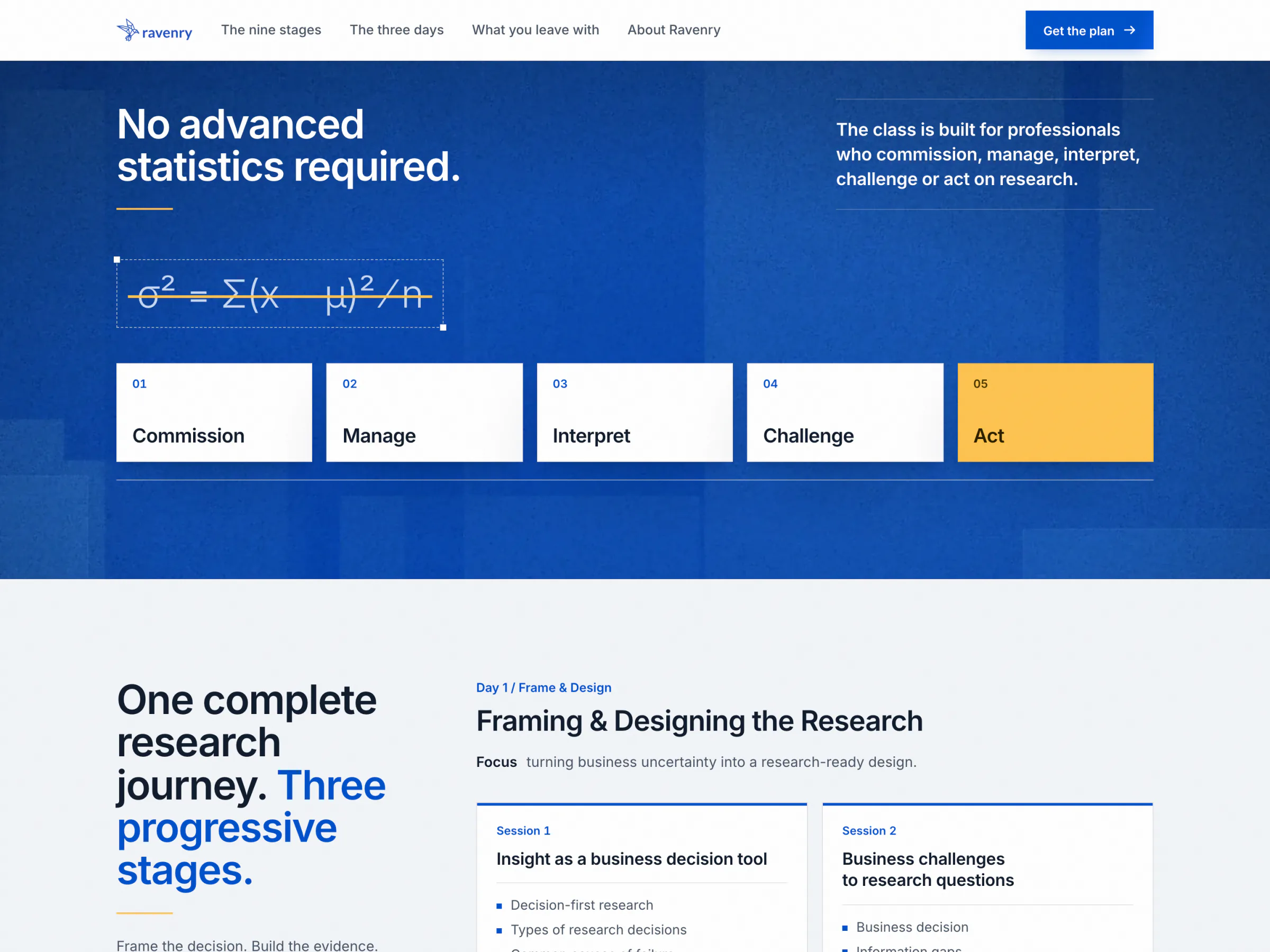
A Curriculum Read Like a Timeline
One Platform, Exported as One Page
Rigor Room is a folder on Ravenry's campaigns platform: one Next.js app that serves every campaign page from its own host. The folder holds the campaign's identity, theme, form and SEO in one plain-data file, every line of copy in another, and its sections and components beside them. Shared code lives in three workspace packages: @ravenry/ui for the design system, @ravenry/leads for forms and submissions, and @ravenry/email for the Ravenry email layout.
The page's real address, though, is on a domain the platform does not own. So the campaign leaves the platform as its own private repository, made by an exporter and deployed by Ravenry's engineer with its own database: that copy is the live page.

From a Form to a Row
- The reader presses "Get the plan" and the page scrolls to the form.
- The form renders eight fields (five required) and one consent, all declared once in the campaign's config, and checks the answers in the browser against a schema built from that same declaration.
- A one-line server action hands the answers to the platform's shared submission handler.
- The handler flags a honeypot rather than rejecting it, checks the schema again on the server, confirms the campaign's database row exists and is active, and rate-limits per campaign.
- The answers land in Supabase: the usual contact details in their columns, the team size, timing and the business challenge in a
fieldscolumn, and one consent record with the exact wording, its version and the time. - The reader sees the success panel. No email goes out automatically; the admin can send one per lead.
A Repository a Partner's Engineer Can Own
The exporter runs in six stages: resolve, plan, materialise, transform, generate and gate. It reads a committed tree through git archive, never the working copy, so a local secrets file cannot travel, and it decides every file: other campaigns, the platform's own pages, docs, rules files and every check that logs in, prints leads, rewrites source or sends email stay behind. It rewrites the registry, styles and checks for one campaign, and generates a schema, a seed, a Dockerfile, a CI workflow and a runbook. Sixteen gates follow, cheapest first, from a leak scan of the source and the built bundle to the pixels at 0 px. Only a passed export publishes: the first as a private repository, every later one as a pull request.
- The schema gate applies the schema and seed to Postgres compiled to WebAssembly, in process.
- Served gates run the export's own copies of the checks, the ones its owner will run.
- The record the export carries never names what was left out.

One Campaign, on a Host the Platform Never Chose
An export is the same code with one switch: CAMPAIGN_STANDALONE names the campaign and SITE_HOST the domain it lives on. Every host then serves that campaign, the admin answers in place instead of on the platform's host, and only the admin is kept out of search. The domain is a build input: if it is missing, the build fails rather than declare Ravenry's own address as the page's canonical URL. Rigor Room's search setting reads the same switch, so the exported page is indexed and the draft on the platform never is.
Why This Stack
The platform was already proven on a live, indexed page, and Rigor Room needed nothing it lacked except a long-text field for the business challenge, which the shared form kit gained for it. Lenis drives GSAP's ticker, so scroll-scrubbed motion and smooth scrolling share one clock; Supabase and Resend were already in production for SWDA.
Four Rejected Directions, Then SWDA's Styles
The brief arrived on 16 September 2026, and the campaign was scaffolded the same day with the platform's own command. Five directions followed in six days. The first four were rejected:
- The deck as a page (16 September): nine sections and a rail, the sales deck translated one slide at a time.
- The sun scene (16 to 18 September): one continuous scene, with a sun as the progress bar. Rejected section by section, including the request to avoid circles, because Ravenry's world is rectangles.
- An editorial rebuild by a second agent, Codex (18 to 19 September): flat blue fills and isometric objects. It deleted the grounds' vignette, noise and block pattern, and was rejected as too 3D and out of style. It is kept on a backup branch exactly as found.
- Brick by brick (21 September, morning): lit perspective bricks, with grounds drawn in code. Rejected the same day for inventing a new style instead of reusing SWDA's.
The fifth, rebuilt in SWDA's styles on 21 September, is the page. On 22 September the revisions became three headline versions at their own addresses. On 6 October the client chose the third, its headline was rewritten as "Turn data into better decisions.", and the page was exported the same day.
Claude Code built the page, its checks and the exporter. The campaign's own rules file records every rule a rejection taught, so the next session starts from them: build in SWDA's styles, use the supplied plate image for every blue ground, keep objects flat and square-cornered, and never draw a circle.
SWDA's Styles, Not a New System
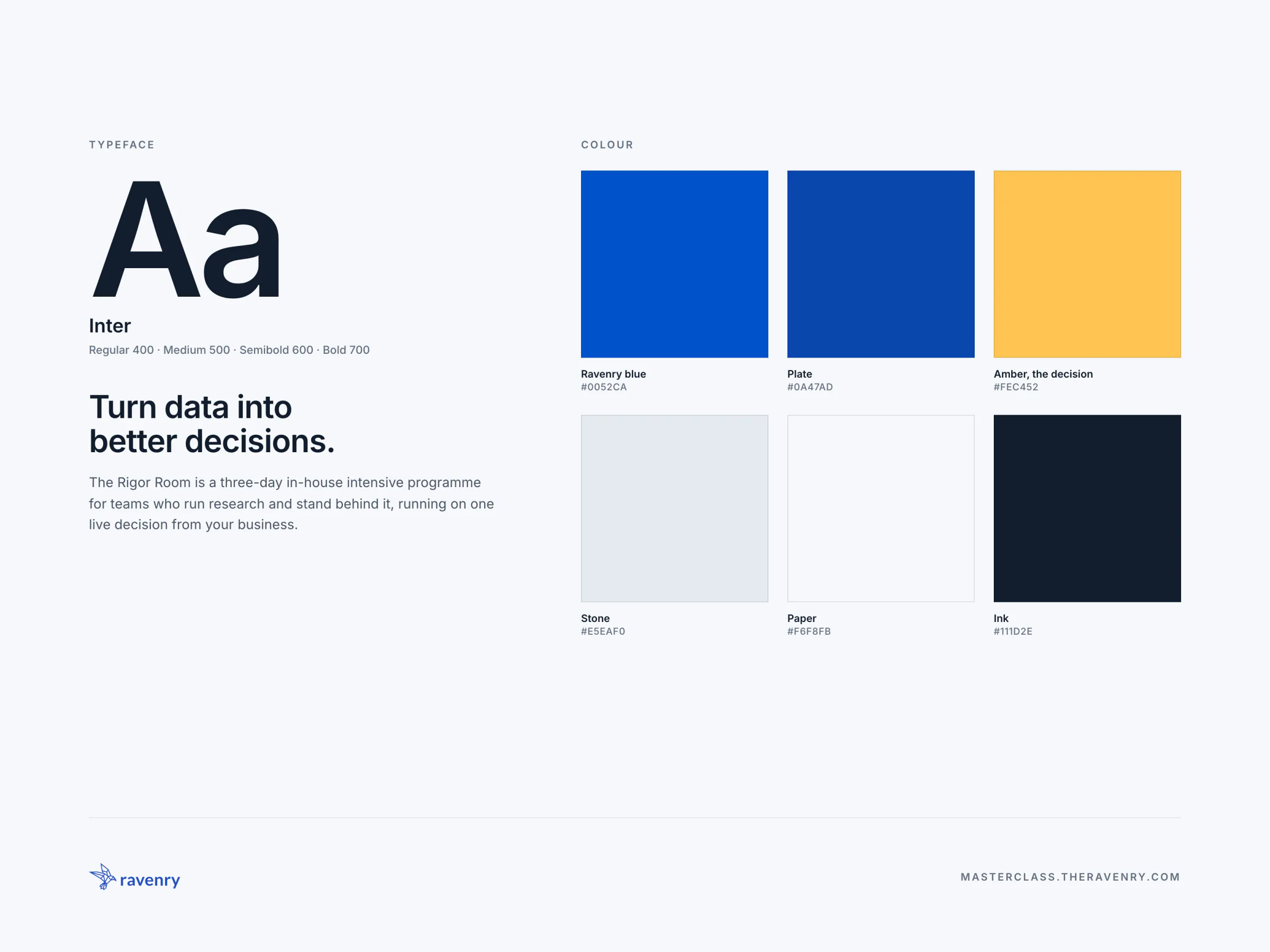
After four rejections the instruction was clear: reuse what already works. The page takes SWDA's headings, gold rule, container, twelve-column split, hero, metrics rail, cards, cover shadows and footer, and every blue ground is the supplied plate image, fixed to the screen and clipped per section. The cost: every object had to become flat, with a 1 px edge and a seat shadow, and every class is namespaced .rr-, because one stylesheet entry also loads on SWDA's live page. Every change since has had to leave SWDA at 0 px of difference.
Three Headlines, One Page
The revisions offered three headlines. Rather than three pages, there is one page component in which only the hero reads the version, and all three share one canonical address and stay out of search engines. When the client chose, the other two were deleted and their addresses redirect to the page, because the review links had already been shared.
Amber Means the Decision, and Nothing Else
The programme runs on one live decision, so amber marks only the decision: the hero's block, the ninth stage, the capstone exercise, the verb Act, the submit button. The form's optional field for the business challenge is the most valuable answer on it. The cost is a contrast budget: amber on the blue plate measures about 4.3 to 4.4:1, so it is only ever large type there, and never type at all on paper.
Export a Repository Instead of Hosting It
The page's real address lives on a Vercel account outside the platform. Instead of moving the account, the campaign is exported as a private repository with indexing switched on only in that standalone build, so the public draft and the real page can never compete in search. It cost five fixes to the exporter, which had only ever exported SWDA, and the old page at that address is now served by the campaign at /research-readiness, exactly as it was.
Motion That Carries the Argument
Every effect on the page has a job in the argument, and every one has a finished still version under reduced motion: the decision landed, the blocks filled, the stack straight, the wall complete.
- The tower draws from its corners, its faces wipe up, and the decision bobs until the scroll drags it into its waiting slot. On a fine pointer, the blocks move at two depths.
- The nine stages are the page's only pin, using
position: stickyrather than a scroll library, held mid-screen for 280% of the screen's height. Stages ahead are wireframes and the current one is selected. Below 1024 px they become a complete staircase over a list. - The roles lift onto SWDA's seat shadow with a 1 px selection outline and square handles.
- The sessions fill blue as their cards cross 62% of the screen, then turn white; the capstone fills amber.
- The documents fan open and their crop marks stand off under the pointer or keyboard focus, with the real list as HTML beside them.
Accessibility is checked rather than assumed: every tab stop's focus ring, 44 px targets, heading order, and contrast measured on the composited pixels across six routes at three widths, with no failures.
The Headline in the Room
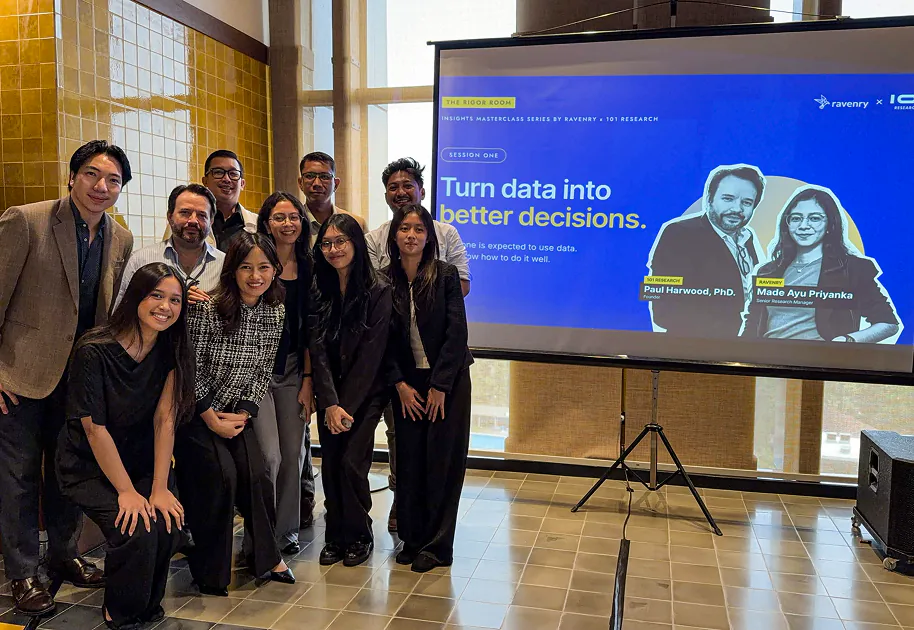
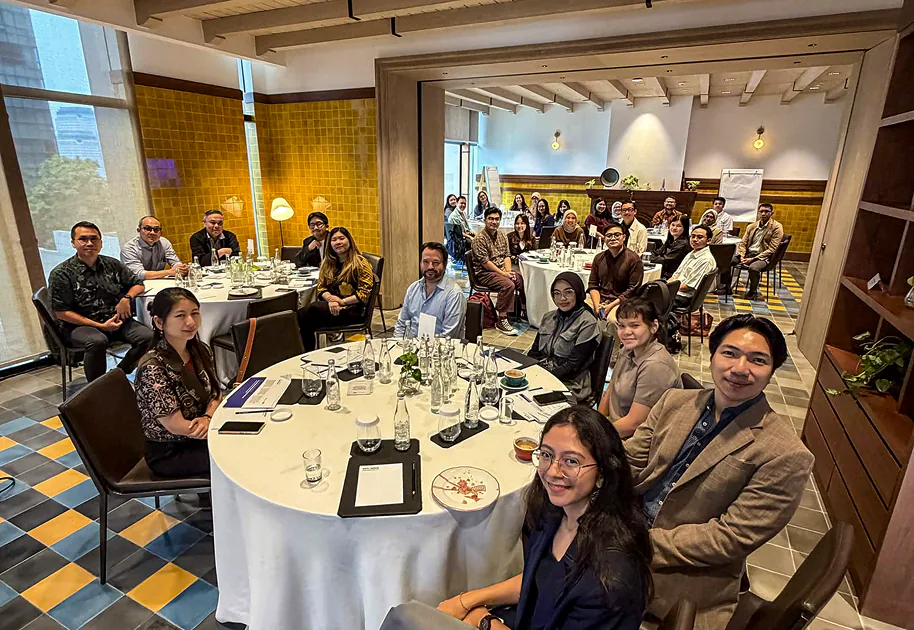
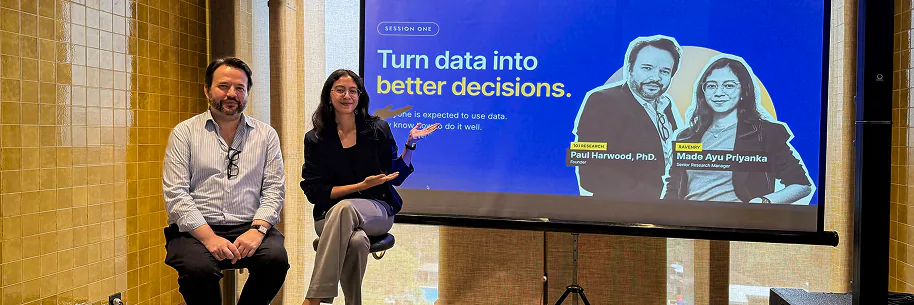
Two days after the handover, on 8 October 2026, the page's headline went up on a screen at 25hours Hotel Jakarta. Session one of the insights masterclass series, by Ravenry and 101 Research, ran for a morning and was limited to 40 seats. The slides carried the page's words and colours: "Turn data into better decisions." on Ravenry blue, with the decision in yellow.

Three Posters, One Headline
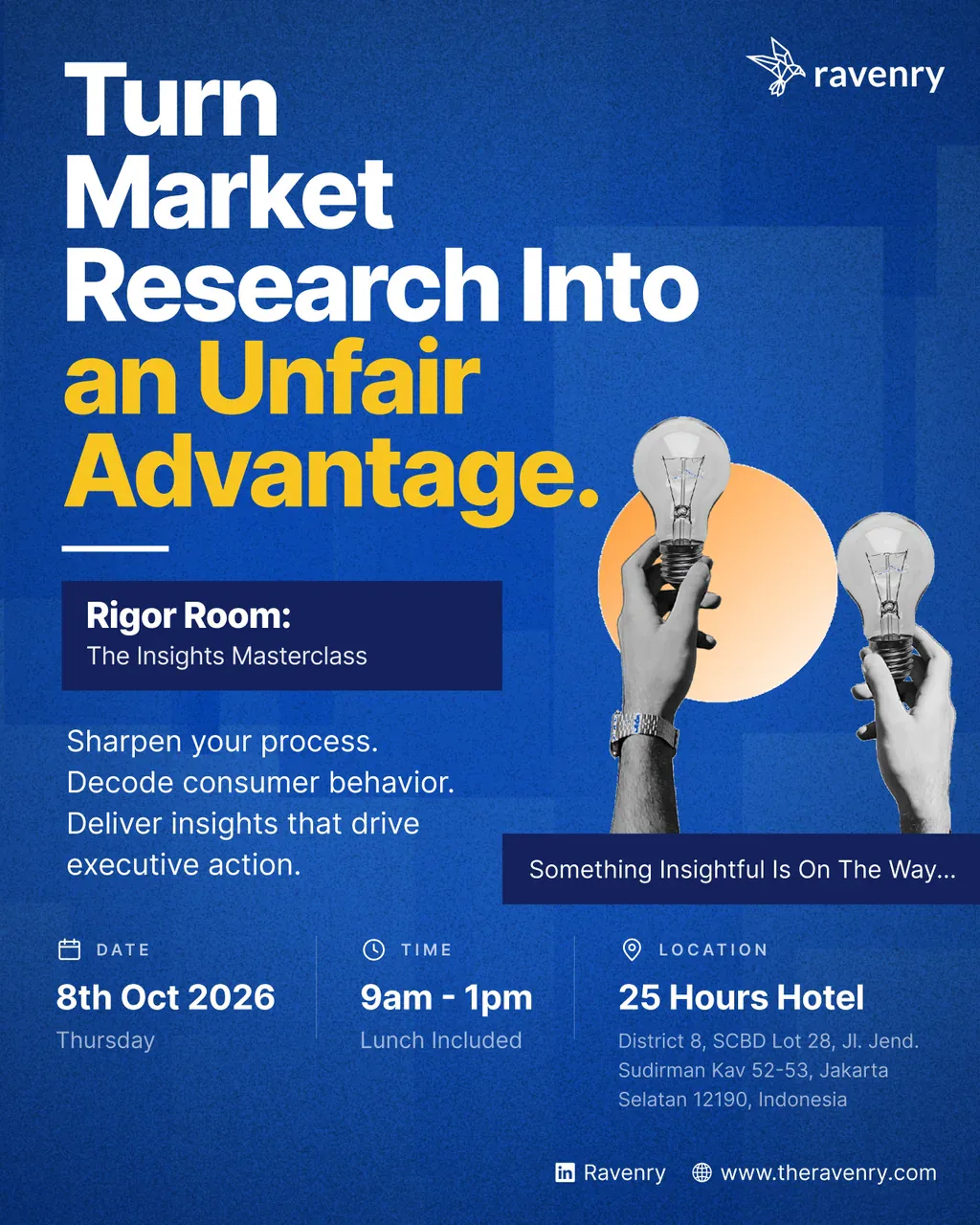
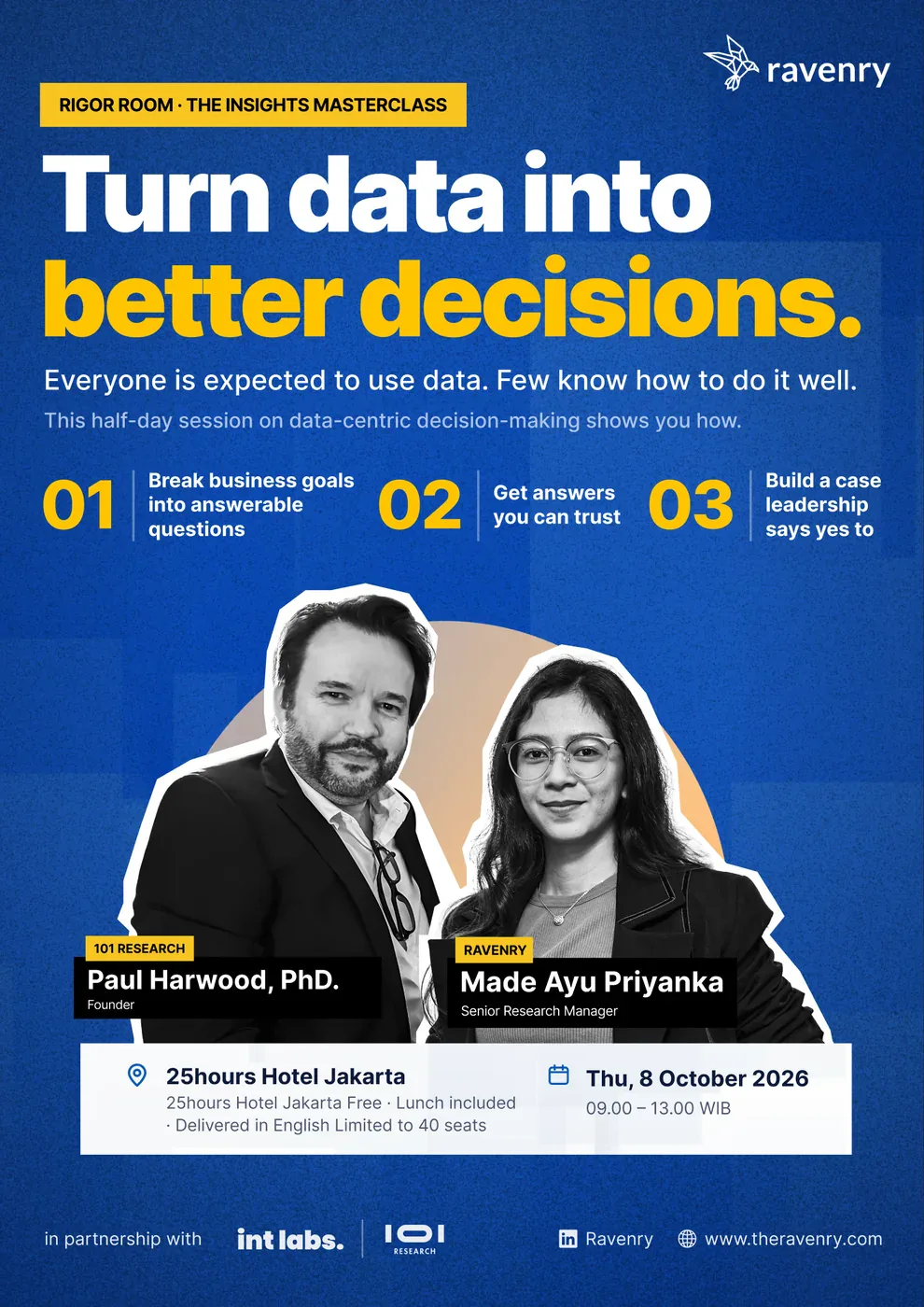
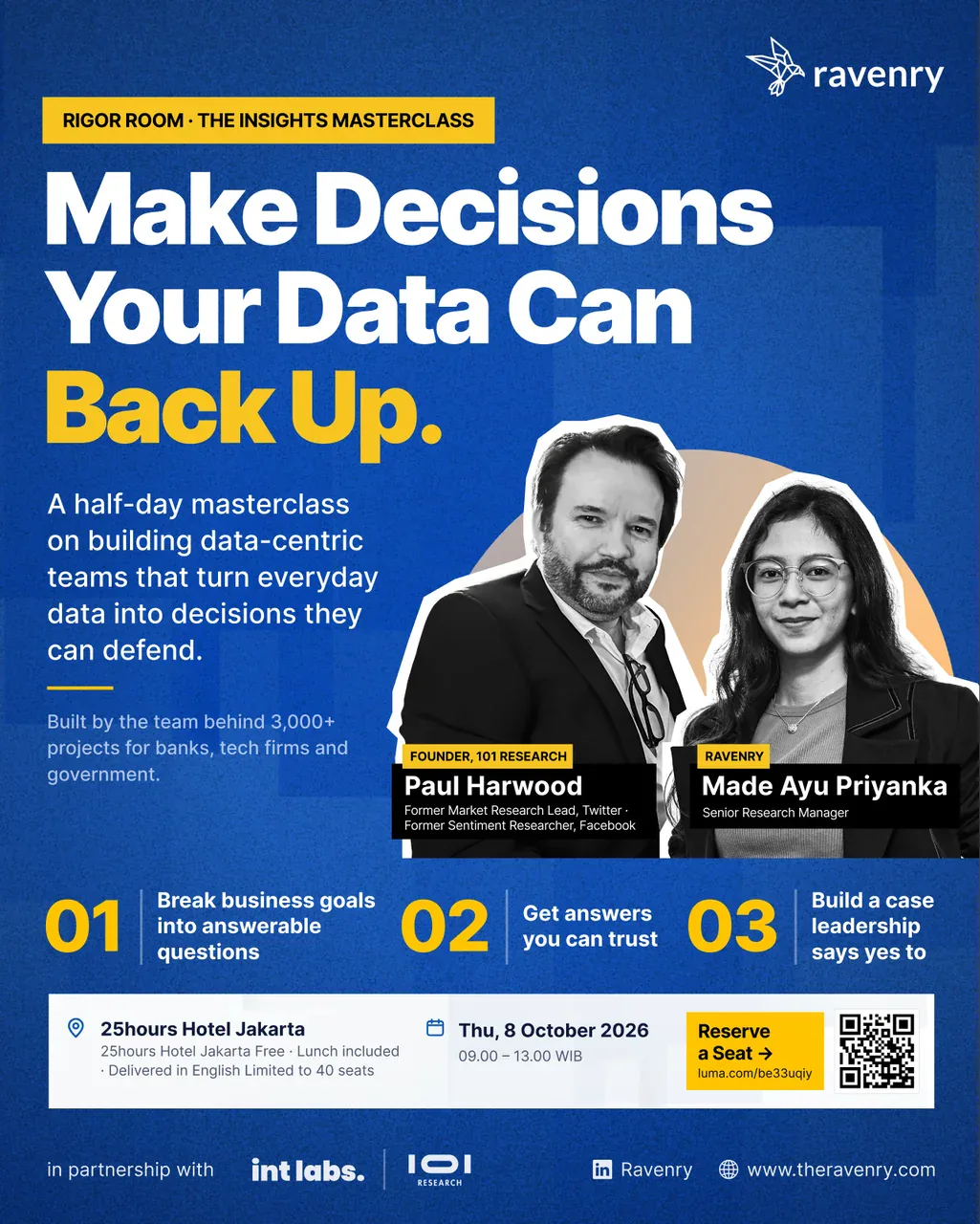
Three posters announced the session, from the same design work as the page: a teaser with the date and the hotel, then two with both speakers and the session's three steps, one of them under the page's own headline.
Chosen, Handed Over, Live
On 6 October 2026, twenty days after the brief, the client chose the third headline version, and the page left the platform as its own repository for Ravenry's engineer to deploy. It is now live at masterclass.theravenry.com, open to search engines, with the page it replaced preserved at /research-readiness. On the platform it remains a draft that stays out of search engines, so the two never compete.
The most useful lesson was that rules beat taste. Four directions failed for the same reason: each invented a style instead of reusing a proven one. Once those rules were written down in the campaign's rules file, the fifth direction landed in a day and has not needed redesigning since.
Known limits: nobody is notified when an enquiry arrives, so leads wait in the admin until someone looks; the legal pages are still working drafts; and the thank-you email waits for a test send before it sends automatically. Next comes a notification for each enquiry.
Gallery