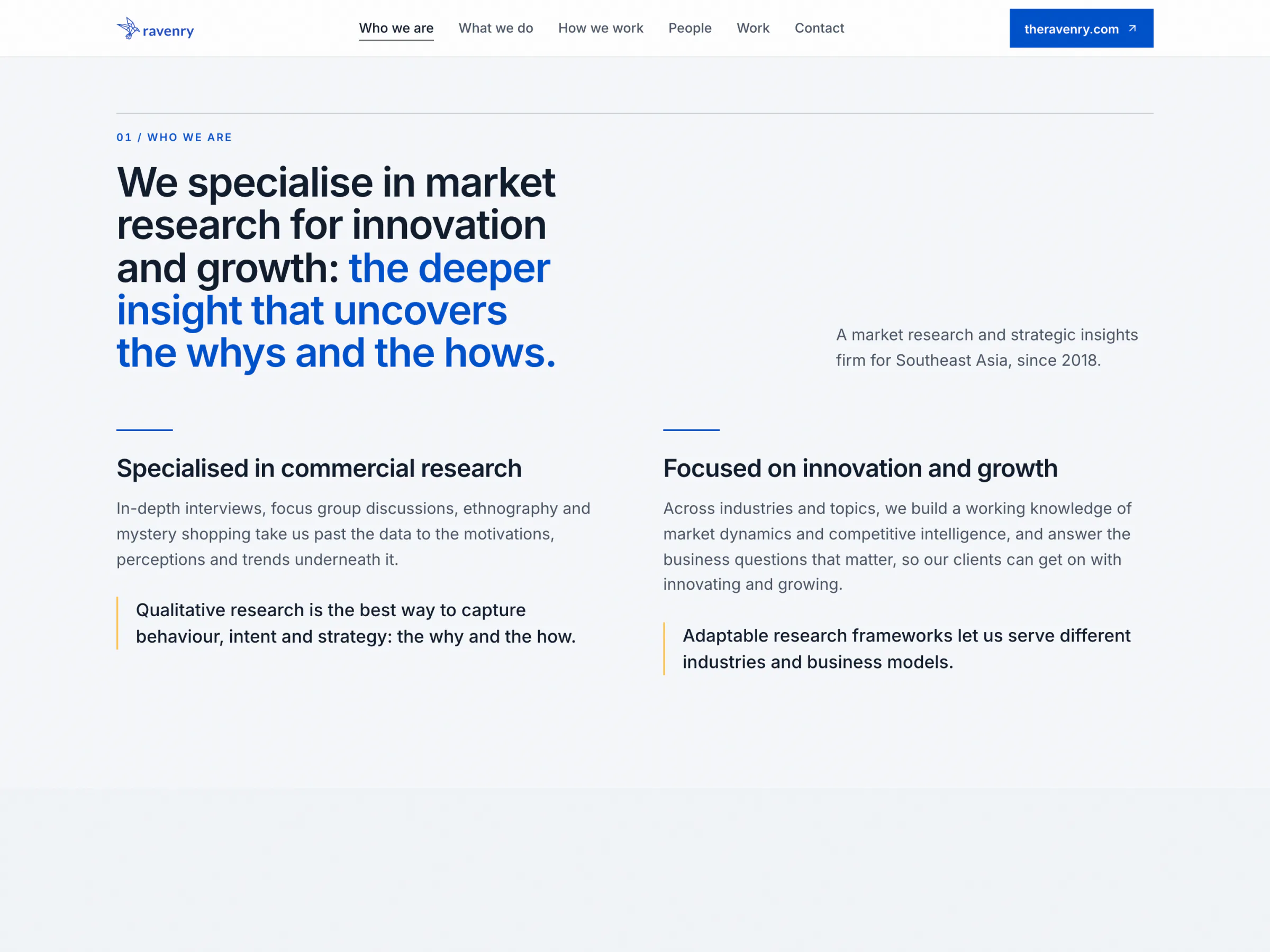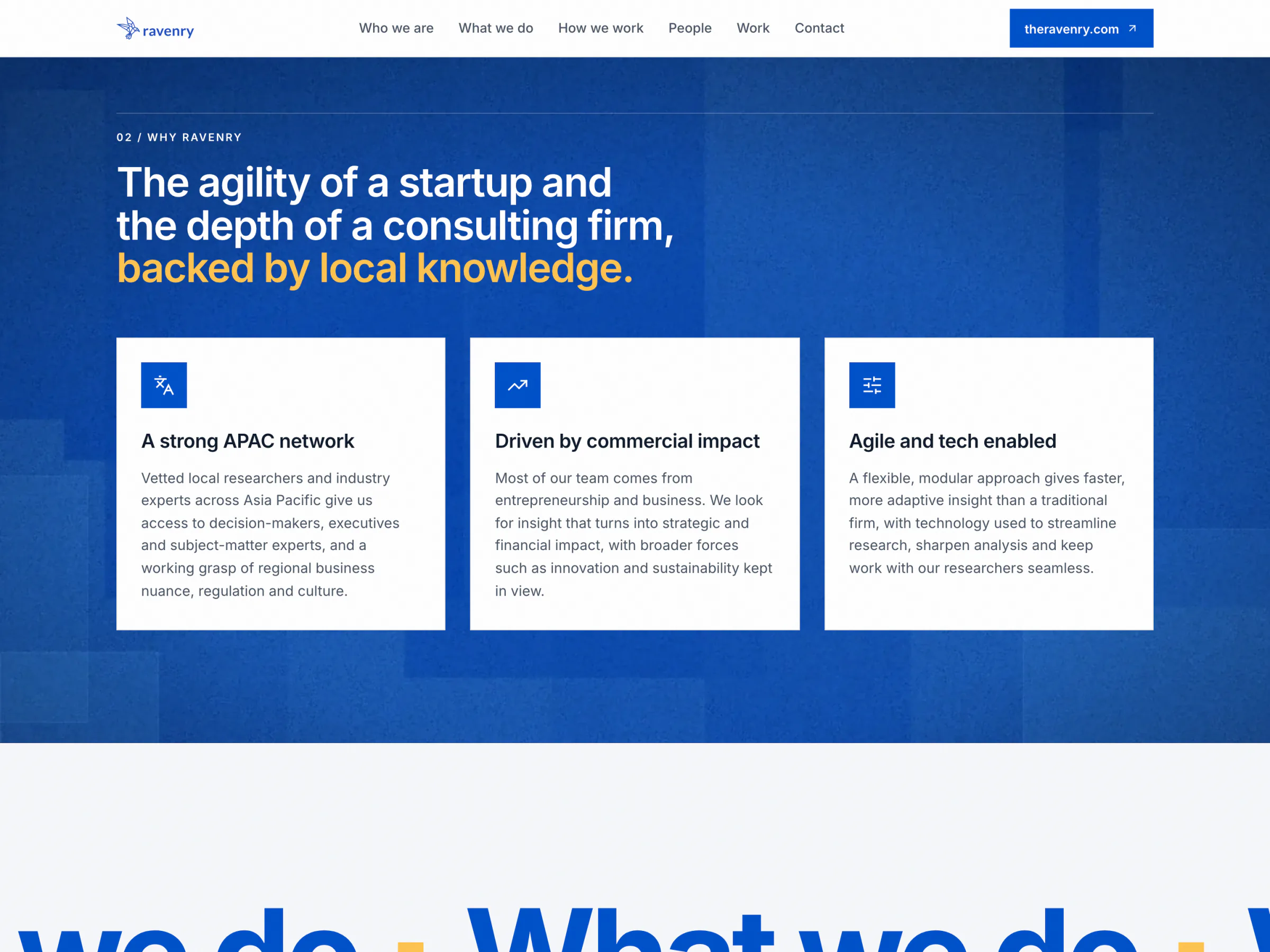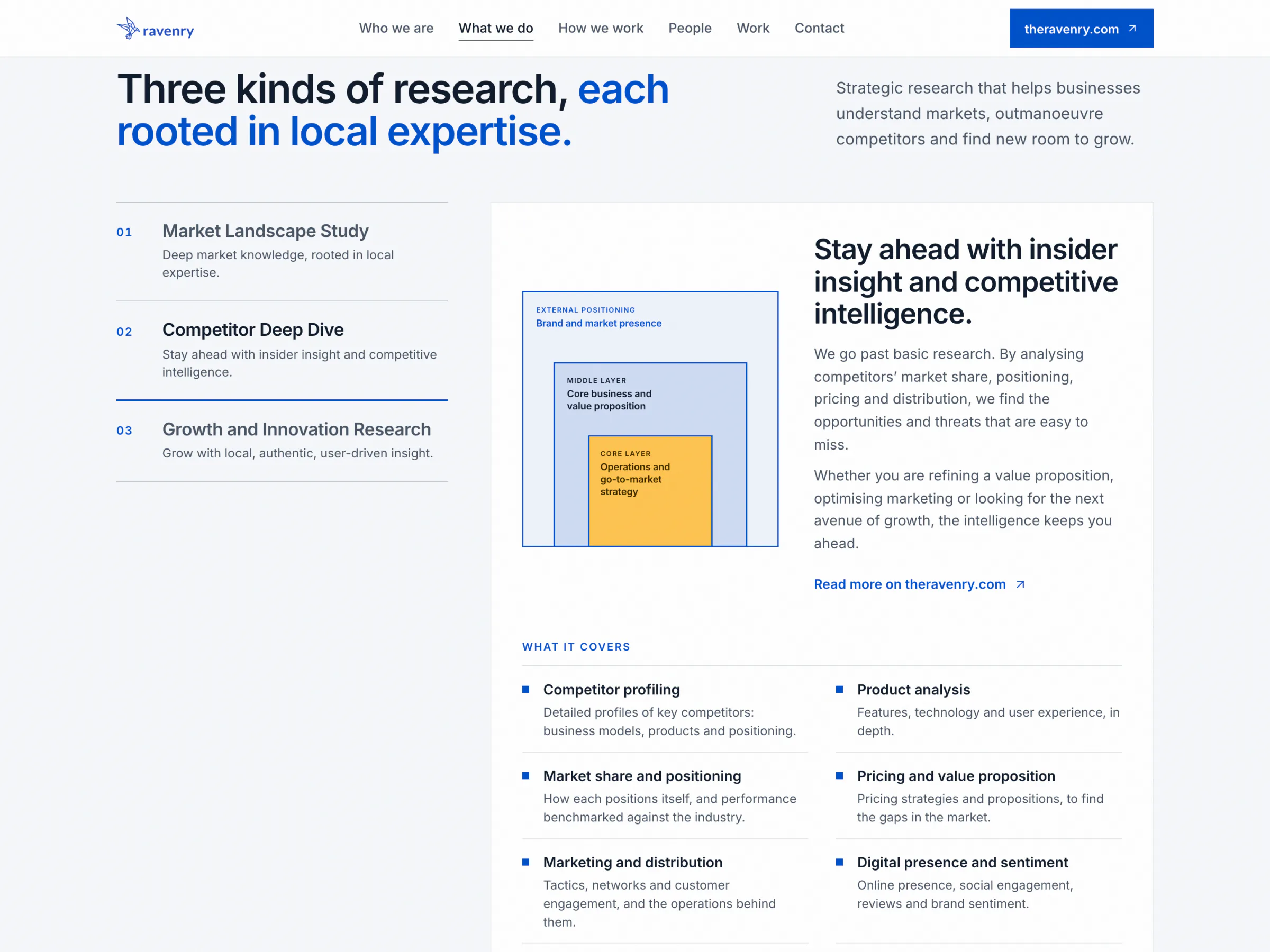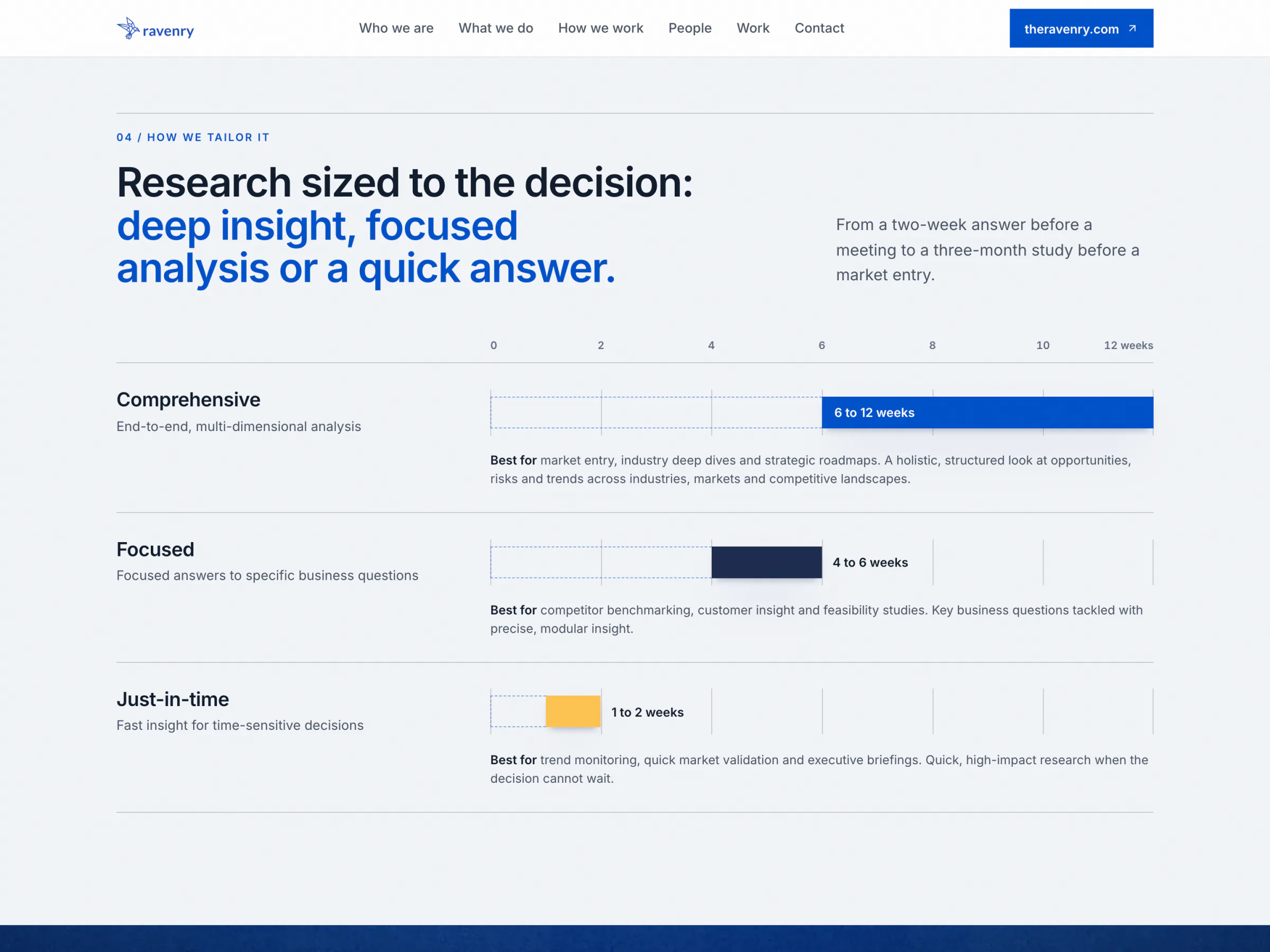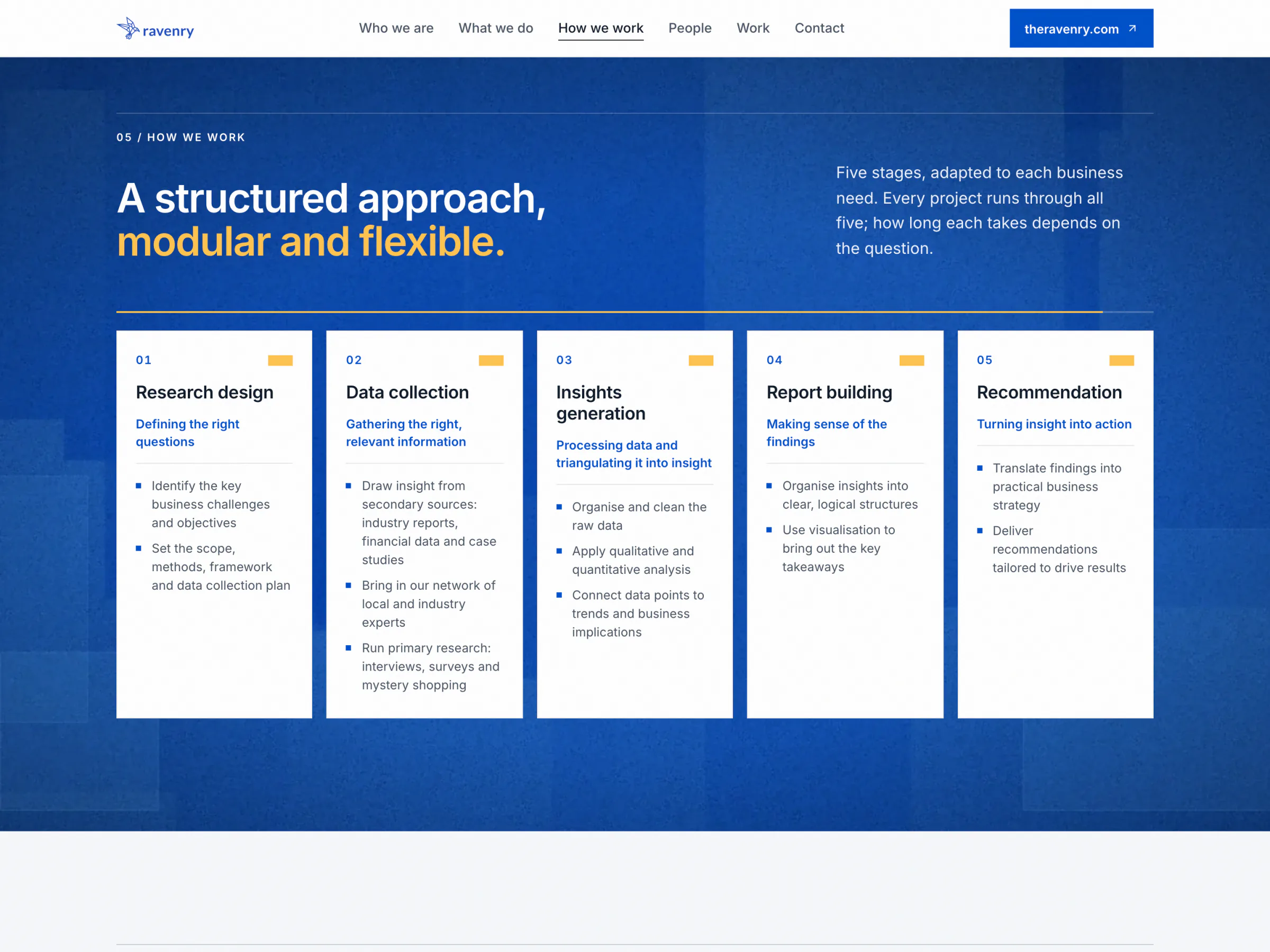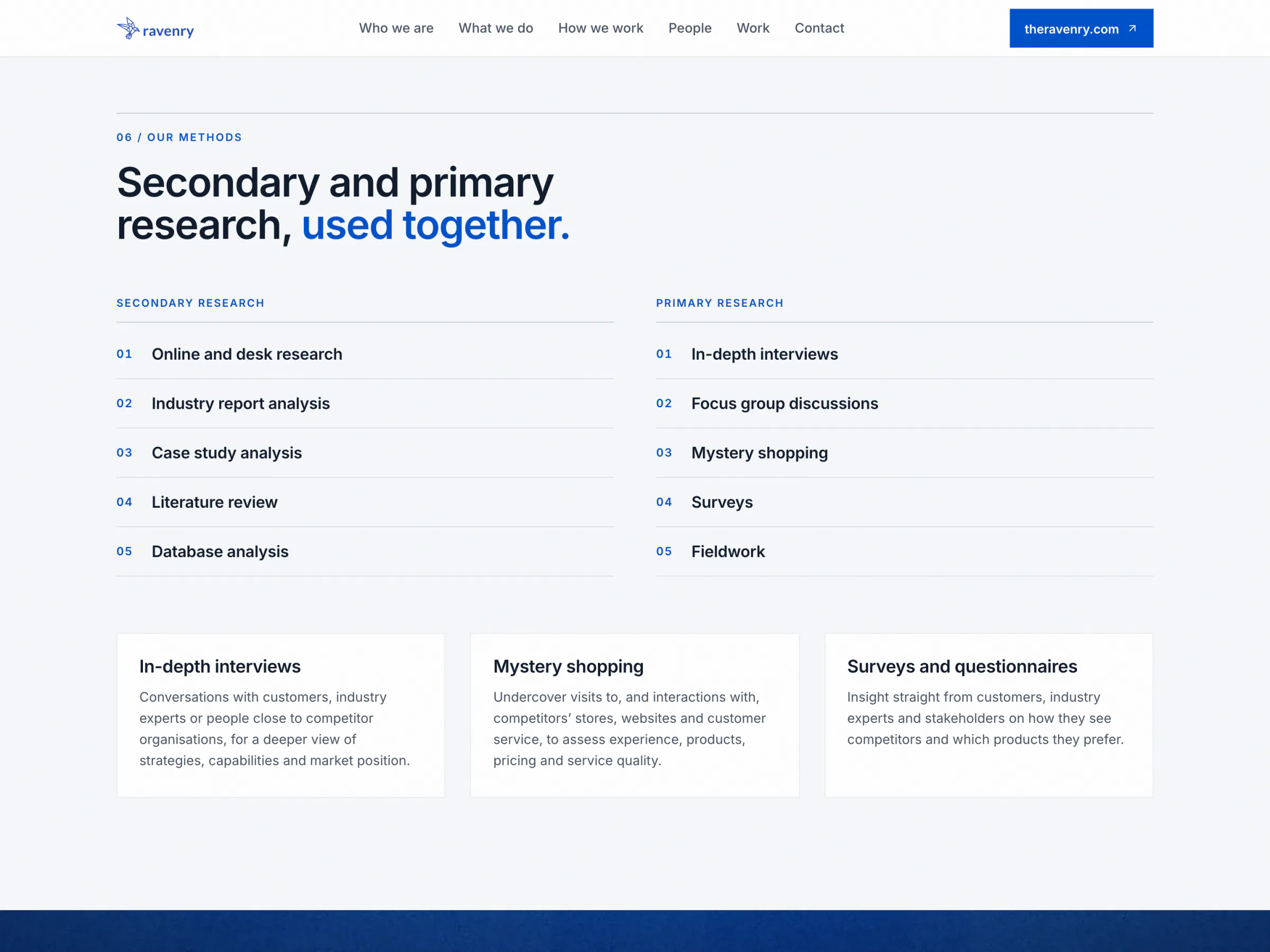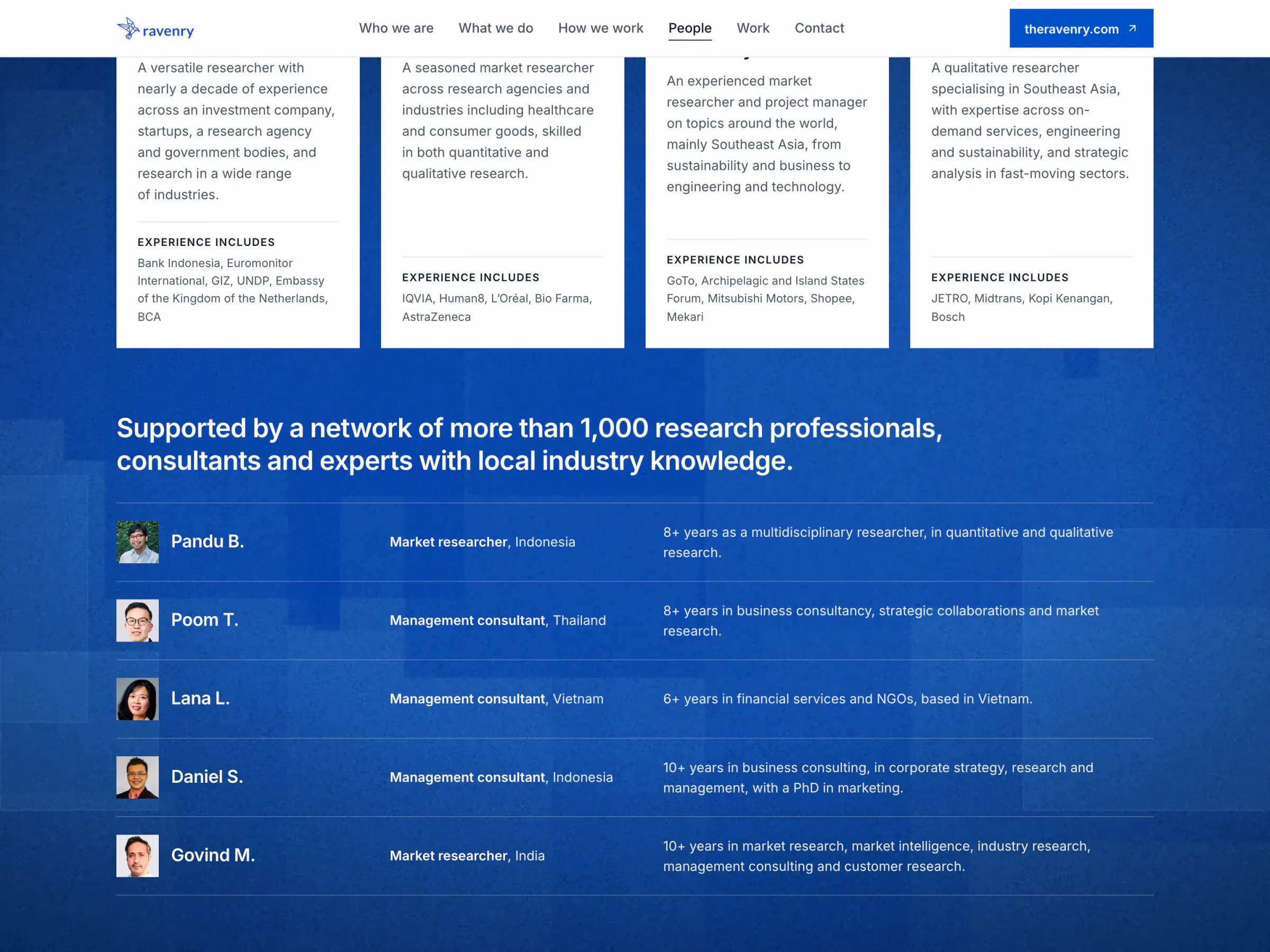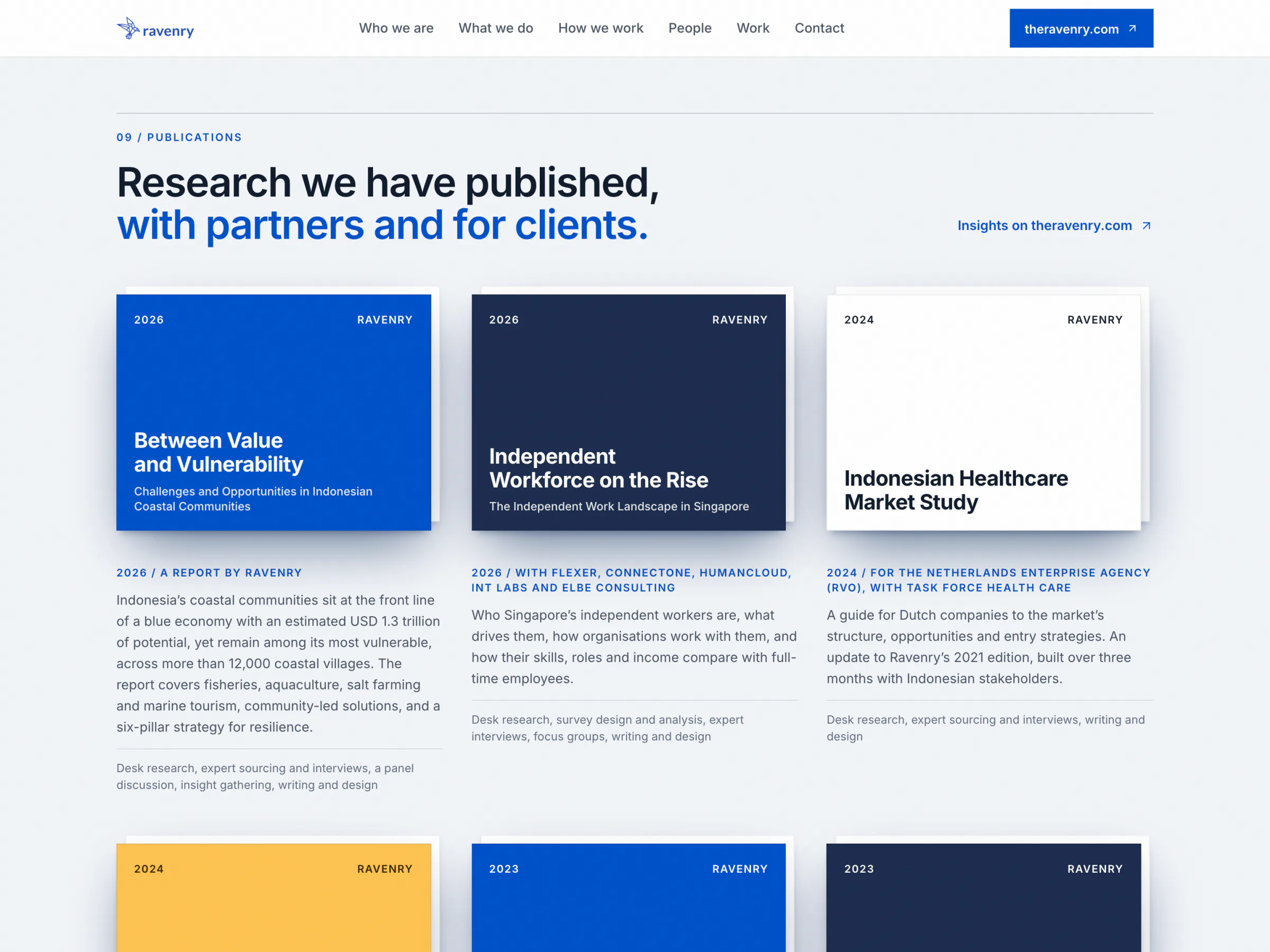
Ravenry's 44-page company profile, rewritten as one web page with its own address that anyone can be sent.
Asked for, built and published on its own address in one day.
Project facts
- Role
- Product design and direction. Built with AI coding sessions under my direction.
- Timeline
- 1 day, 23 September 2026
- Built with
- Claude Code
- Playwright
- ffmpeg
- Stack
- Next.js 16
- React 19
- TypeScript
- CSS Modules
- Web Animations API
- GSAP
- Lenis
- Vercel
A Profile You Can Send as a Link
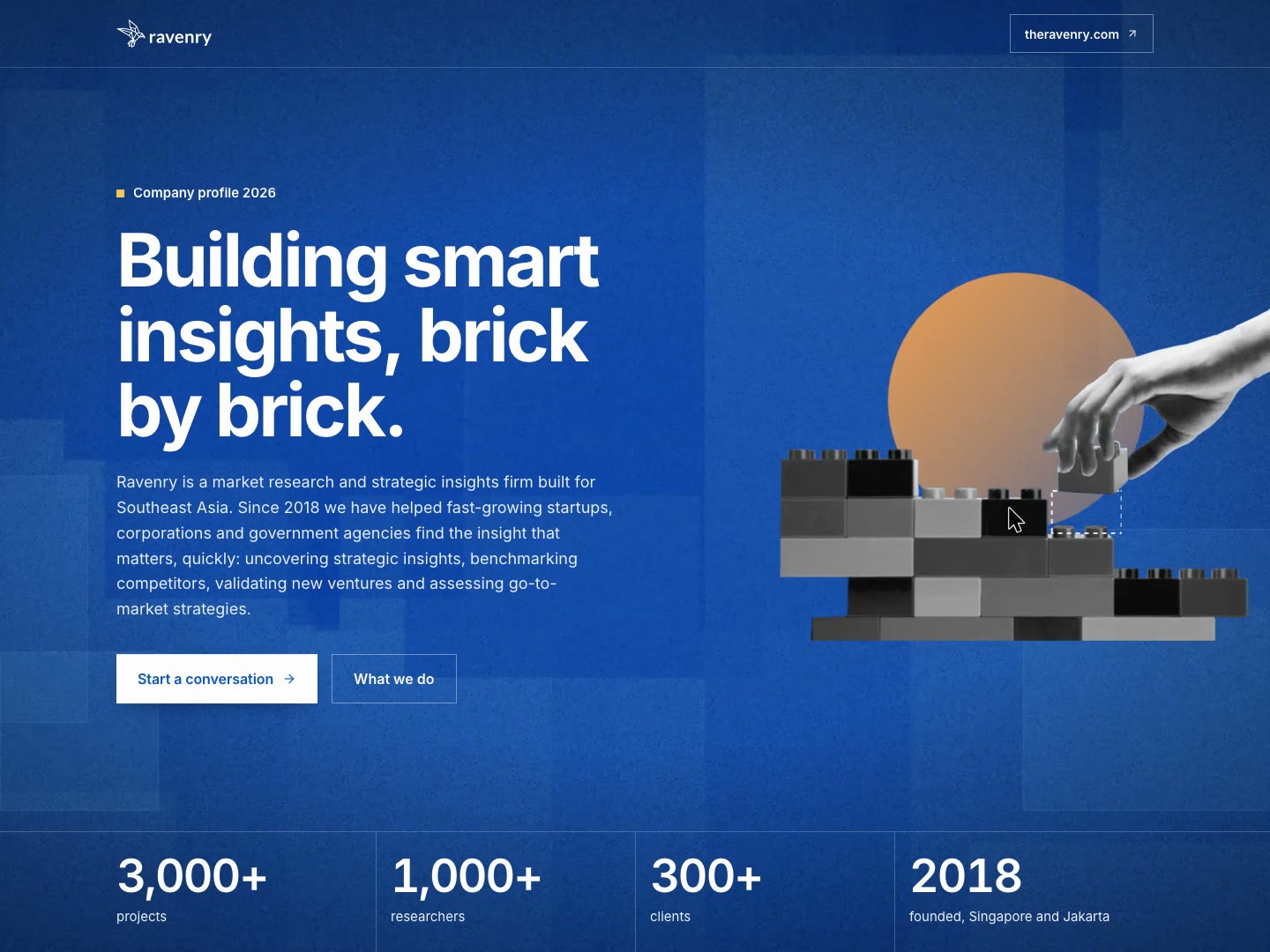
Ravenry is a market research and strategic insights firm built for Southeast Asia, founded in 2018, with offices in Singapore and Jakarta. Its company profile for 2026 is a 44-page PDF: who the firm is, its clients, what it does and how, its people, nineteen case studies and its publications.
The profile needed to travel as a link. Until then the web version lived only behind the campaign index of Ravenry's platform, so sharing it meant sending people through a page built for the team. The request was simple: give the profile an address of its own, so it can be published and sent without going through the campaign index first.
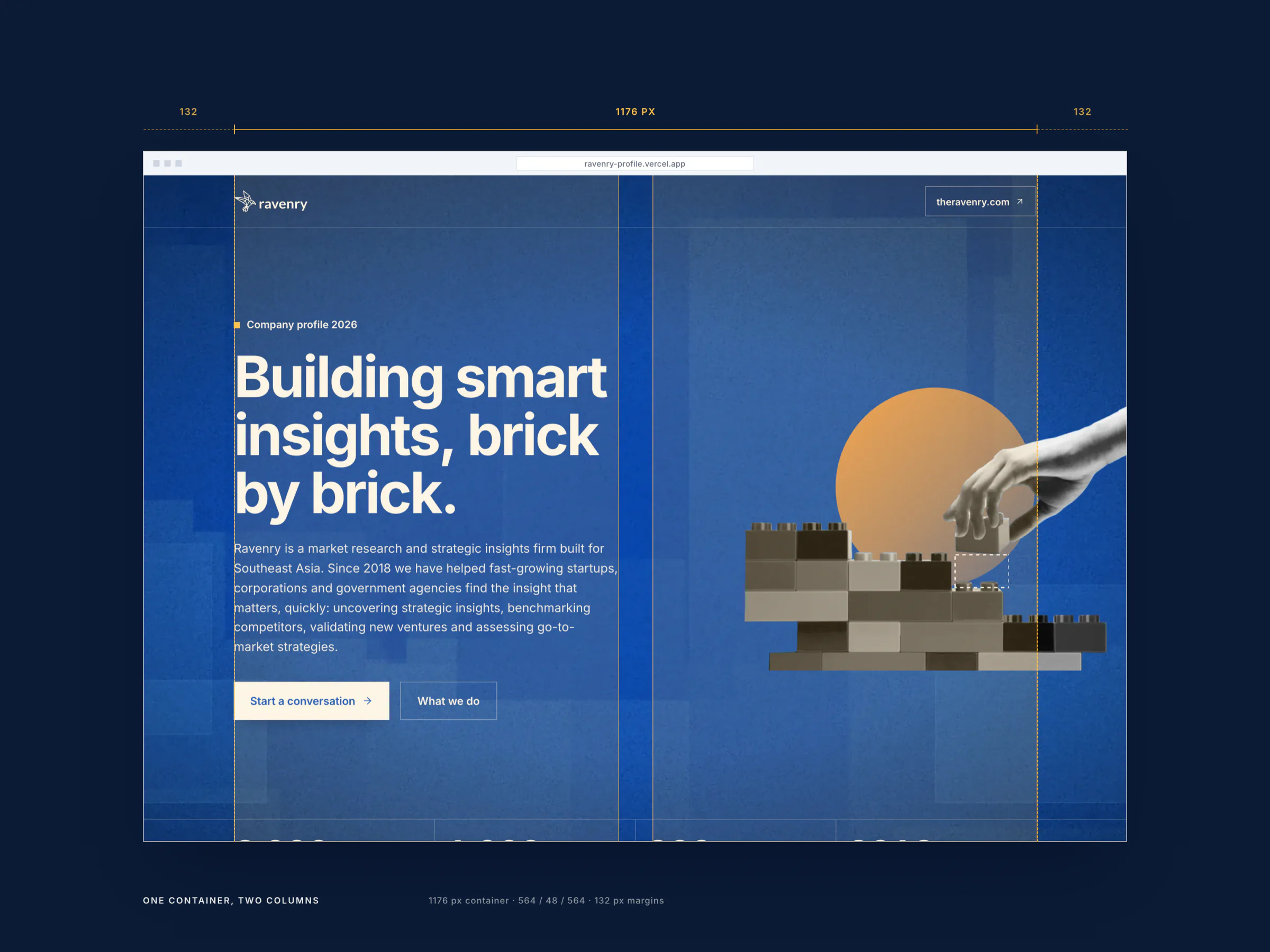
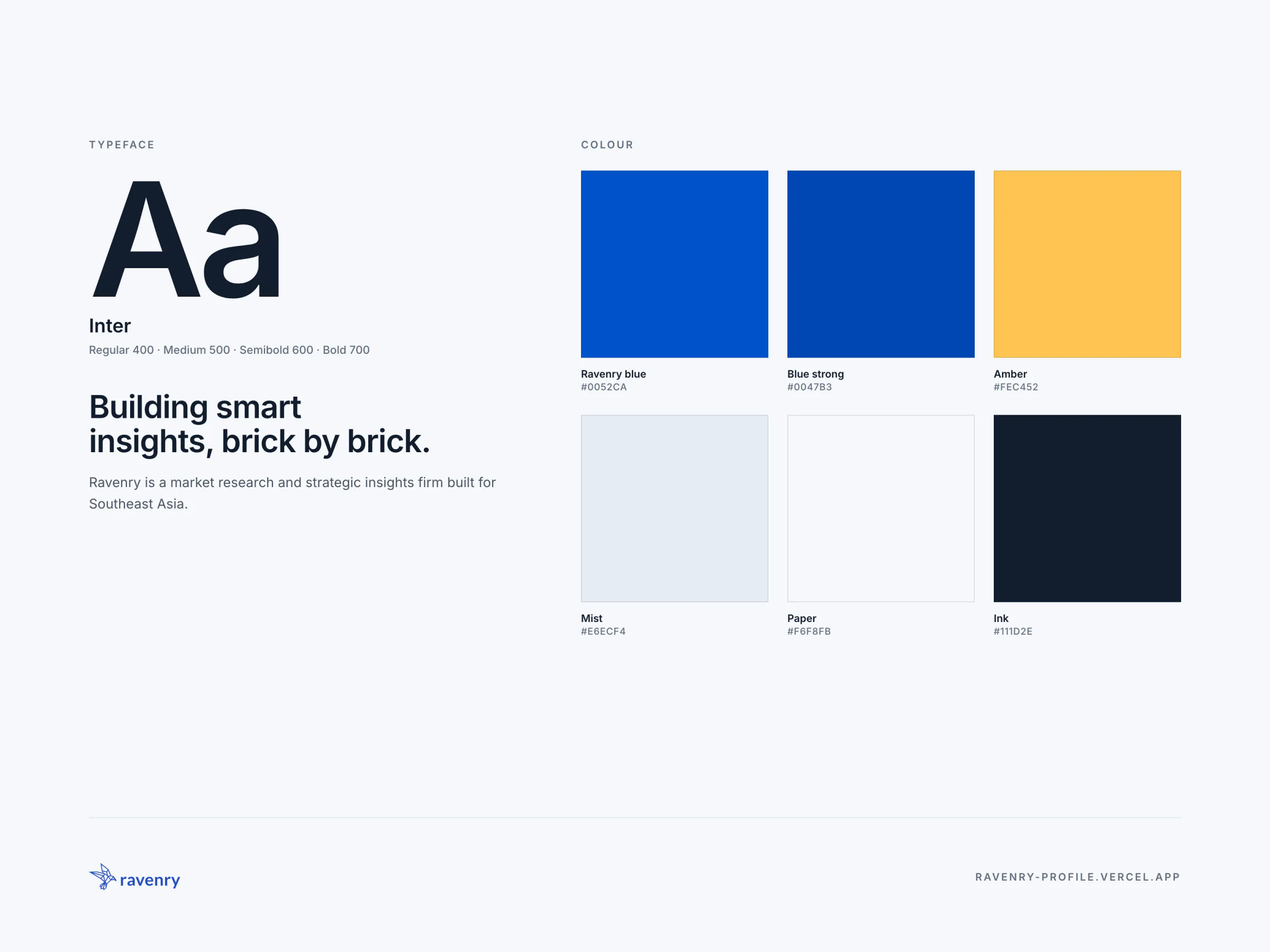
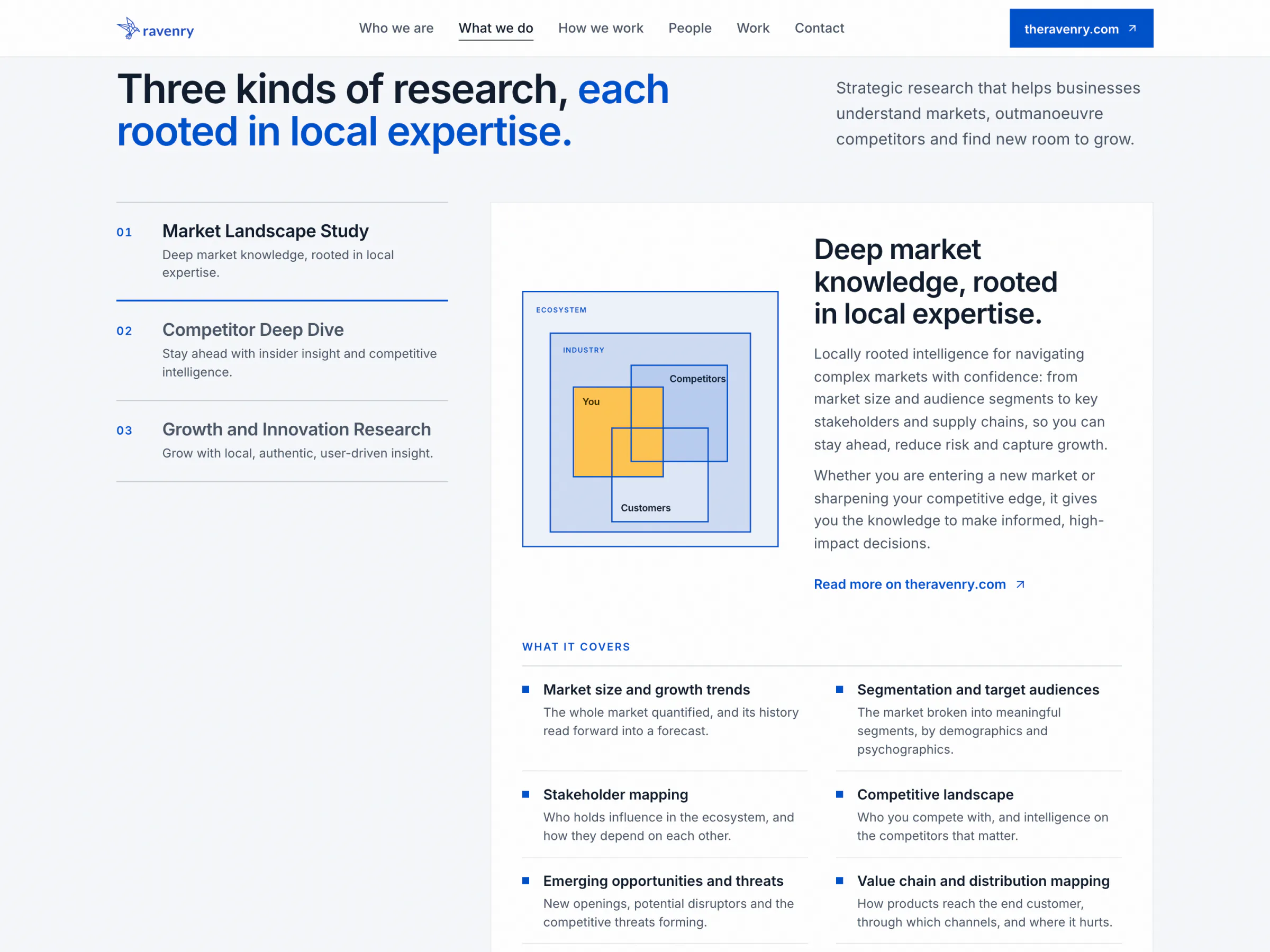
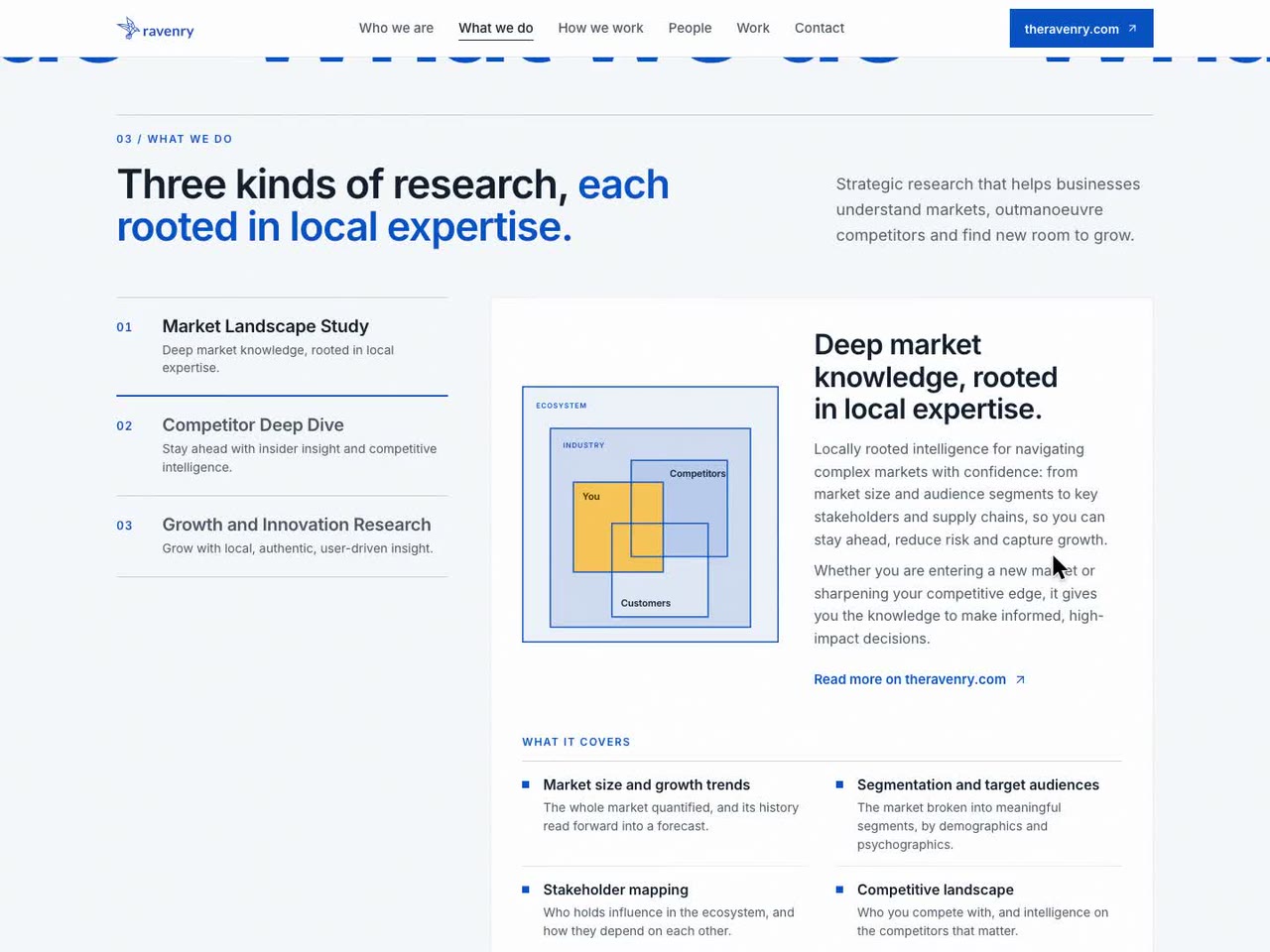
The brief pointed at a studio website as a reference for the web version. The page takes that site's structure rather than its look: numbered section heads, giant running titles, services that bring their detail up beside them, and a filtered grid of work. Everything else is Ravenry's: the plate's blue, gold for what matters, flat objects with a seat shadow, and the cover's own key visual.
Open the Link, Scroll, Read the Work, Get in Touch
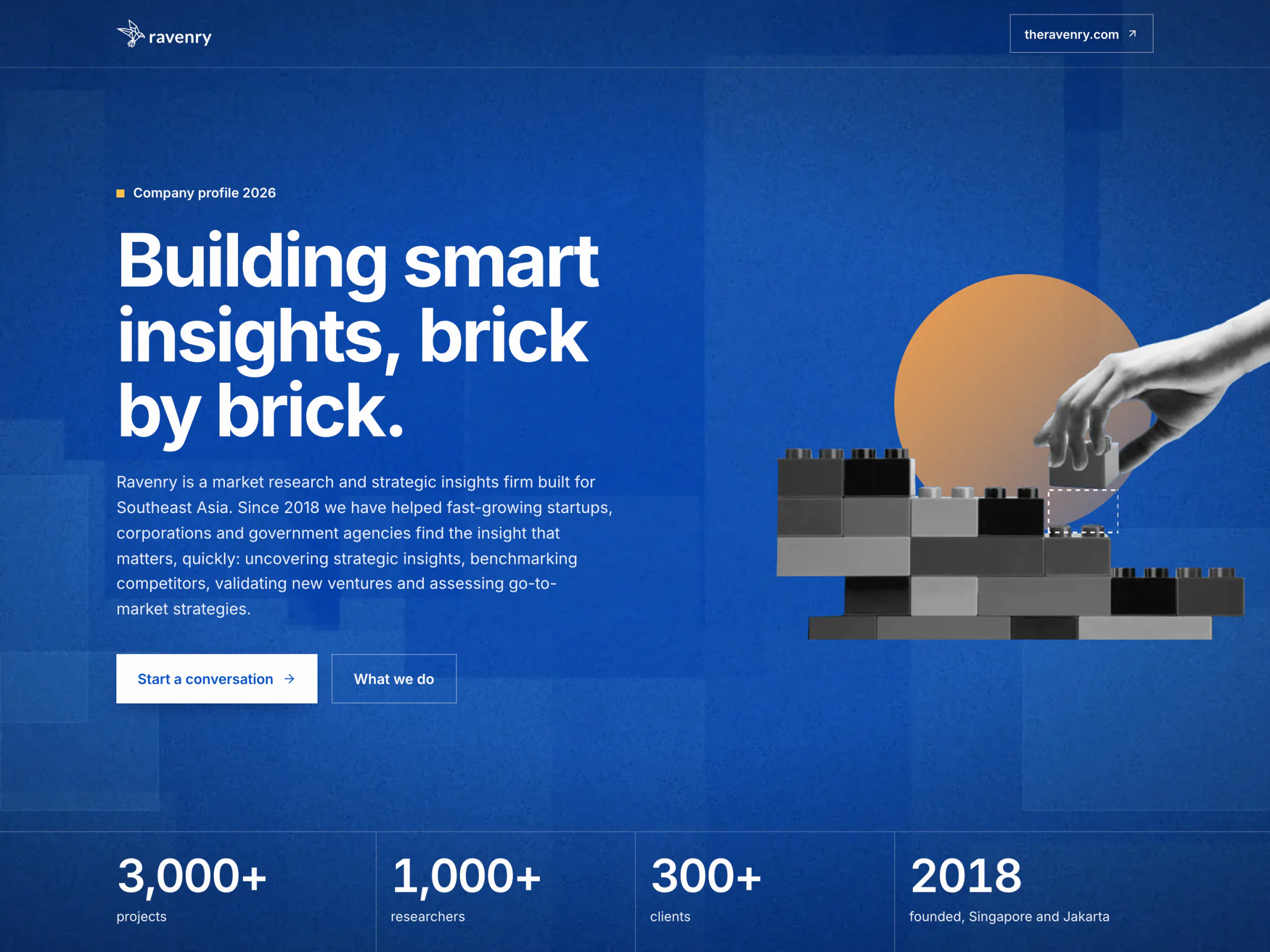
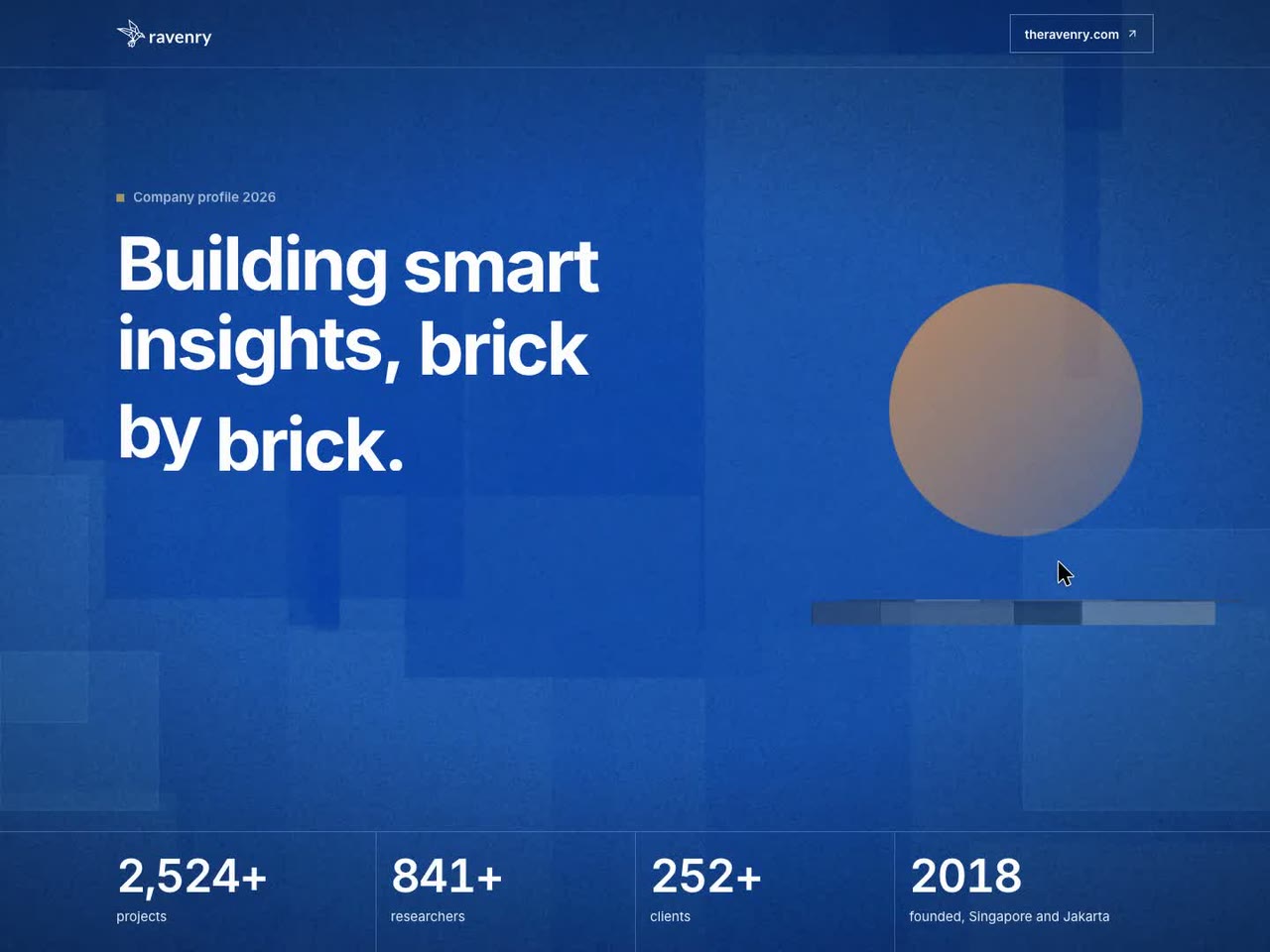
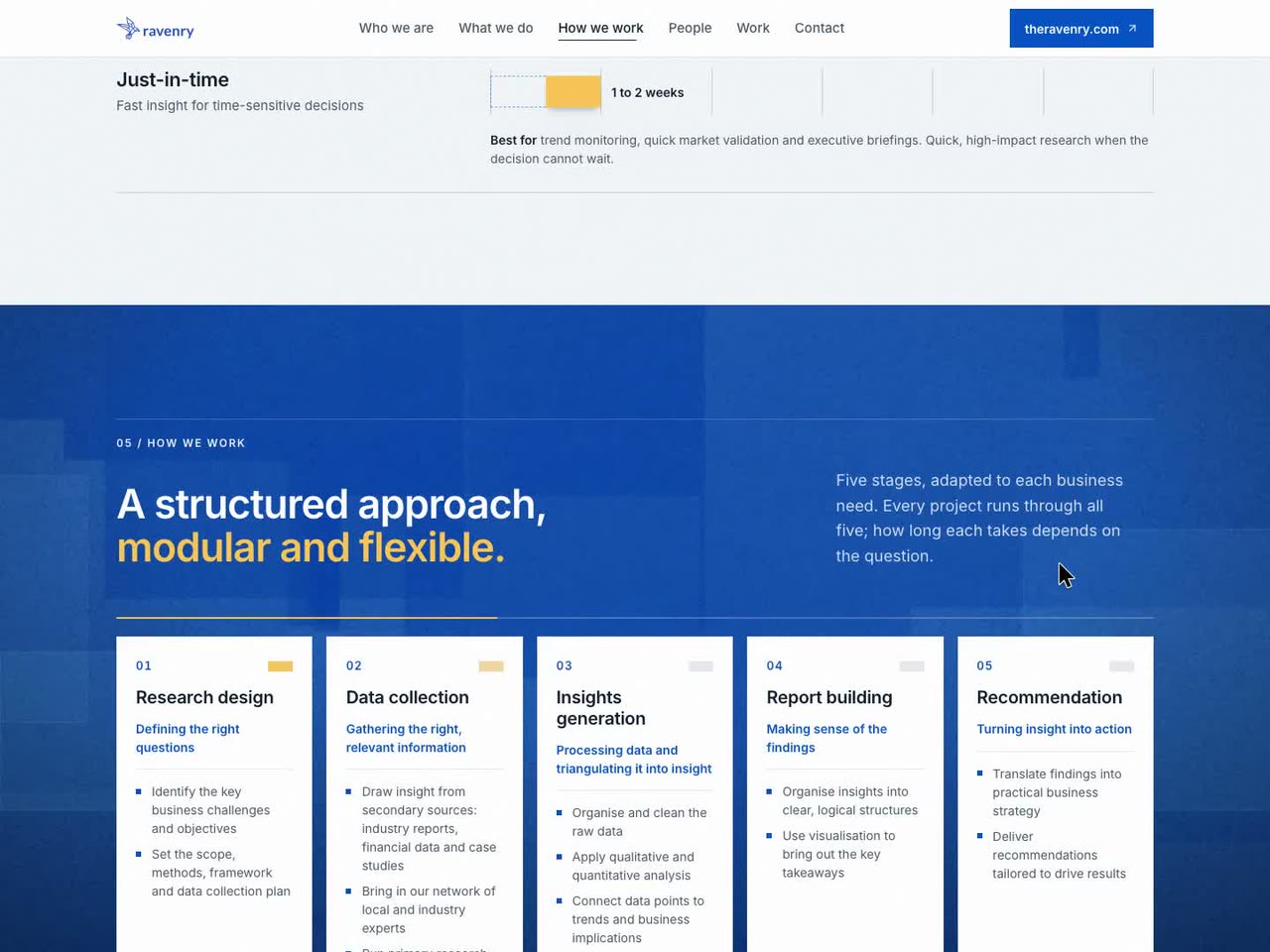
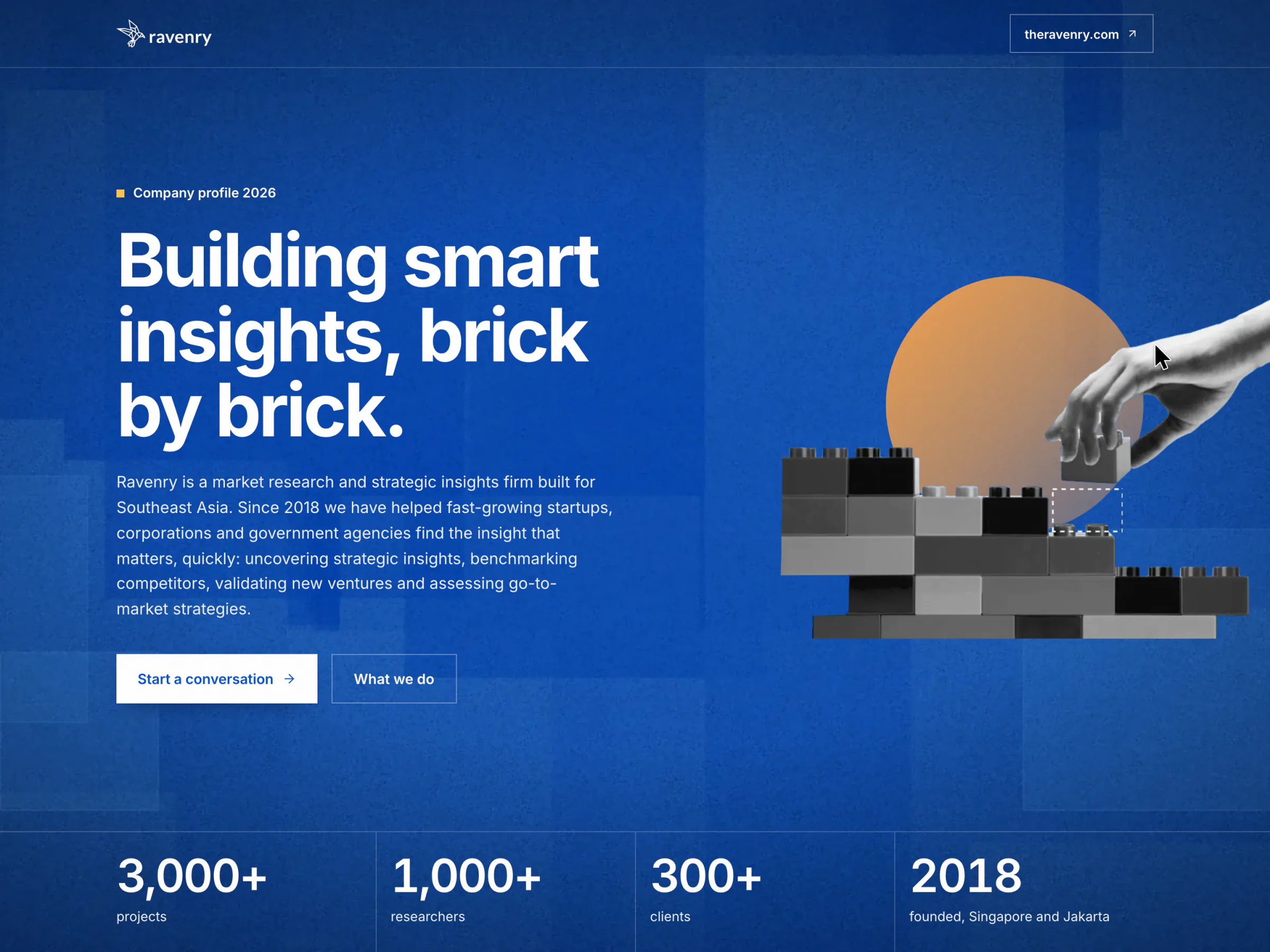
- Open the link. The cover assembles: the sun rises, the stair lands one course at a time, and the hand brings the next brick, while the firm's figures count up beneath it.
- Scroll. The brick lowers into place over the first third of the cover. A white bar slides in with six section links and marks the one being read; on a phone they fold into a Sections menu.
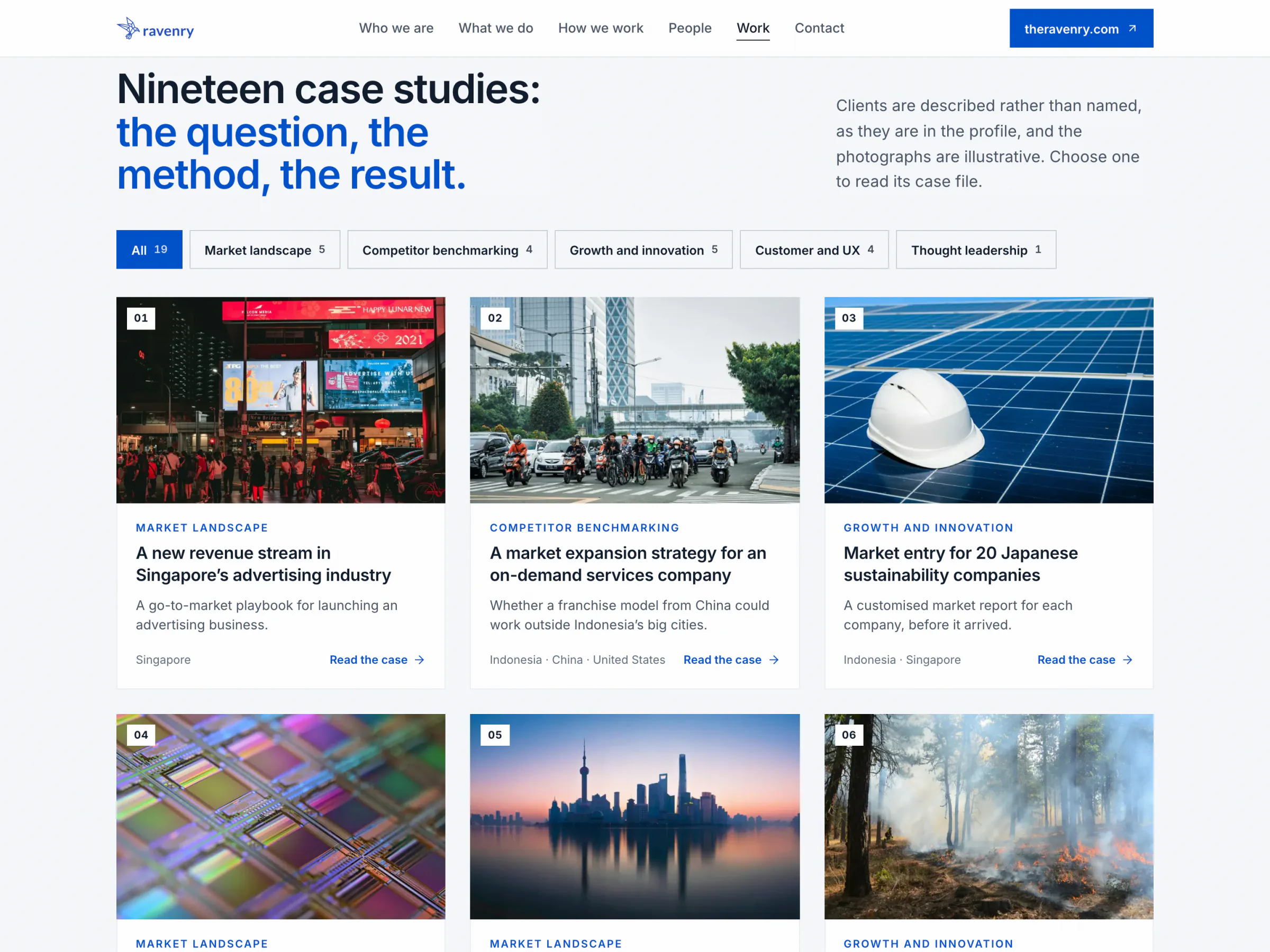
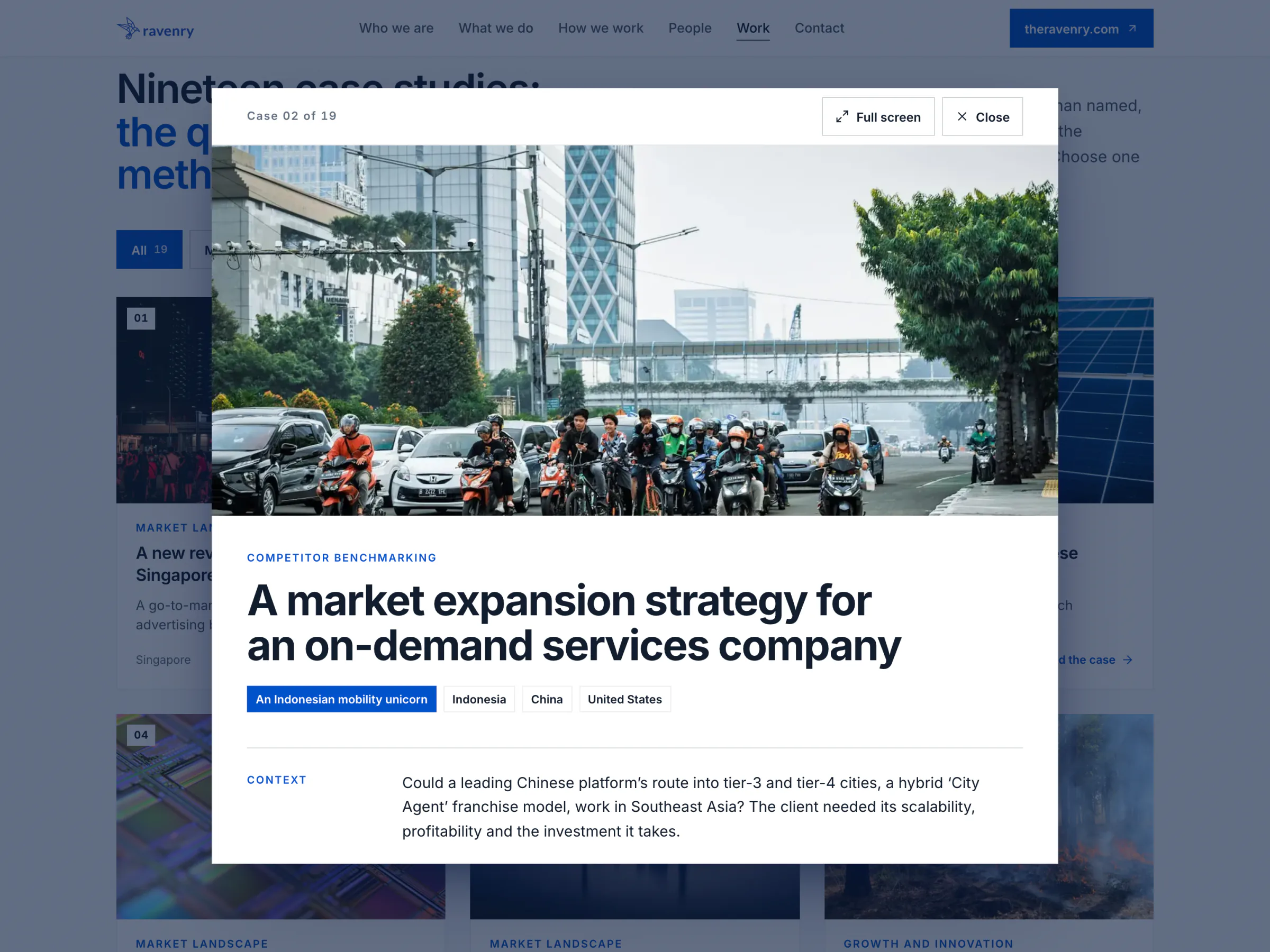
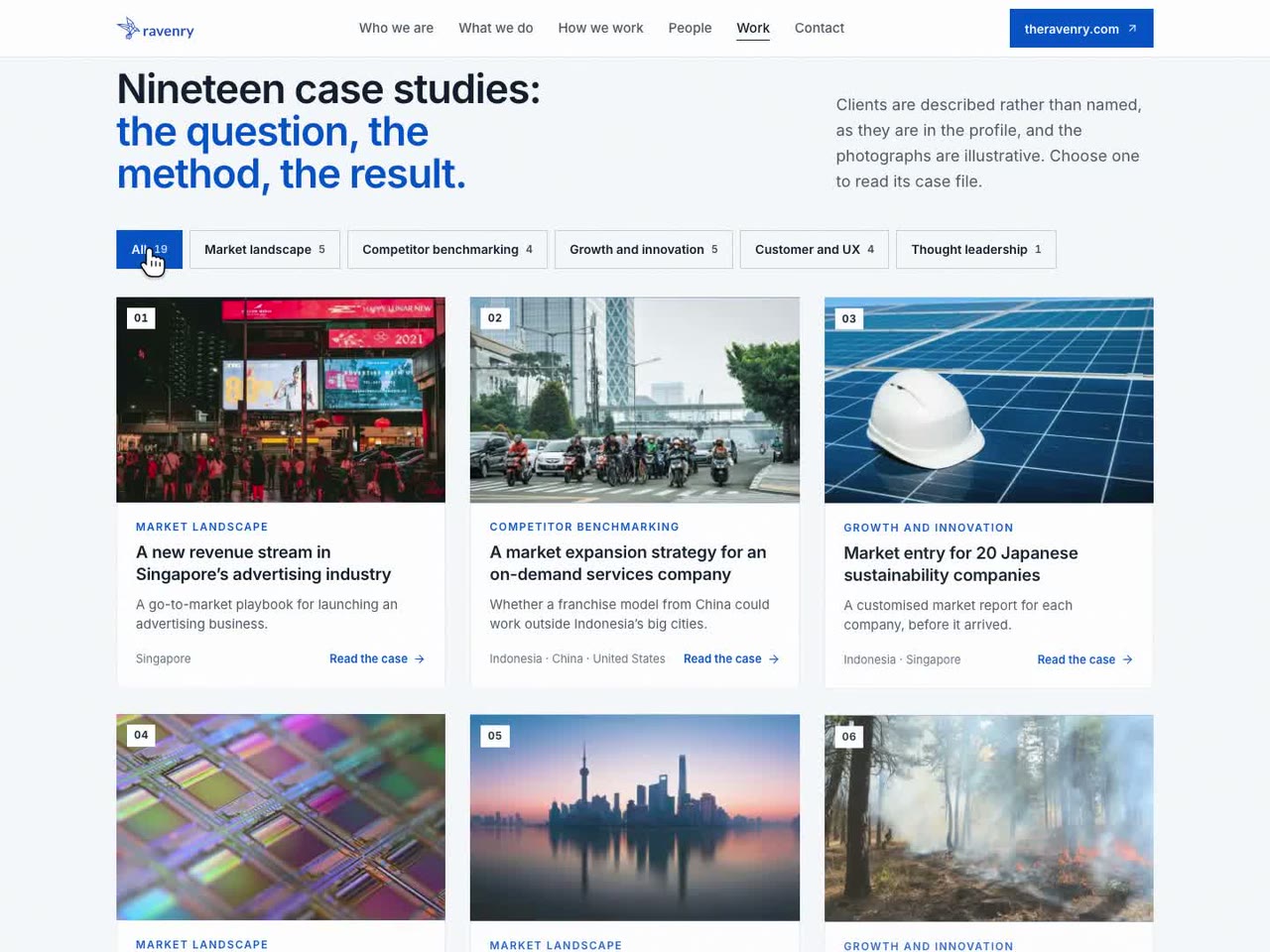
- Read the work. Nineteen case studies, filtered by kind, each opening as a case file with its context, approach and result, and a full-screen mode.
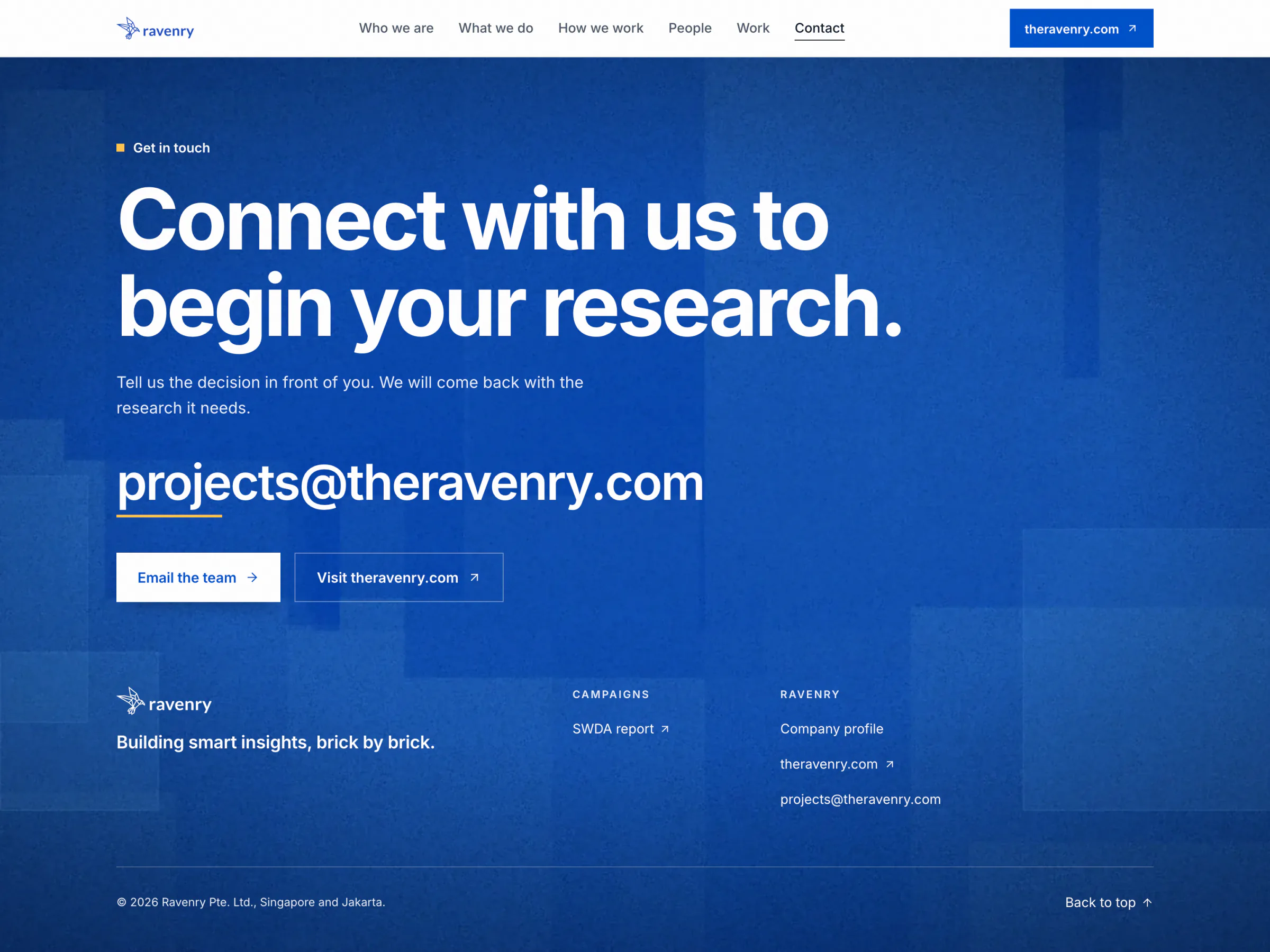
- Get in touch. "Start a conversation" goes straight to Contact: one email address and Ravenry's website.
Logos, Not Names
Three Offerings, One at a Time
Nineteen Case Files
One Deployment, One Host, No Database
The profile is a page on Ravenry's campaigns platform, the same Next.js deployment that serves every campaign. It needs no database: there is no form, contact is an email link, and every word is static content in one typed file, each block tagged with the page of the PDF it came from.

One Branch in the Proxy
The profile's address is one branch in the platform's proxy, not a project of its own. A request for its host is rewritten to the profile's route, /about, with a noindex header. /about itself comes back to /, so the page has one address; admin and documentation paths go to the platform host; anything else is not found. The registry refuses any campaign that claims the same host, and the routing checks ask the host each of these questions. Until the platform's next release, the working branch's preview build serves the address.

Opening a Case File
The card is a button that says it opens a dialog. A click opens a native modal dialog, moves focus to Close and locks the page's scroll. Previous and Next loop within the current filter, full screen is remembered for the next case, and Close, Escape or a click on the scrim returns the page exactly as it was.
Why This Stack
The platform already had a host router, the design system's smooth scroll and its reveal components, so the profile is one route, one content file and one folder of CSS Modules. The modules keep it isolated from the campaigns: it imports nothing from them, and when it gained its own host, the live SWDA page's nine pixel captures stayed at 0 px.
Three Heroes in One Day
The profile was asked for, built and published on 23 September 2026, in four commits that changed it:
- First build (morning): the PDF's content as a page, with a hero made of the process stages as a wall of bricks, clients as names in a marquee, drawn covers and initials for the team.
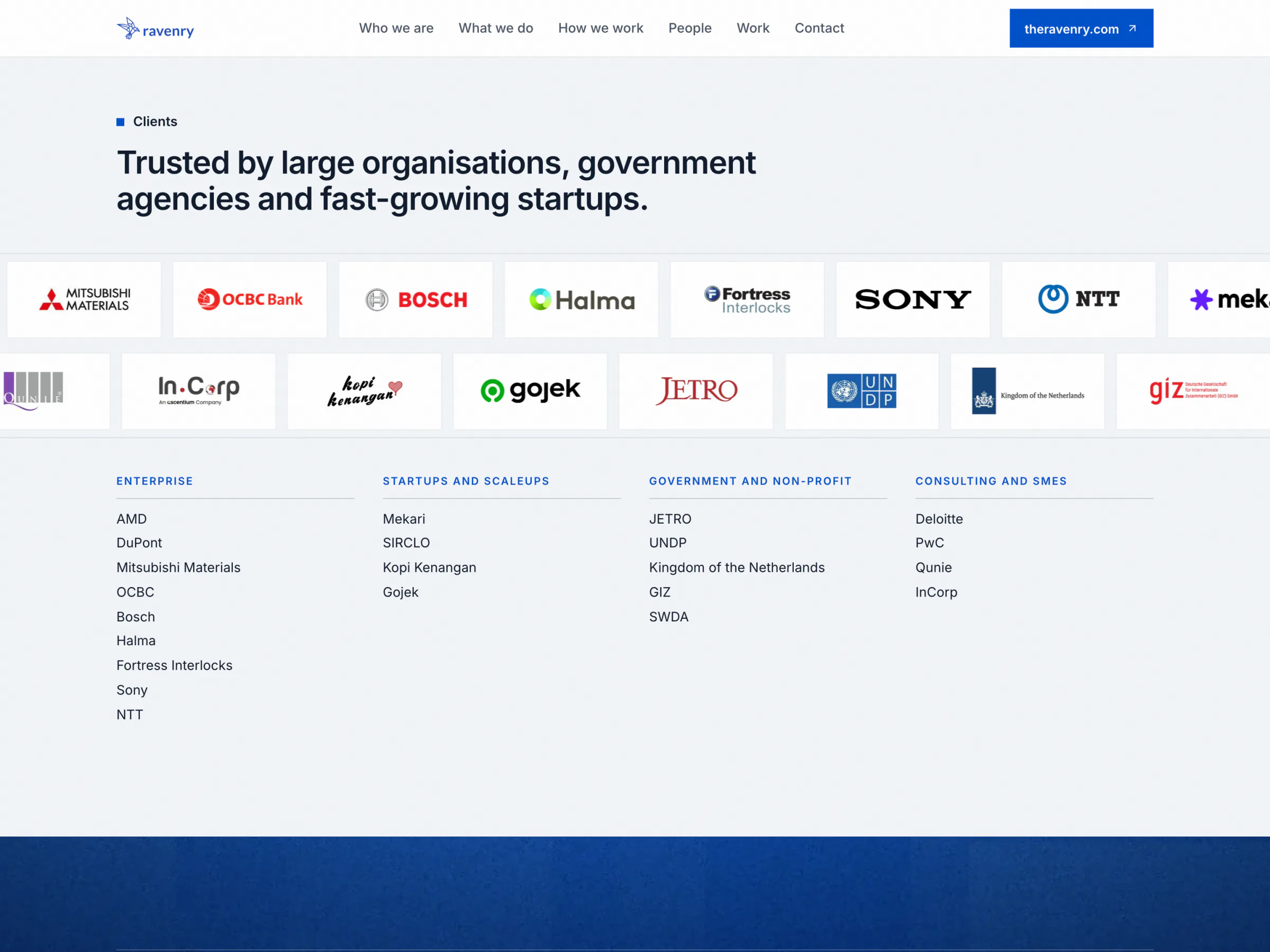
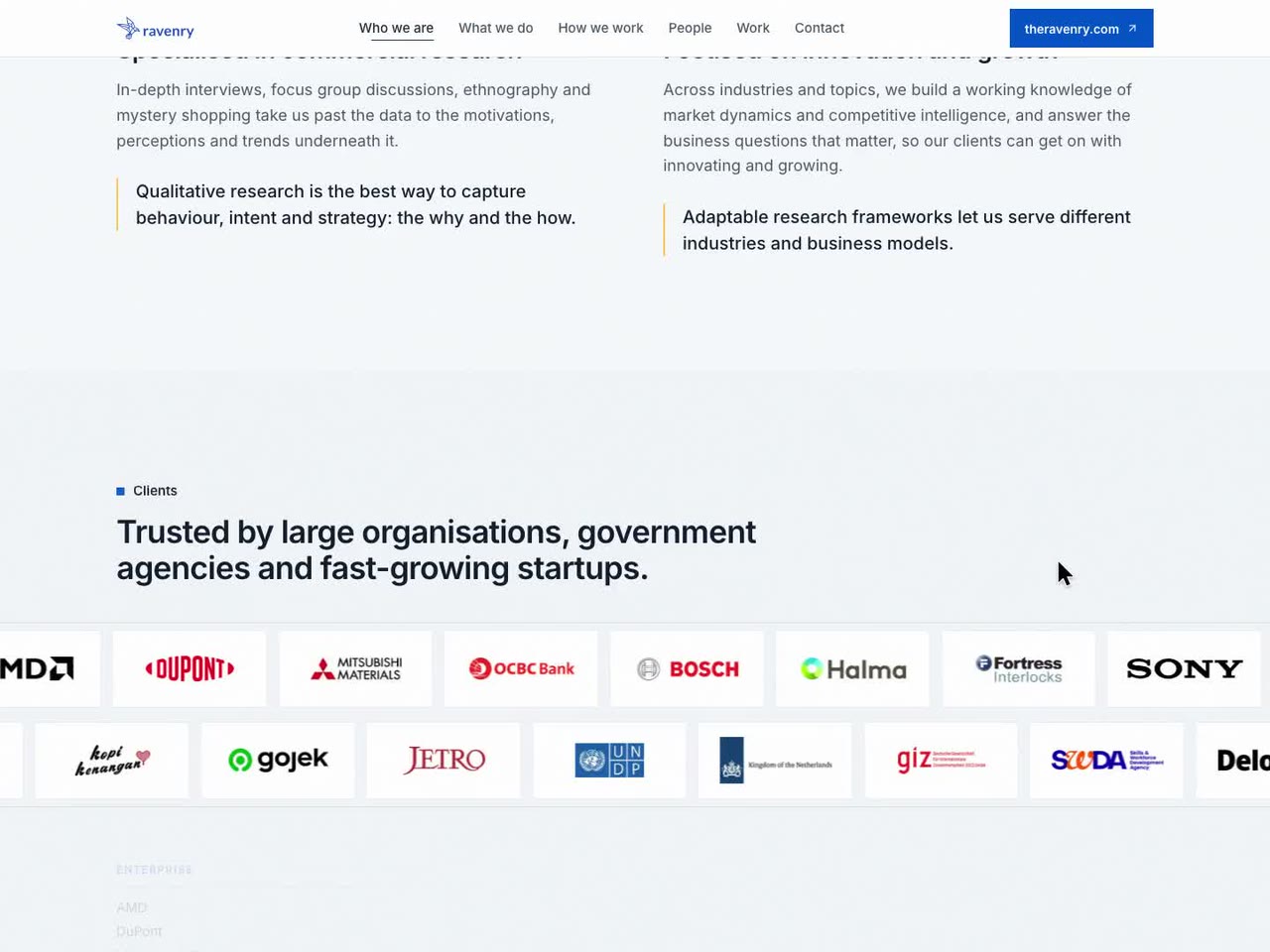
- Review (midday): a hero of its own instead of a wall that echoed Rigor Room's bricks, real logos instead of names, real photographs, and case files as a popup with full screen as an extra button.
- Portraits and links: the last core-team portrait, and the campaign index's three offerings linking into the matching tab.
- Its own address (evening): the network's portraits, the profile on its own host, and the third hero, the cover's sun, stair and hand.
Claude Code proposed the design, wrote the code and the web copy, extracted the logos with their transparency, chose the illustrative photographs and checked each build. The review notes are kept beside the code, one row per note with what changed.
Real Assets Over Stand-Ins
The first build set the clients in type, drew the covers and showed initials for the team. The page now uses the profile's own logo files, a photograph for each case and the team's portraits. The cost: nineteen stock photographs that are not Ravenry's, each labelled illustrative and credited, and one candidate photograph passed over because a delivery rider's jacket would have named a client the case keeps anonymous.
Its Own Address, the Same Deployment
Instead of a second project, the profile's host is one branch in the platform's proxy. The registry refuses any campaign that tries to claim the same host, and the routing checks gained seven checks for it. The cost: the profile publishes from the working branch's preview builds until the platform's next release reaches production.
Its Own Hero, and the Sun as the One Circle
The first hero repeated Rigor Room's bricks, and the second, a mosaic of city photographs, did not feel like Ravenry. The third is the cover's key visual, with the sun as the single exception to Ravenry's rule of no circles. The cost was two heroes discarded in a day, and the profile's circular diagrams were redrawn in squares.
Content as Typed Data
All the content lives in one typed file, every block tagged with its PDF page, so the web version can always be traced back to the source. The cost: updating a line is a code change and a deploy, not an edit in a CMS.
Every Effect Has a Still Version
- The key visual: a drawn sun, the stair cut into five bands along its seams, and the hand, moved by the pointer at three depths. A marching outline marks the brick's place until it seats.
- Headlines rise word by word, section rules draw in, and cards show selection handles under the pointer.
- The logo wall is sized by area, so wordmarks and emblems weigh the same.
- Reduced motion: every effect has a finished still state, with the brick held, the wall still, every stage lit and every reveal already complete. Without scripts, everything shows.
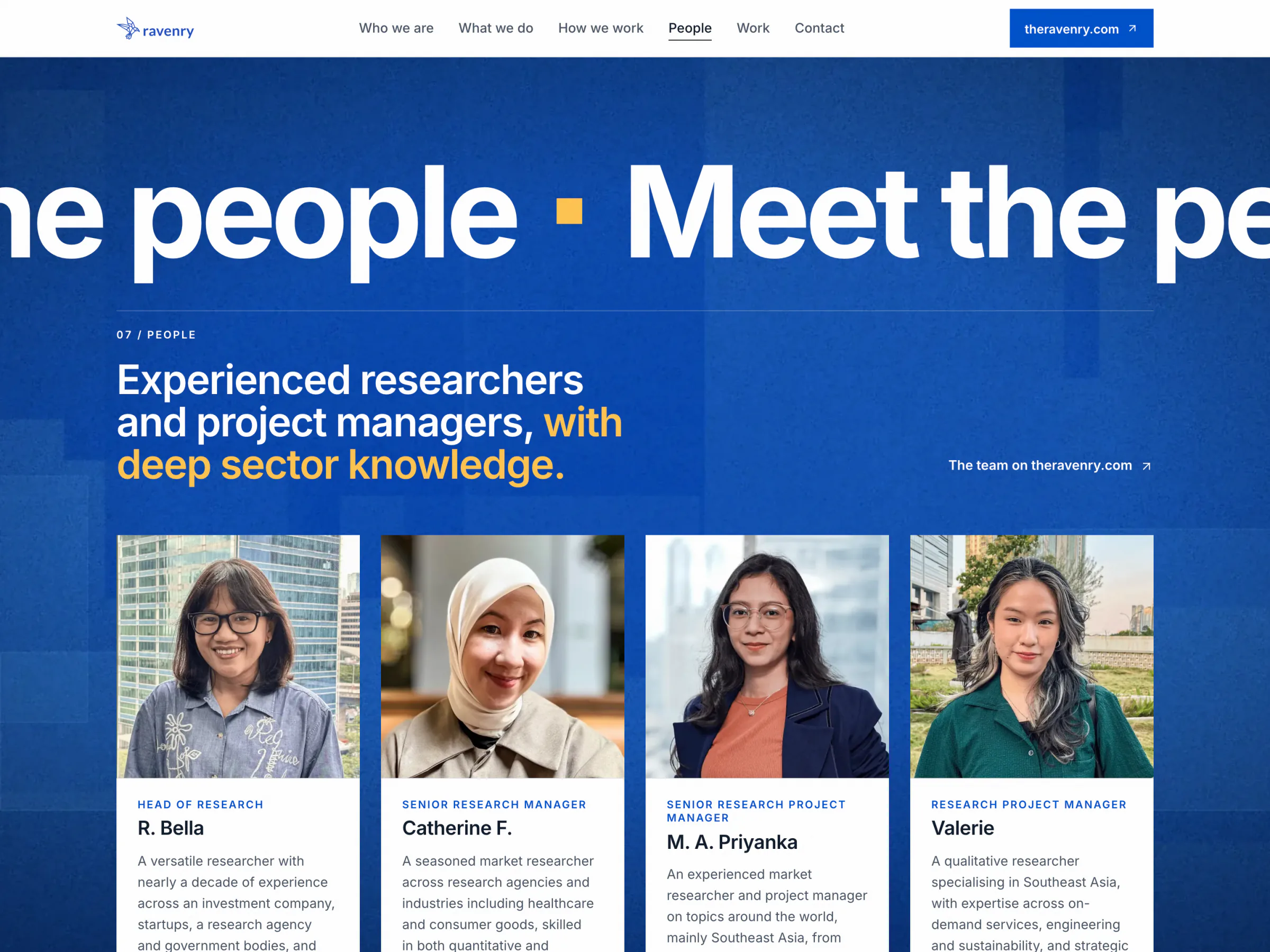
- Accessibility: a native dialog with focus going in and coming back; ARIA tabs with arrow keys, Home and End; filters that announce their count; the bar marks the section being read; new-tab links say so; a skip link; no contrast failures on the composited pixels, and no sideways scroll from 320 to 1920 px.
The Profile on a Roll-Up
The profile also went to print as two roll-up banners, from the same design work as the page: "Your Trusted Partner in Market Research", Ravenry's figures, what it does and the organisations that trust it. One of them carries the cover's sun, bricks and hand.


Published in a Day, Waiting for Its Review
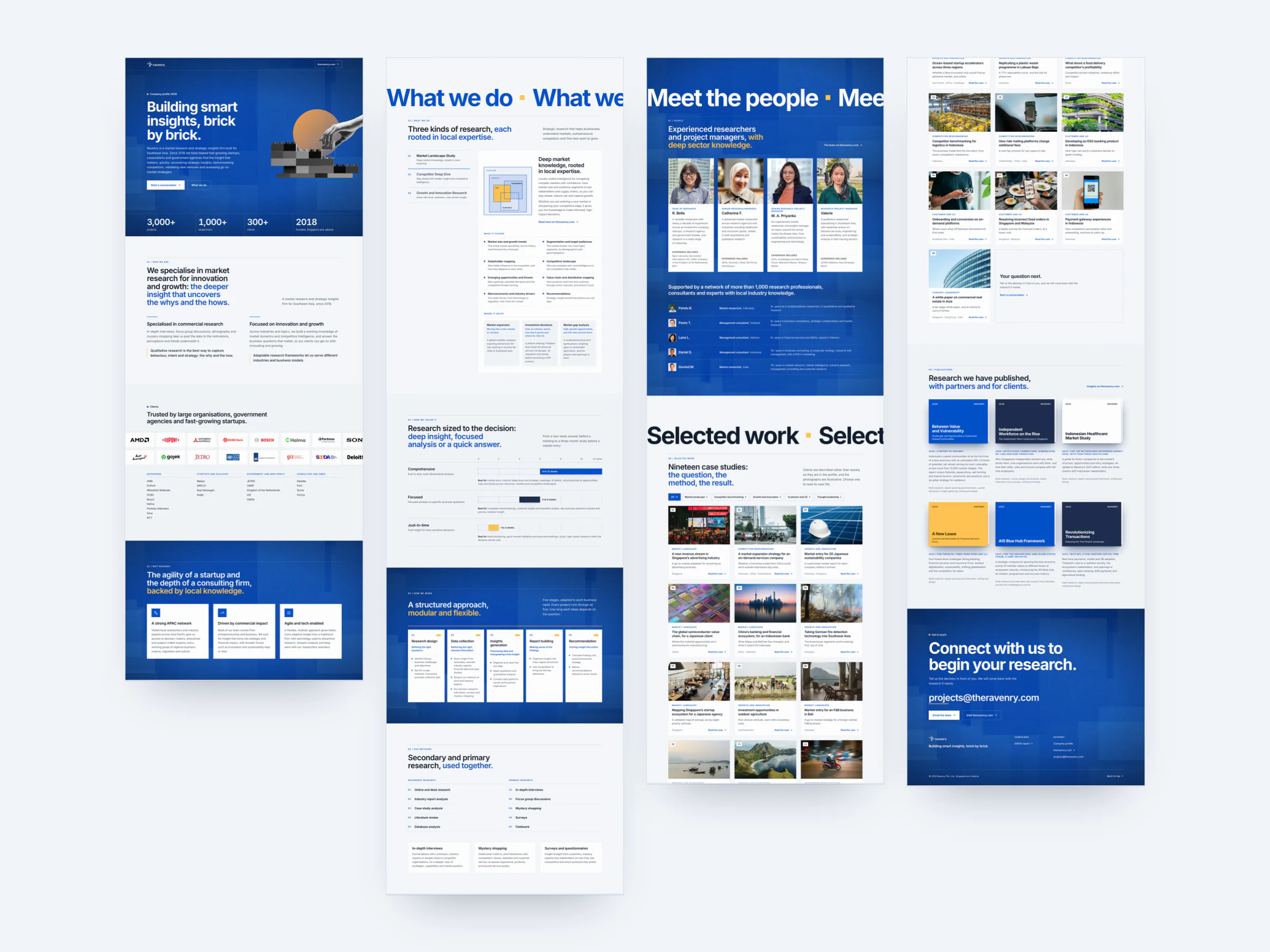
The profile went from a request in the morning to its own public address in the evening: twelve sections, nineteen case files, twenty-two logos and nine portraits. It stays out of search engines and still waits for its design review. Nothing in it has changed since that day.
The lesson was speed through constraints. The platform already had routing, motion, a design system and checks, so a 44-page document became a page in one day, and review notes could be applied within hours. Each note also became a written rule for the next page.
Known limits: the figures and copy follow the 2026 PDF and need a deploy to change; the photographs are illustrative, not Ravenry's own; and the profile's final address depends on the platform's release.
Gallery