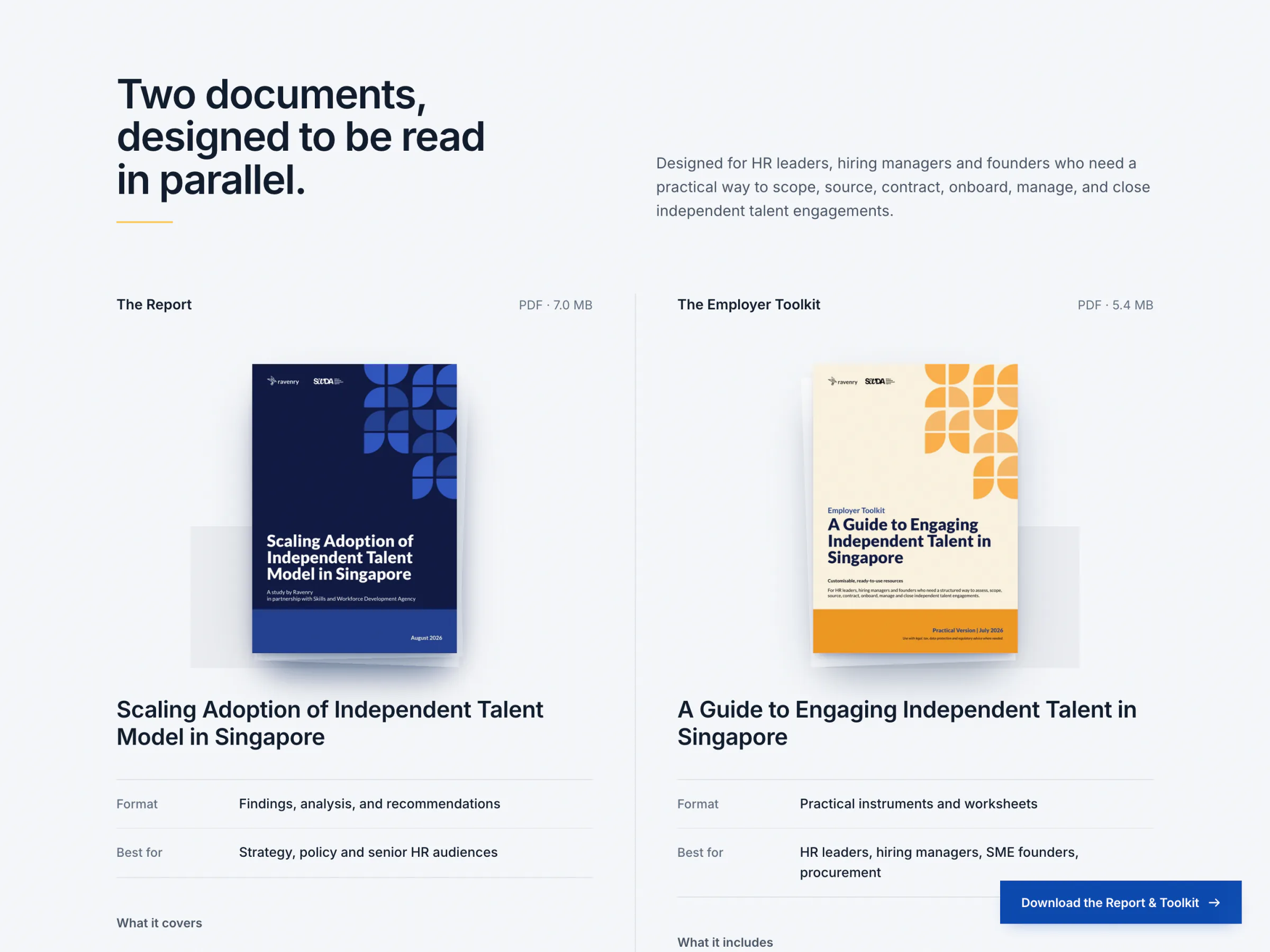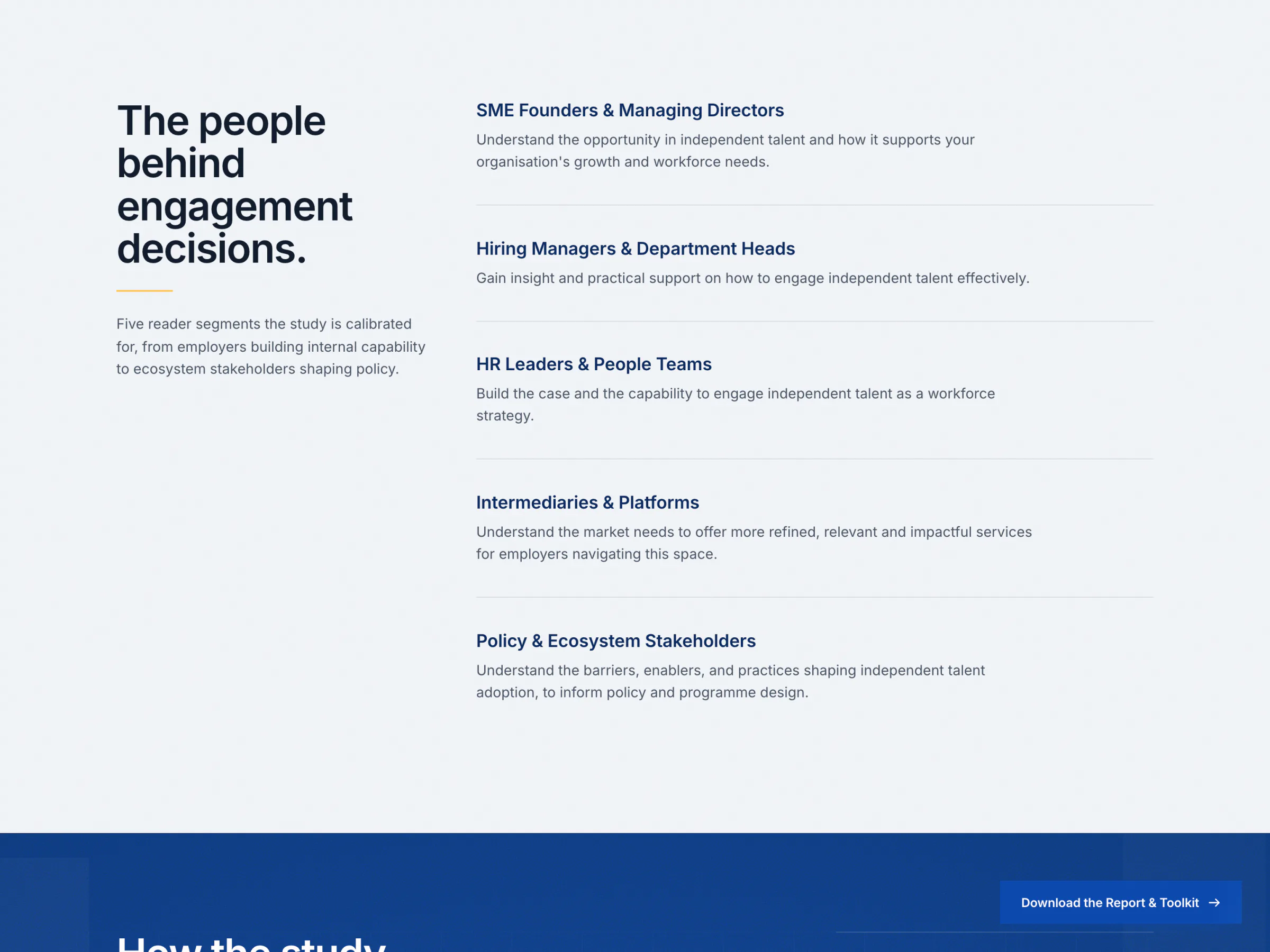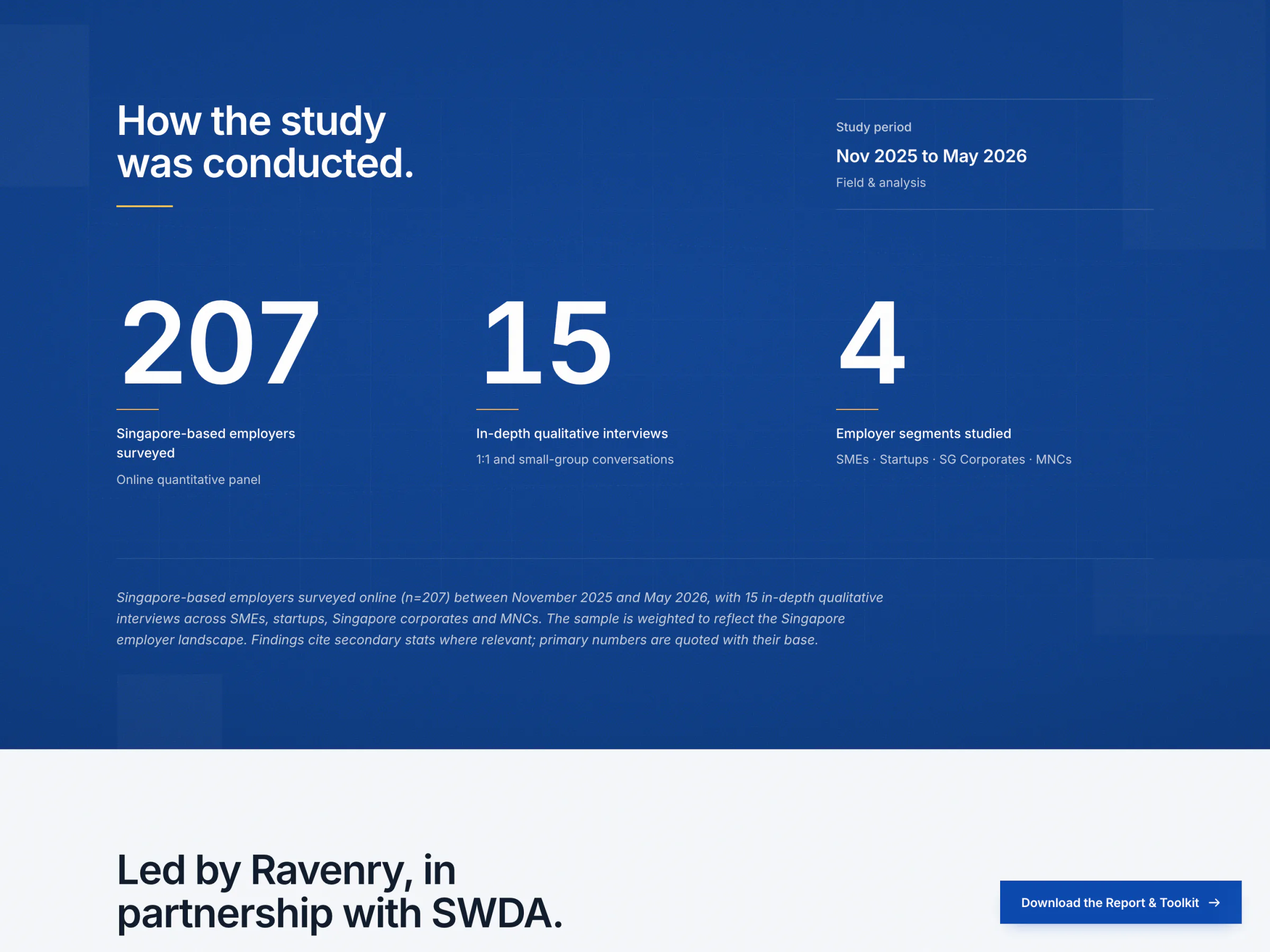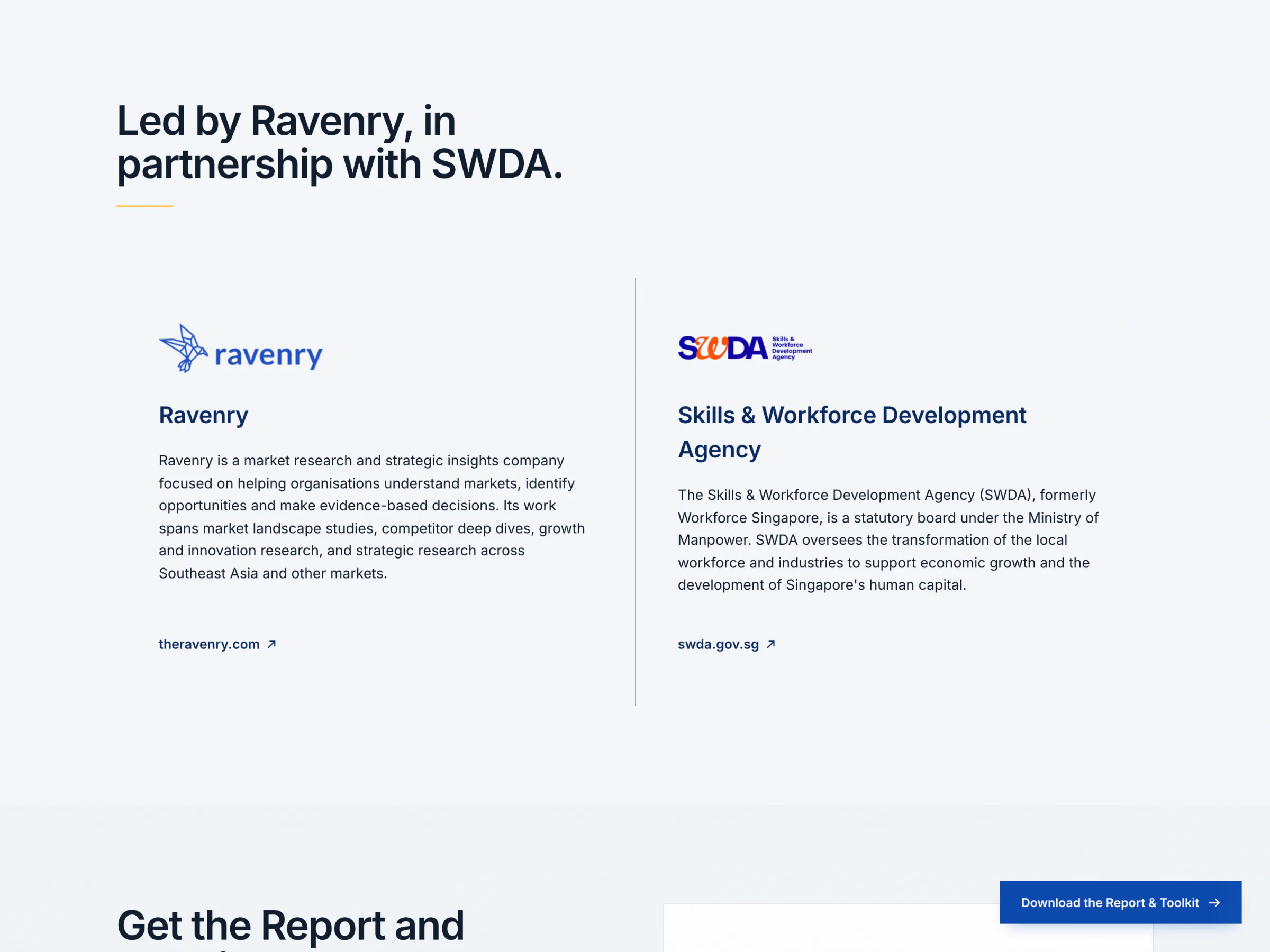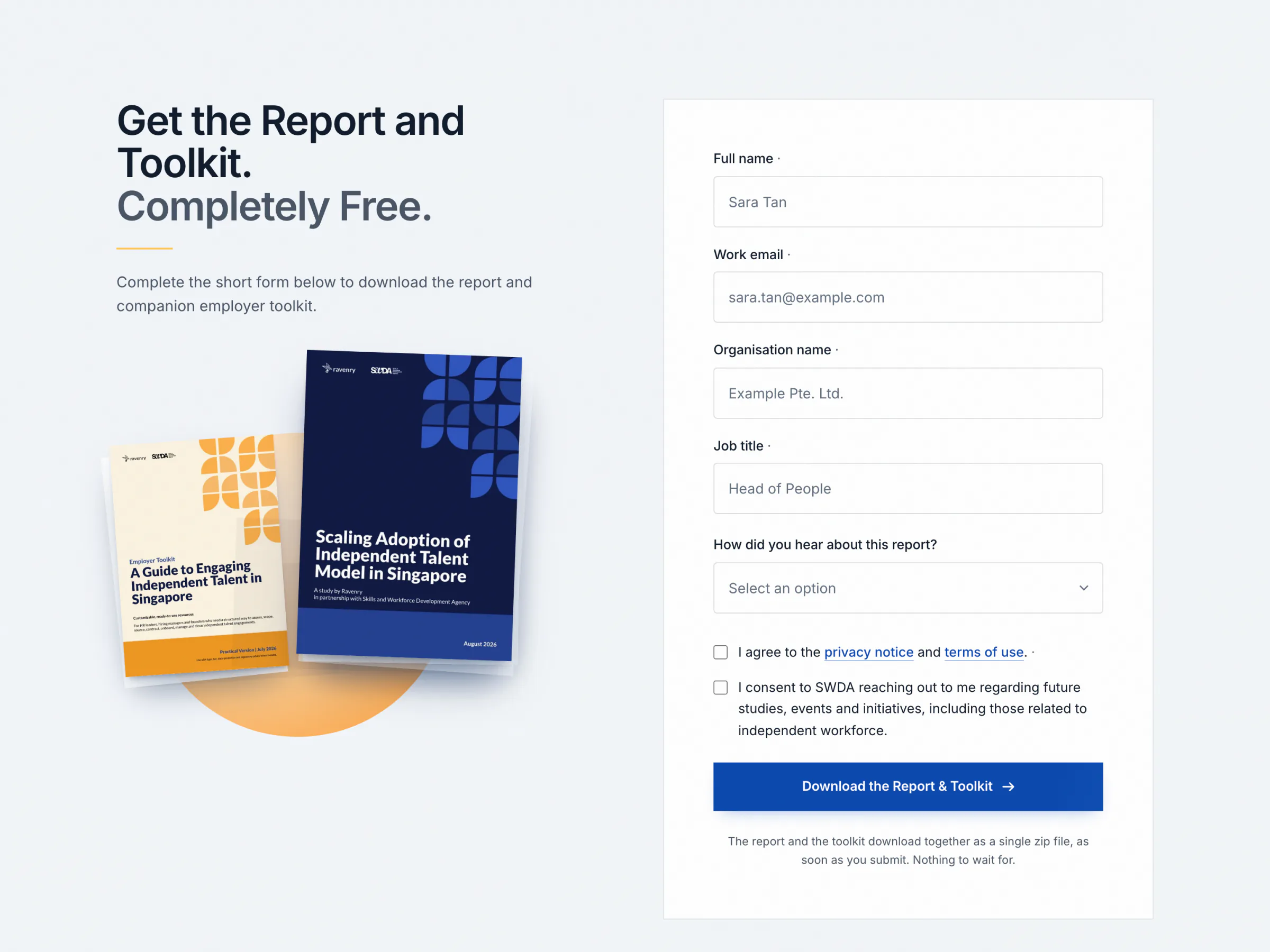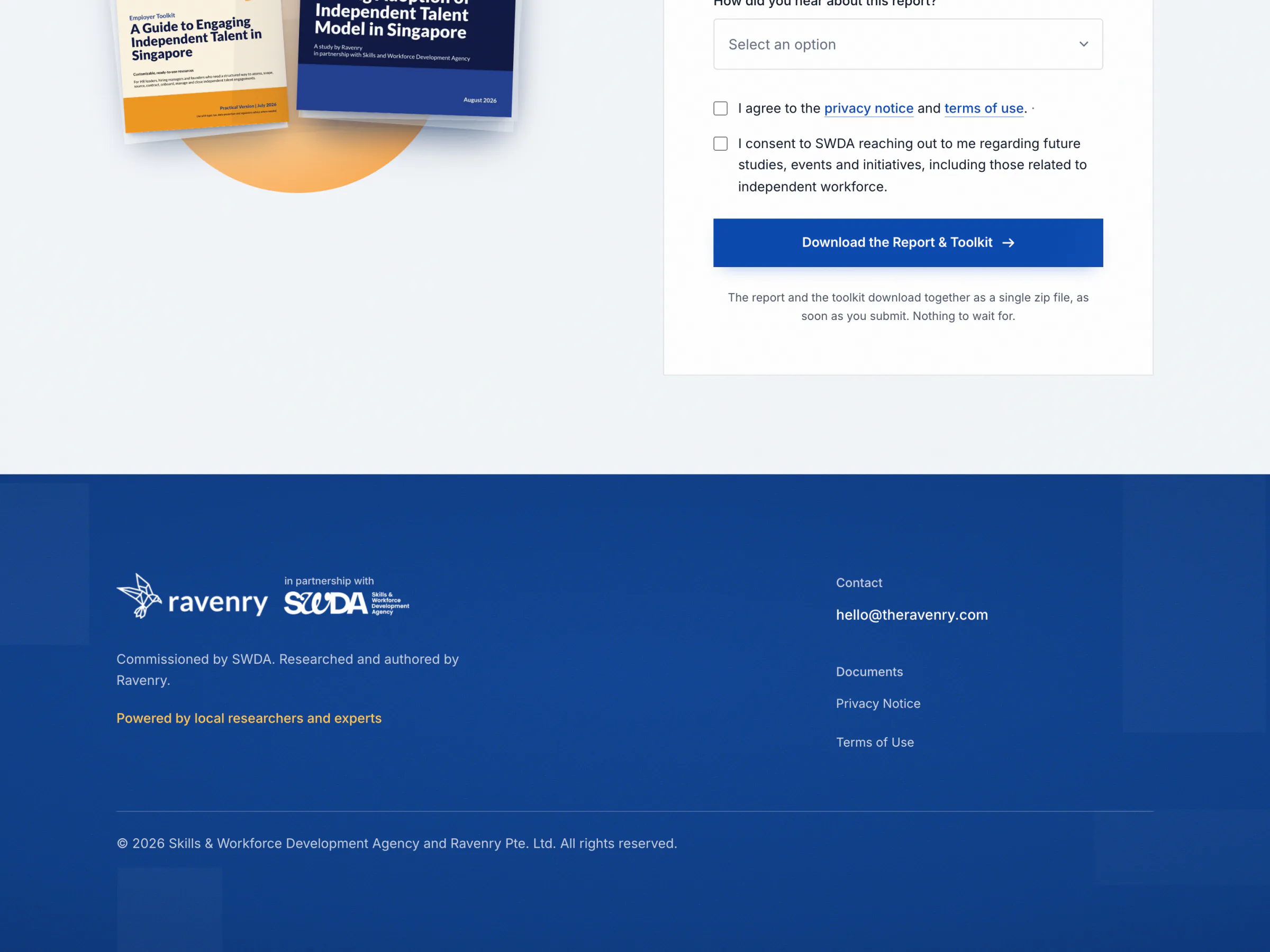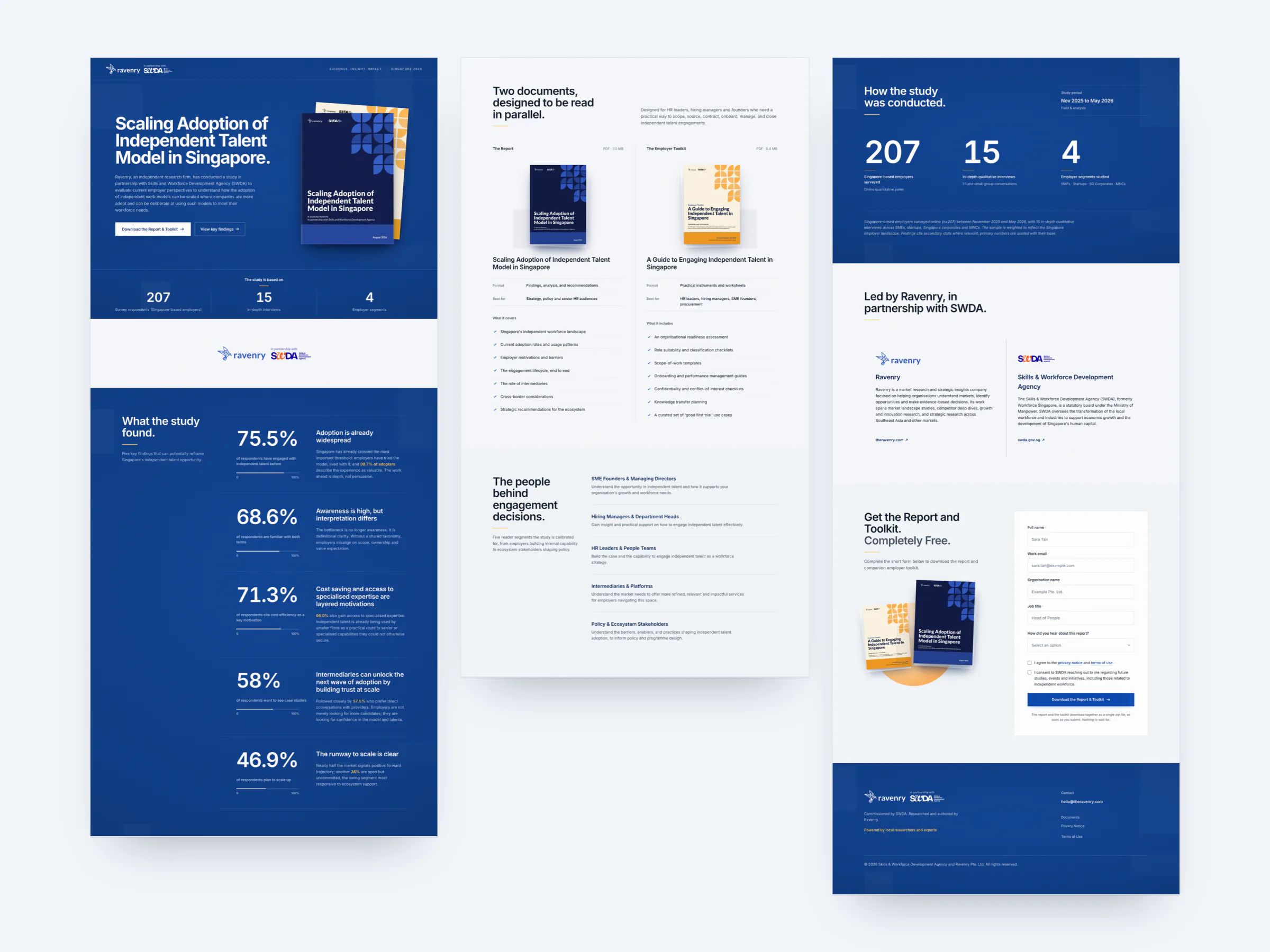
The launch page for a Ravenry and SWDA study, handing over the report and its toolkit in one form.
Live and indexed since 29 August 2026; lead capture checked end to end on production.
Project facts
- Role
- Product design and direction. Built with AI coding sessions under my direction.
- Timeline
- 14 days of work, 21 May to 2 September 2026
- Built with
- Claude Code
- Playwright
- Pillow
- Stack
- Next.js 16
- React 19
- TypeScript
- Tailwind CSS 4
- GSAP
- Lenis
- Zod
- Supabase
- Resend
- Vercel
A Serious Study, and a Form Worth Filling
Ravenry, an independent research firm in Southeast Asia, studied how Singapore's employers adopt and scale independent talent, with the Skills and Workforce Development Agency (SWDA, formerly Workforce Singapore). The study came with a companion, an Employer Toolkit for putting it into practice.
The page had two jobs that pull against each other: communicate the substance and credibility of the work, and turn qualified visitors into named downloaders through a single form. The brief asked for a tone closer to a government white-paper microsite than a marketing campaign: authoritative, British spelling, evidence first, neutral on policy. The readers are time-poor HR, policy and business leaders who judge in seconds, in five groups: SME founders, hiring managers, HR and people teams, intermediaries and platforms, and policy stakeholders.
Gating a co-published government study raises its own stakes. A pre-ticked consent is not freely given under Singapore's PDPA, and making the download depend on agreeing to be contacted would be a dark pattern. And the brief's original plan, emailing a link, failed in practice: the shared folder it pointed at was never public, so readers would have hit a sign-in wall.
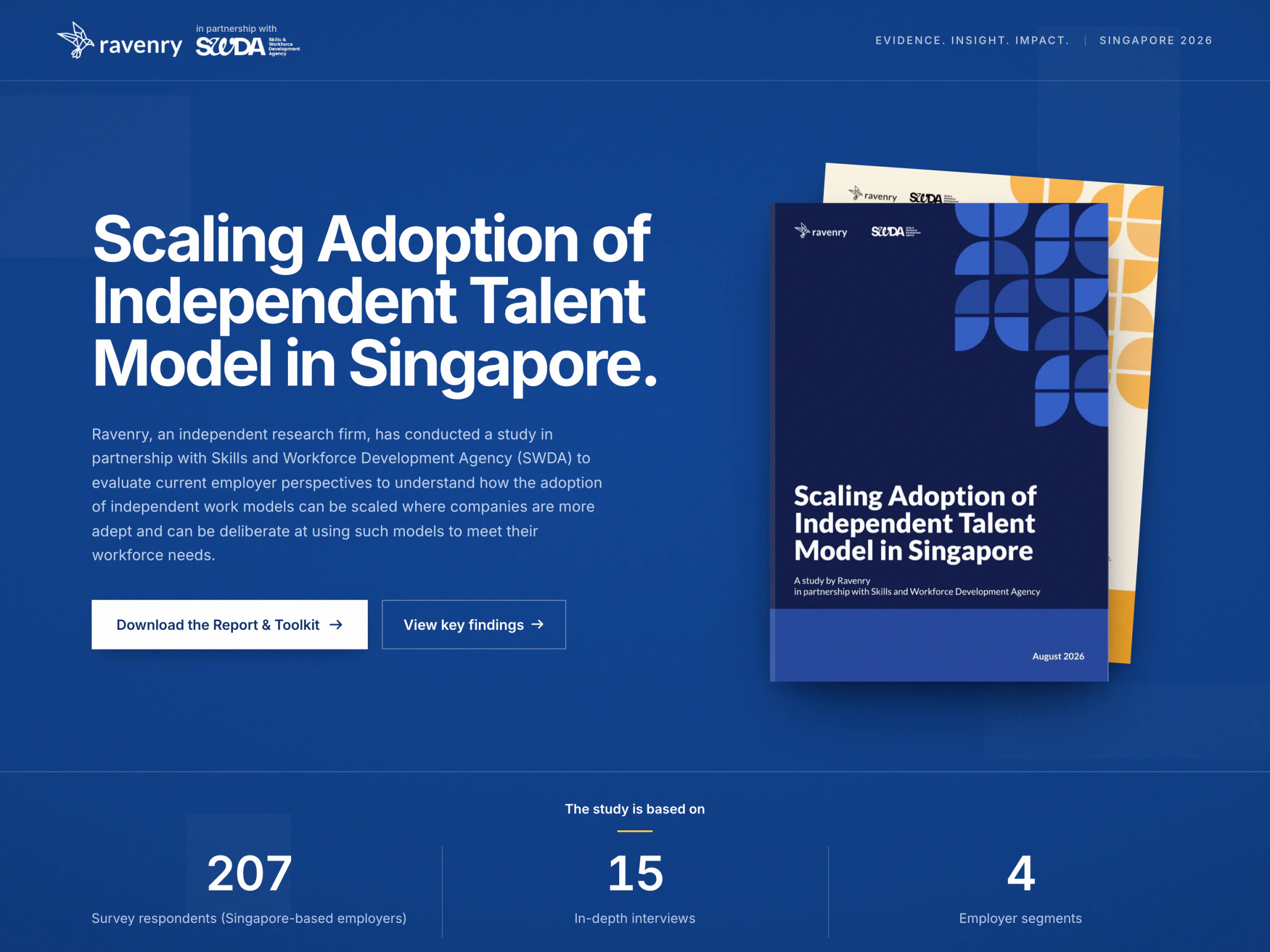
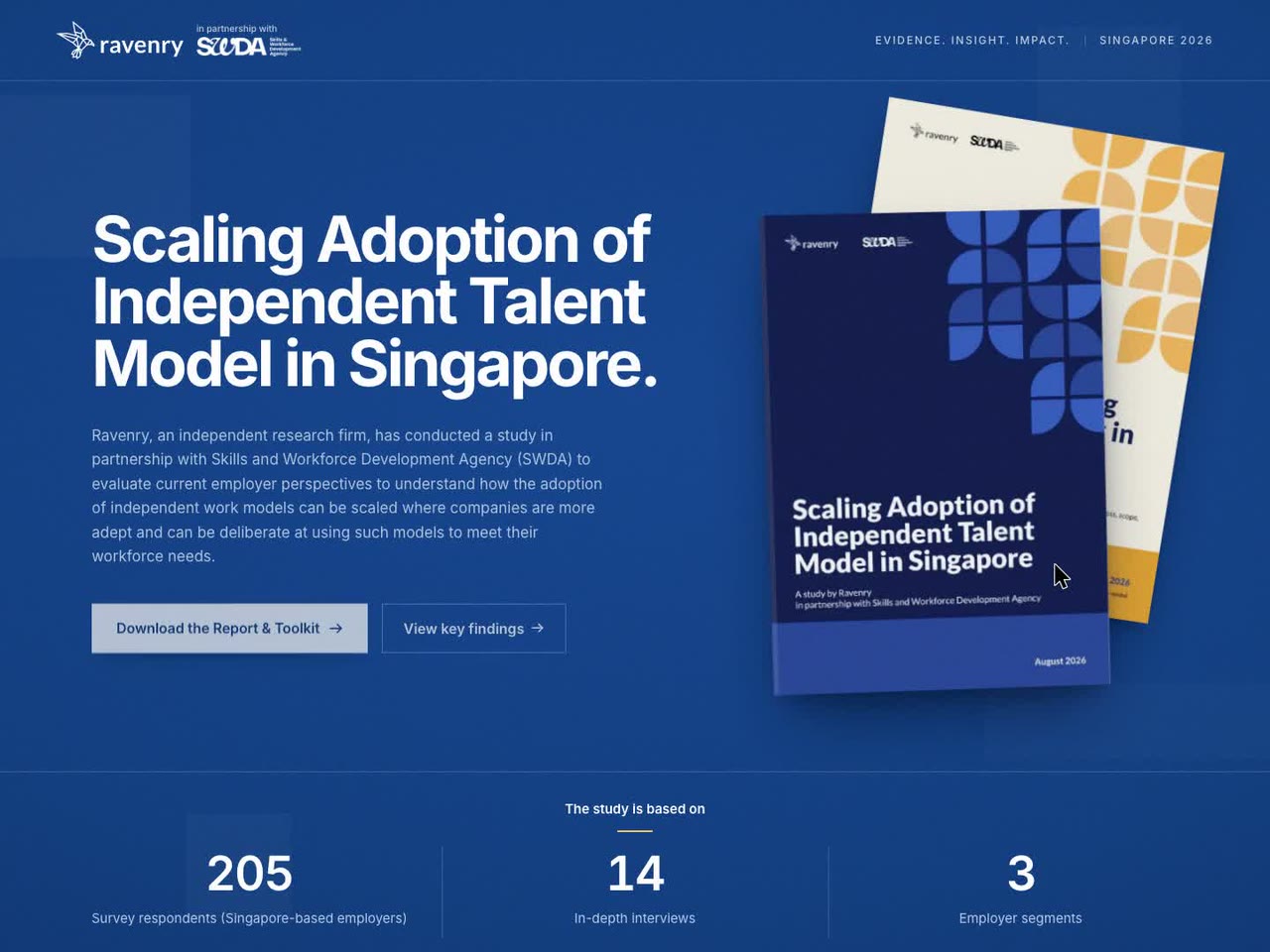
Five Sections in, One Form Out
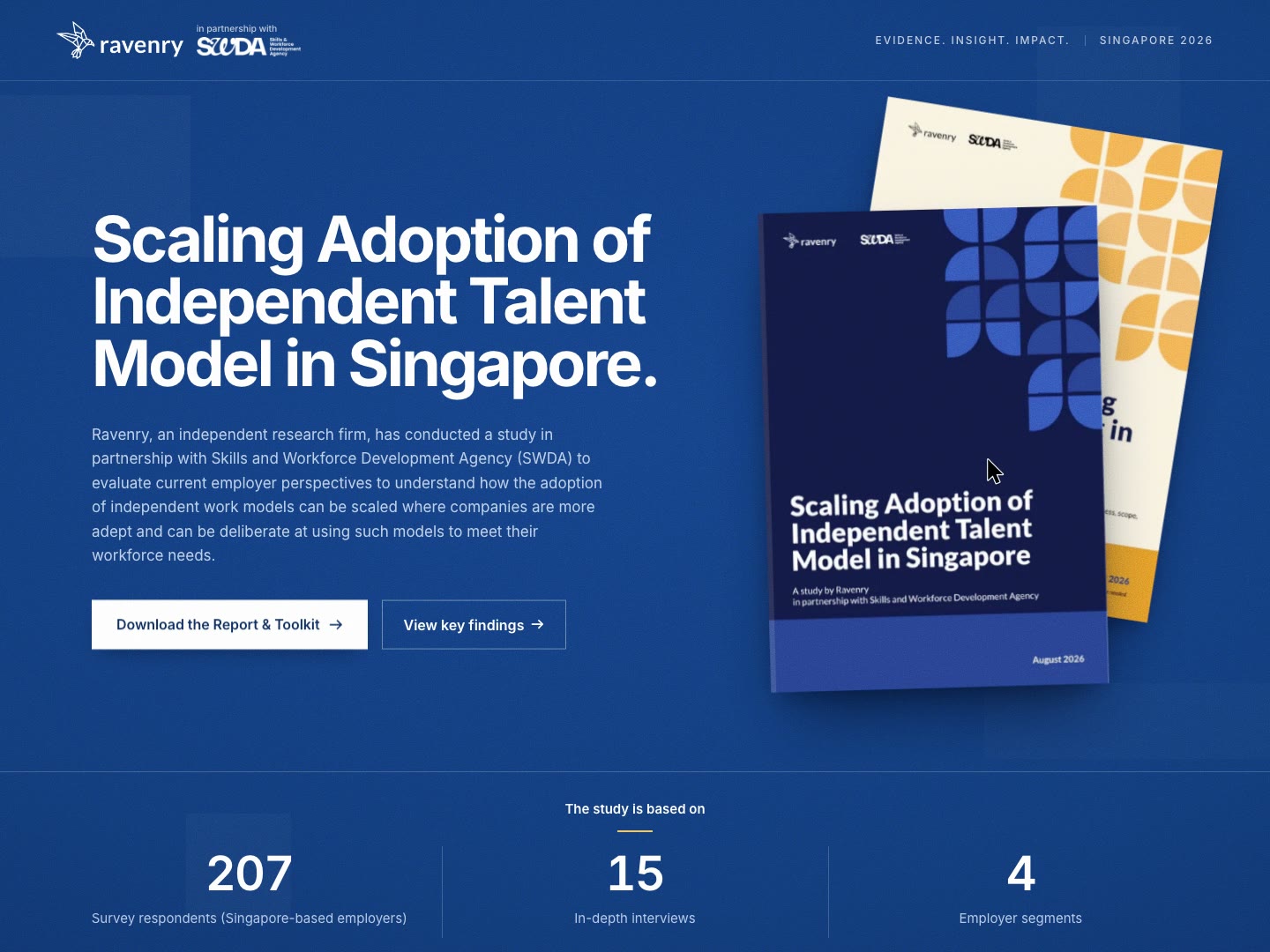
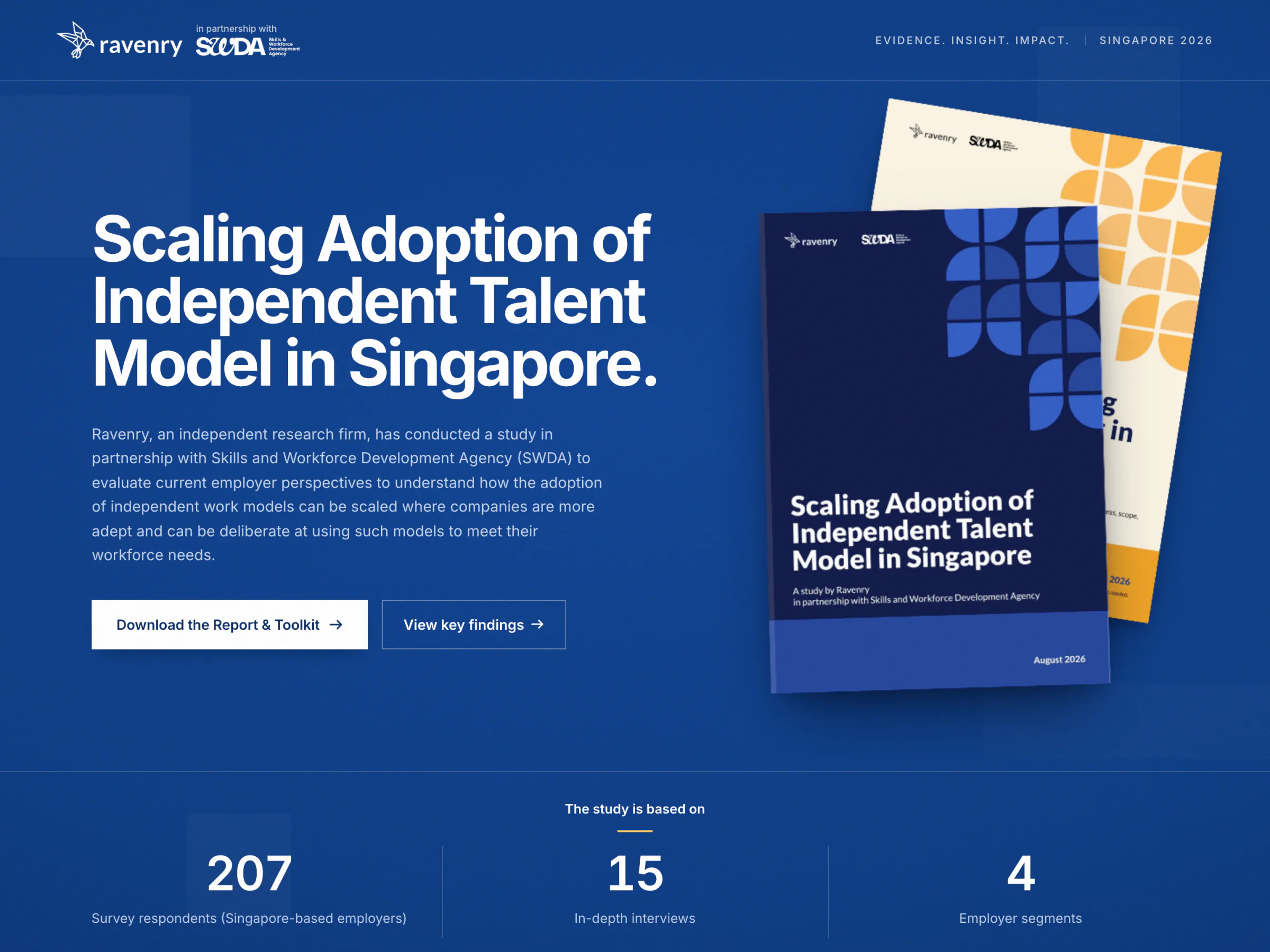
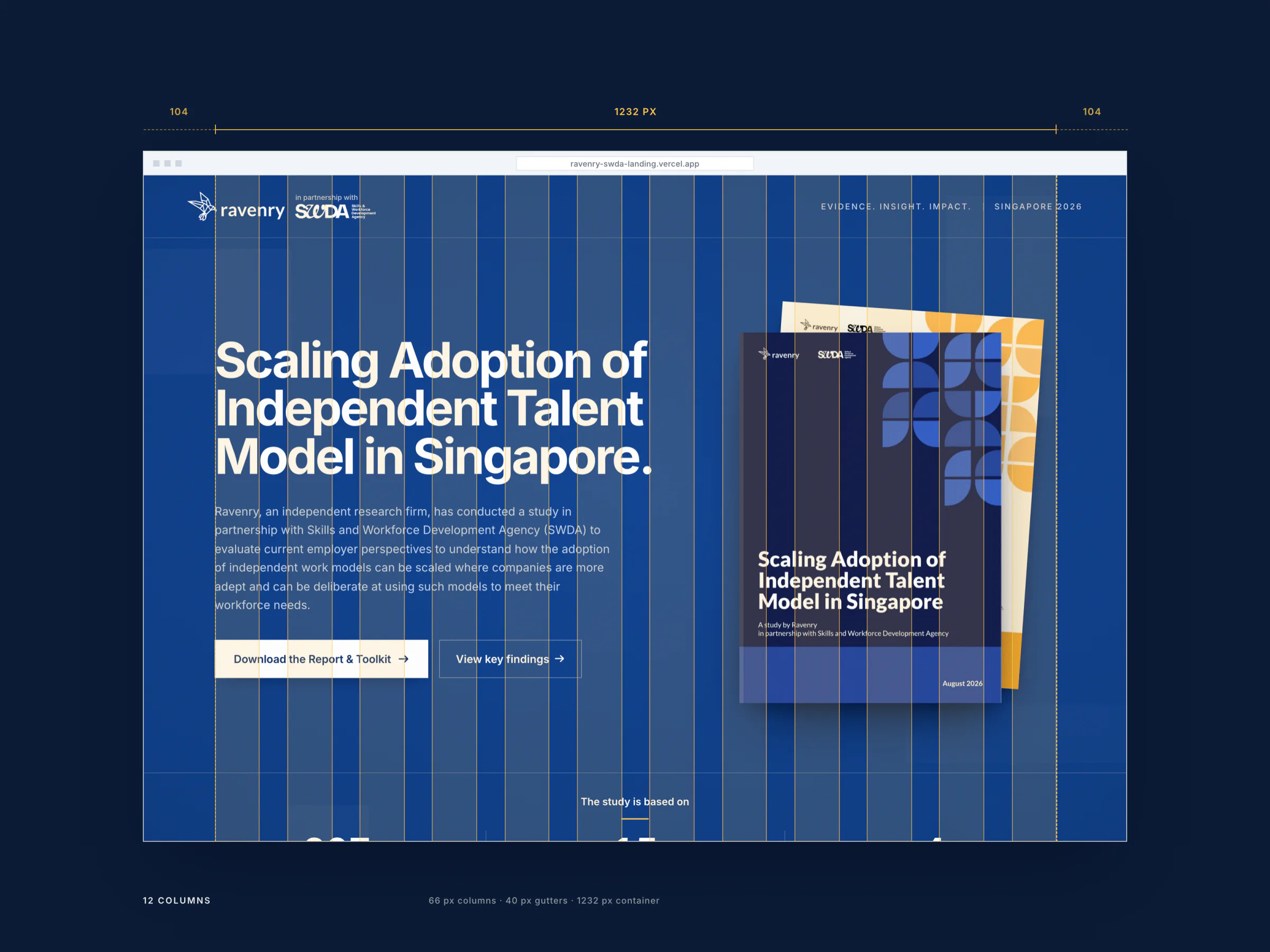
- Land on the report. The headline on the left, both real covers on the right, and two calls to action.
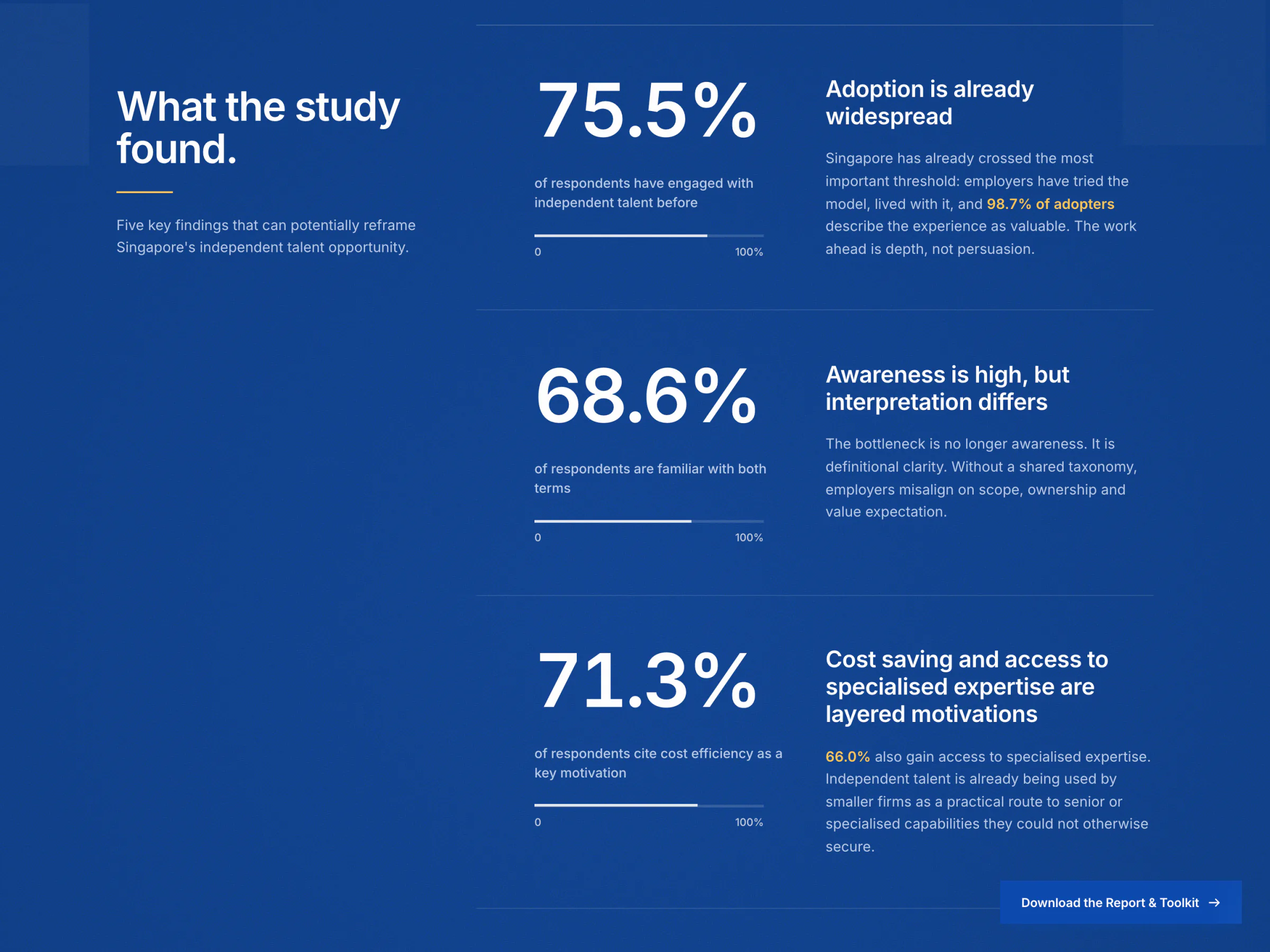
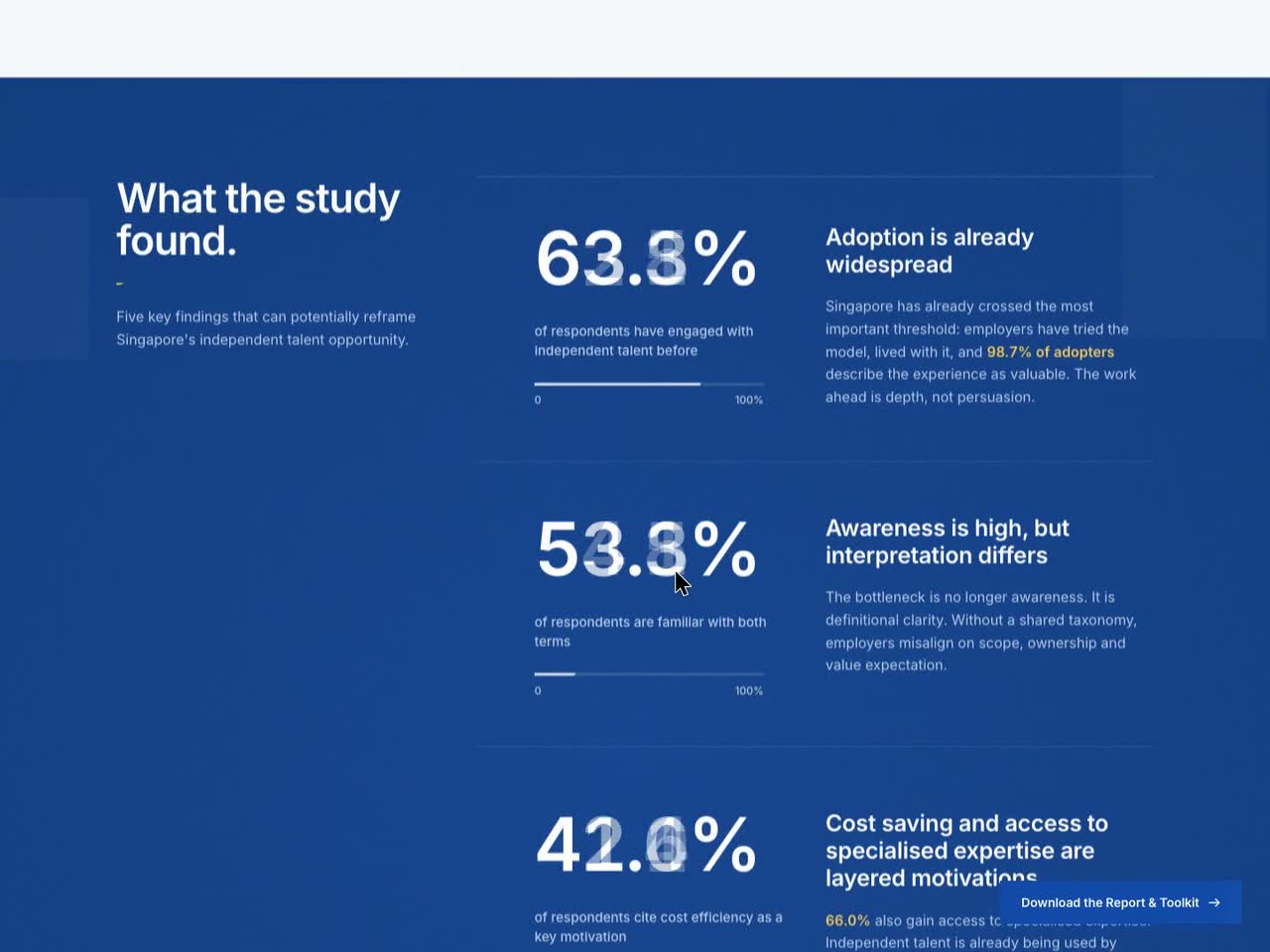
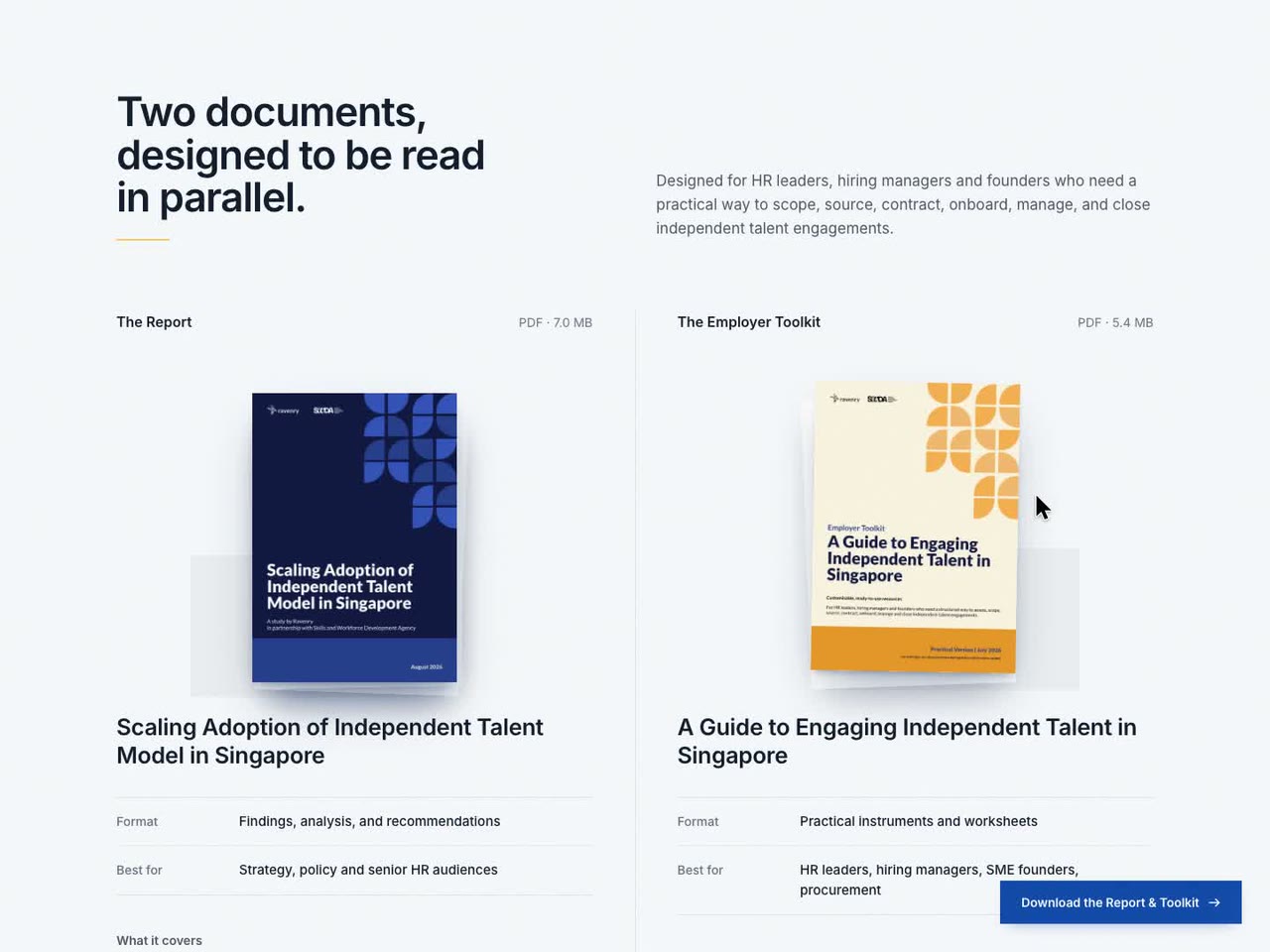
- Read the case as you scroll. The partnership lockup, five findings, the two documents side by side, the five readers, the method and the colophon.
- Open the form from anywhere. The hero's button, a sticky button once the hero has passed, or the closing section. Buttons open the form as a popup.
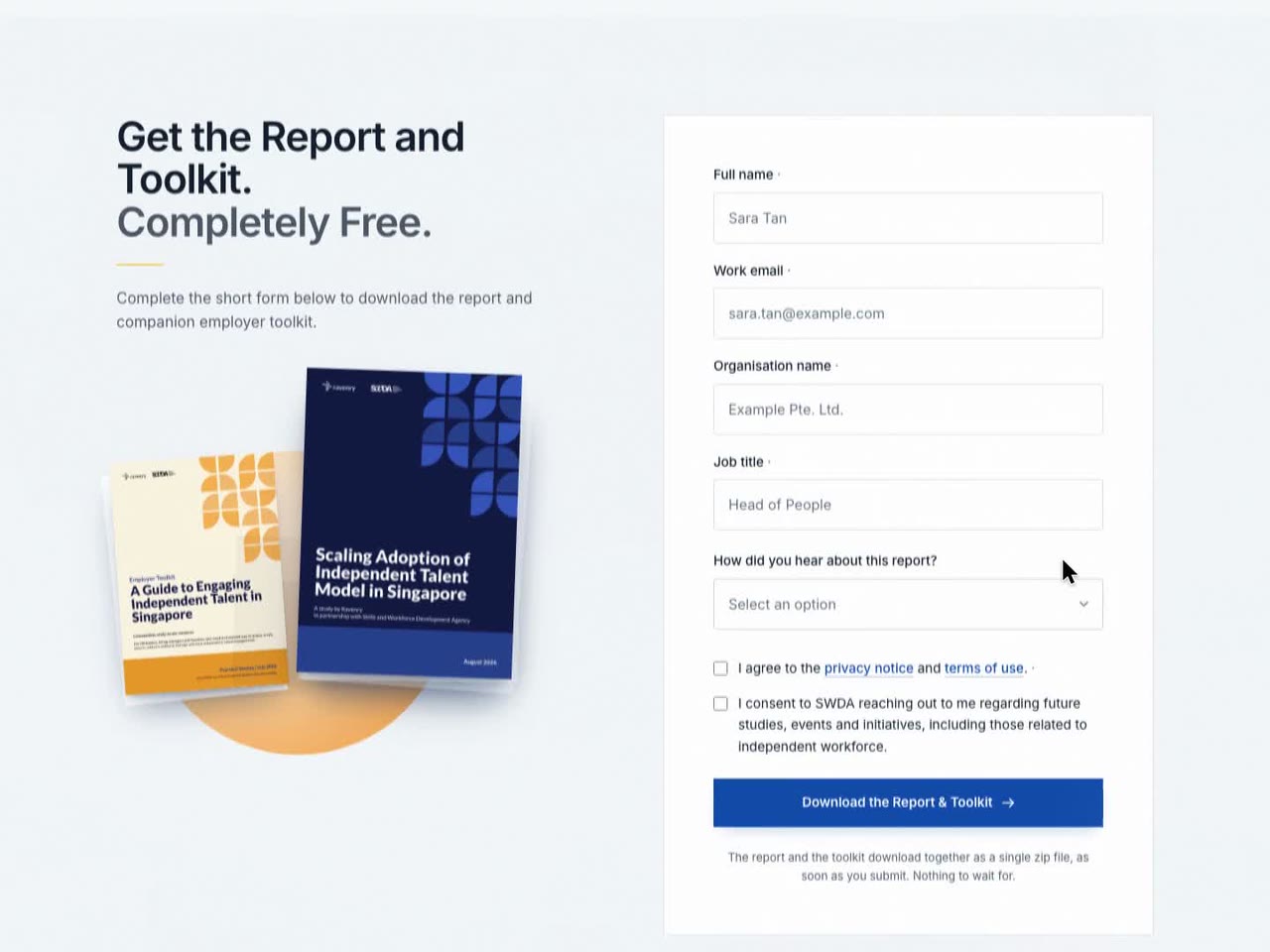
- Five fields, two boxes. Four required fields and an optional referral source. The terms consent is required and SWDA's contact consent is optional; neither is ever pre-ticked.
- Both documents at once. The moment the server accepts, the report and the toolkit download as one file, and a success panel offers it again, with each document as its own link and size.
Asked Once, Clearly, and Never Forced
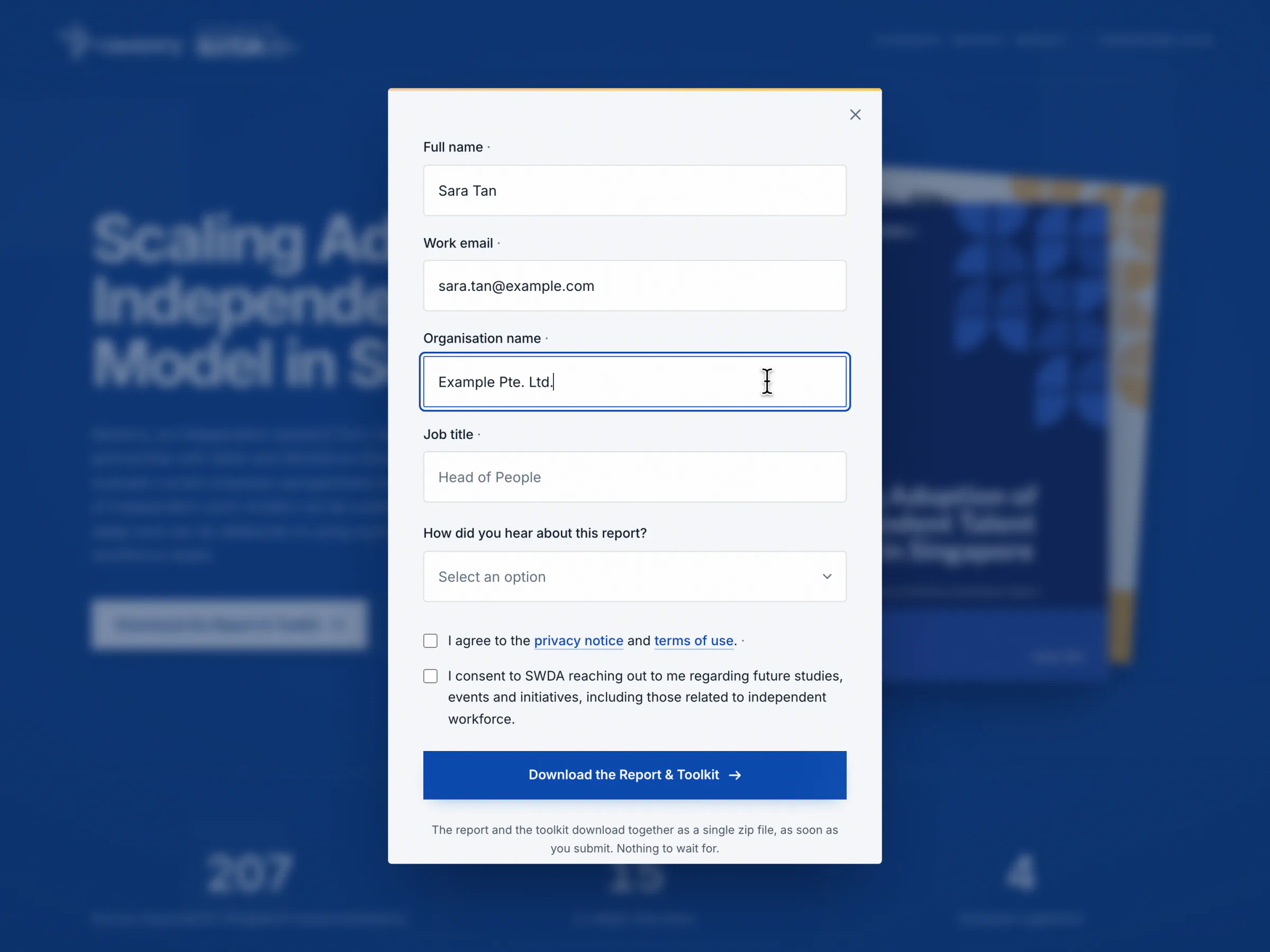
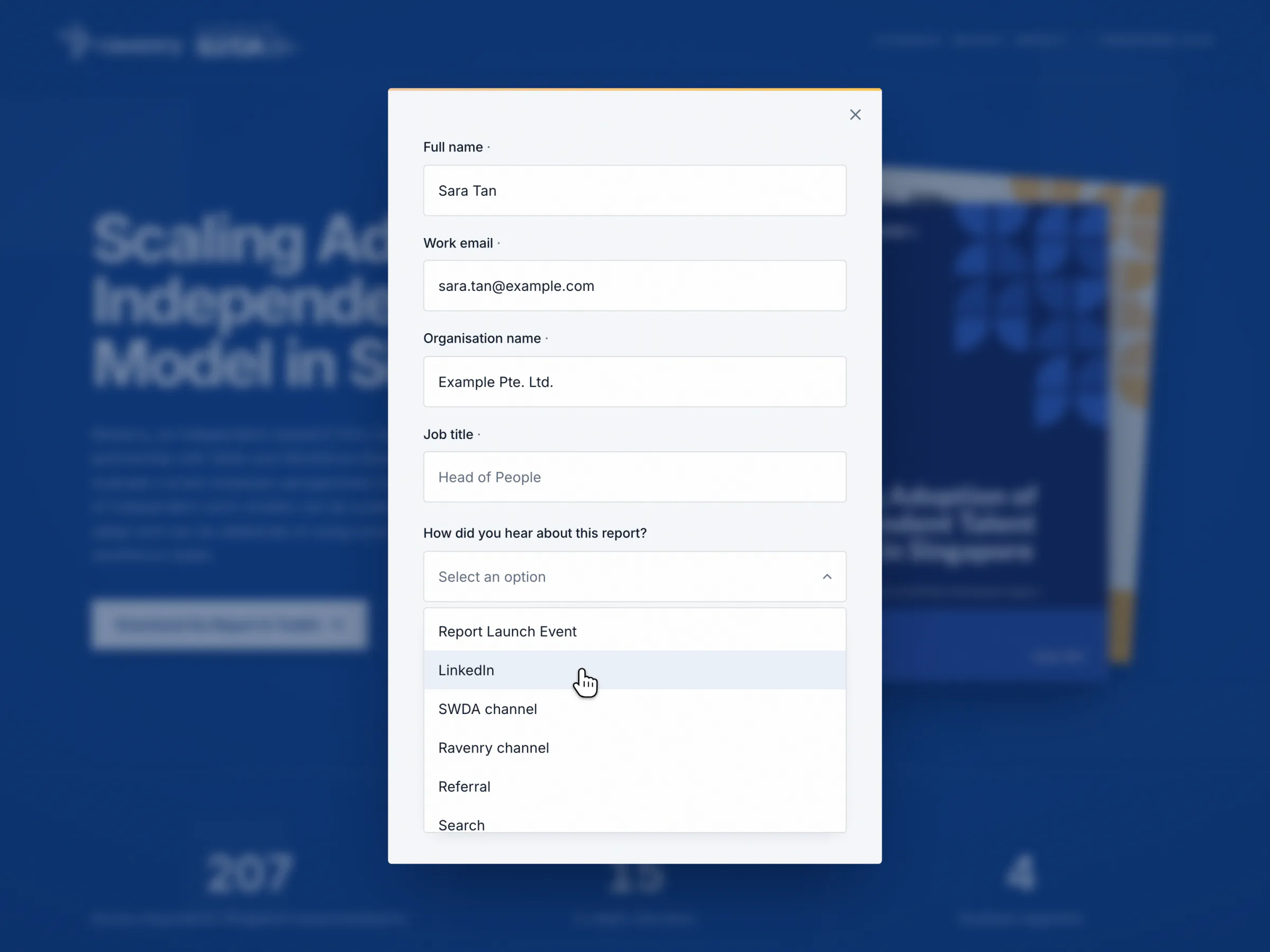
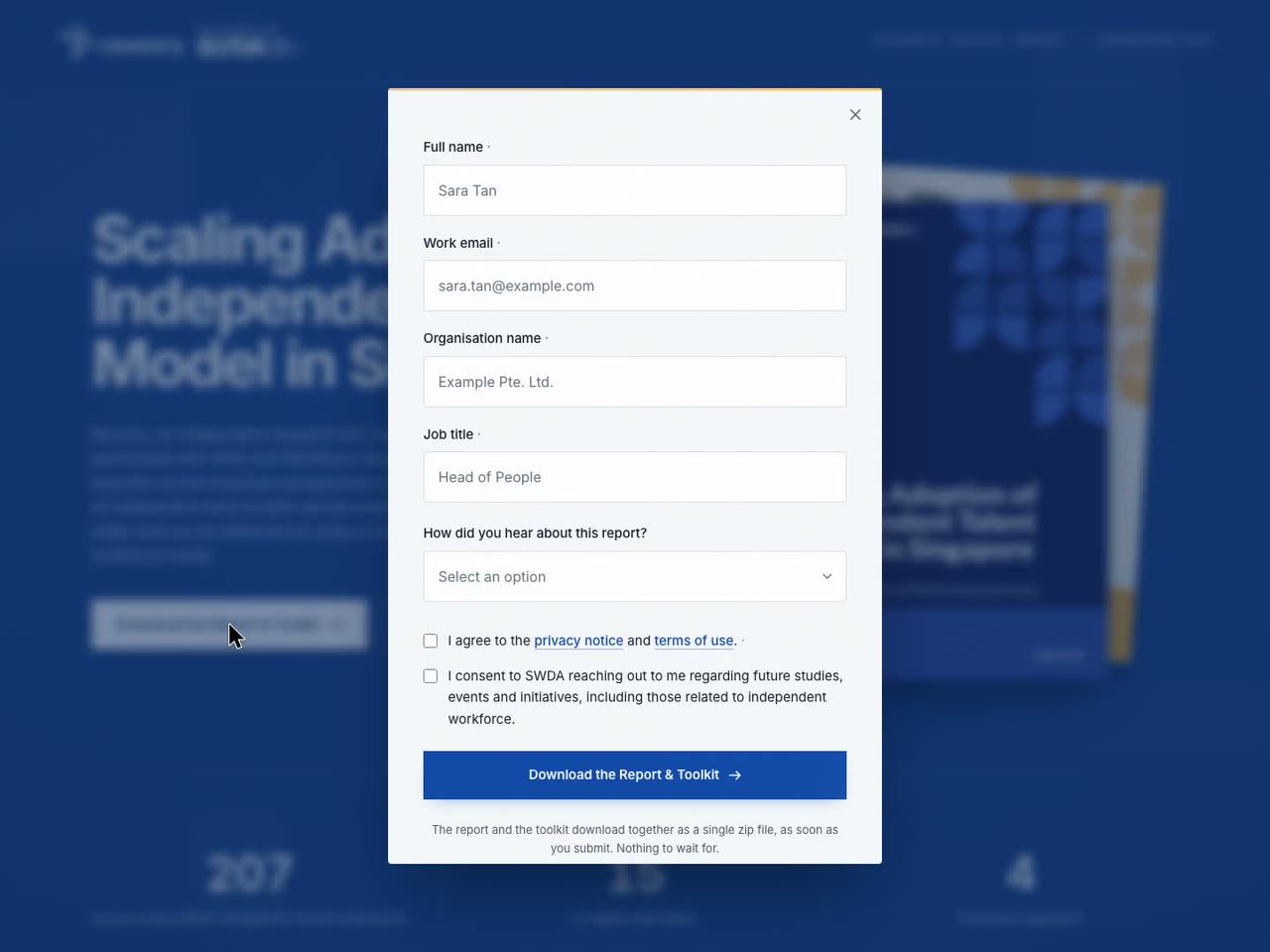
A missing answer marks and describes every failed field and moves focus to the first one; the submit button is never greyed out to force a tick. The inline and popup forms mirror each other's success, but only the one that was submitted starts the download.
Read as You Scroll
One Deployment, One Database, Three Hosts
The page runs as one Next.js app on Vercel. A proxy reads each request's host: the page's own address serves the campaign, the old event address redirects to it with its path and query intact, and admin paths go to the platform's host. Submissions go through a server action into Supabase, the files download straight from the deployment, and an admin behind the platform's host reads the leads and can send a thank-you email through Resend.

From a Click to a Row and a Download
A submission crosses five lanes: the browser, the campaign's server action, the platform's shared handler, Supabase and, only when sending is on, Resend. The browser checks first, against a schema built from the same declaration the server uses, and the server checks everything again, because the browser is not trusted. On production today SWDA's own action runs these steps in the same order; the shared handler takes over with the platform's next release, which also keeps every consent as a record of its exact wording, version, party and time.
- Check. The form validates against the campaign's declared schema.
- Pass it on. A one-line server action hands the answers to the shared handler.
- Check again. A filled honeypot is stored and flagged, never trusted, and every answer is validated again.
- Find the row. The campaign's database row, by its slug; it must exist and be active.
- Hash and limit. The IP address is hashed with a server-side salt and never stored; five submissions an hour per network, per campaign, by default.
- Insert. One row: each answer in its column, every consent as a record.
- Email, if on. The outcome is written to the row, and a failed send never fails the form. SWDA's is off.
- Download. The zip starts under the URL's own file name, and the success panel offers it again.

One Database for Every Campaign
Leads carry a project_id that cannot be empty and has no default. It arrived in two migrations around one deploy: add the column with a temporary default, ship code that sets it, then drop the default, so production never broke. Row-level security is on with no policies and only the server holds the key, so tenancy rests in code: every list of leads, the analytics and the CSV export read through one scoped accessor. Every migration is a file with its reasoning; the later ones carry a rollback, and two carry a verification query.
- SWDA's consent arrived as a new column, so the retired one still says what earlier readers agreed to.
- Four migrations are in production; the fifth, written for the platform's release, waits.
A Throwaway Frontend, a Production Backend
The first day, 21 May 2026, followed a plan of "throwaway frontend, production-quality backend": a scaffold, the database form, email, the admin, CSV export, analytics and hardening, in ten commits and an hour and a half. Two redesign rounds made from the written brief were rejected. On 13 August the page was rebuilt editorially, with its scroll choreography, its checks and a rule that colour comes from the collateral. It reached production on 18 August and launched on 29 August: real covers, the renamed report, the direct download, indexing on and its own address canonical. The last change to the page, on 2 September, is tagged as the final shipped state.
Claude Code wrote every commit, 99 of them, each carrying its co-author line. Rules live in files that load per folder, for the platform, the design system and the page, and handover documents carry context between sessions. When one session could not see images, it verified by measuring the DOM and sampling rendered pixels instead.
Colour From the Collateral, Not the Website
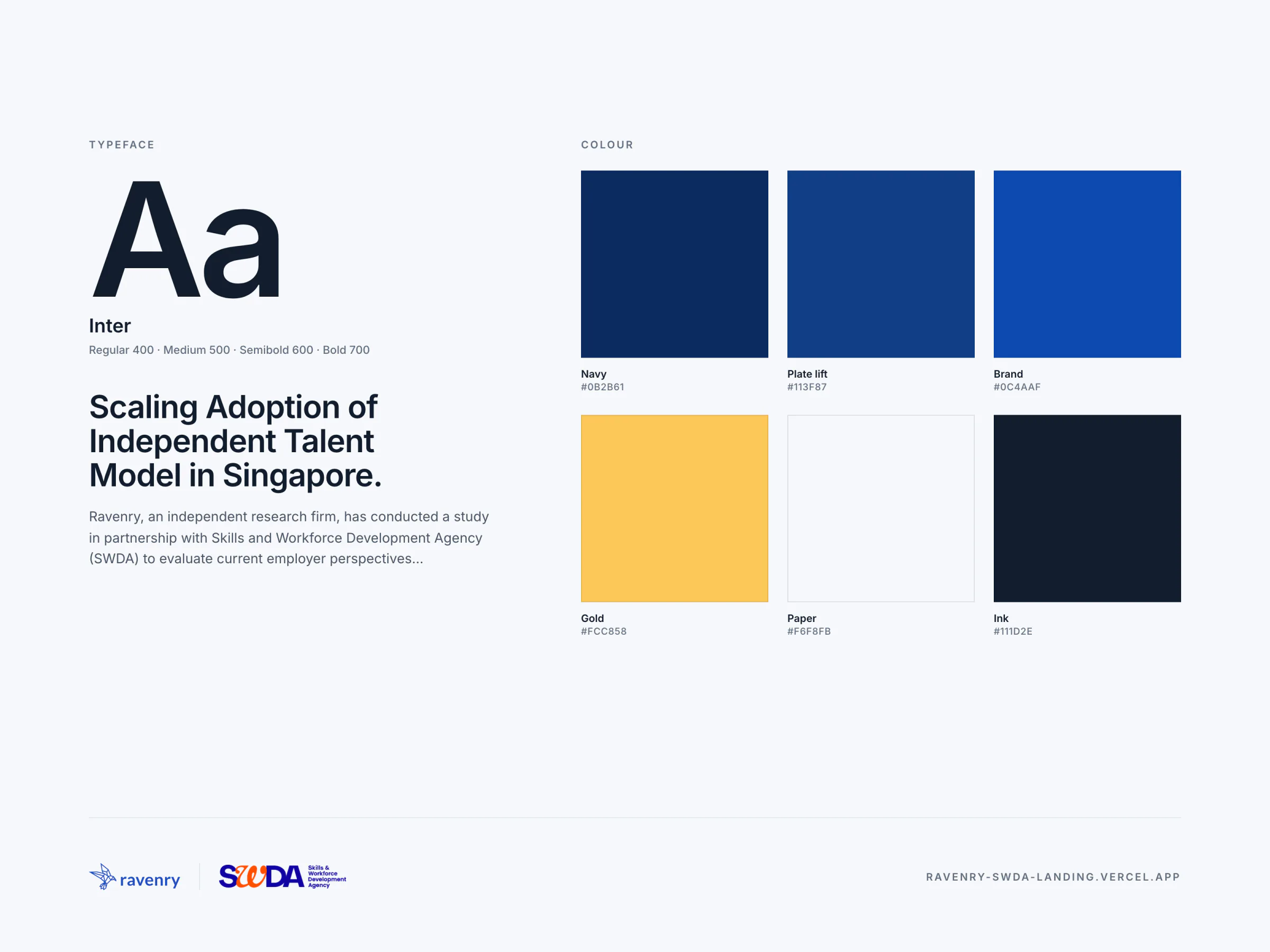
Every colour was sampled from the event's key visuals and SWDA's guidelines, pixel by pixel, rather than chosen by taste, under a written rule not to introduce a new blue. Ravenry's brighter website blue survives only in the glow behind the call to action. The cost: the gold is for dark grounds only, because on paper it measures 1.46:1.
One File, Downloaded in the Browser
After the shared folder failed, and on the client's instruction, the files ship with the page. The report and the toolkit download as one zip, with the two PDFs linked beside it, because browsers ask before a second automatic download. The cost: 11.4 MB on a phone, a saved file name that must match the URL's own, and a real link for when a download is blocked.
Consent as a Record That Is Only Ever Added To
When SWDA's consent replaced a marketing consent, the old column was retired rather than renamed, because a rename would have silently changed what earlier readers had agreed to. The platform's next release keeps the exact wording, its version, the party and the time for every box. The cost: a retired column kept forever, and one row left under an older, broader wording, flagged rather than rewritten.
Two Layers of Admin Authentication
A known framework vulnerability let requests skip middleware. So the proxy checks only that a session cookie exists, and the signed session is verified again on the server for every admin page and action. The cost: the proxy alone protects nothing, so every new admin page or action has to check the session itself.
Prove "nothing changed" in Pixels
When the page became campaign one of a platform, it had to move without changing. Full-page captures from production became the proof, compared pixel by pixel, and all nine stayed at 0 px through the move. The cost: a local build never matches Vercel's image encoding, so local proof needs its own captures, and pixels cannot see a page title.
Objects on a Table, Motion With Weight
- The covers are objects, not images: a page stack, a low plinth, an ambient and a contact shadow, and an 8% inset hairline. Under the pointer, the toolkit lifts up more than out while the report yields, and the pair leans toward the hand.
- Pointer depth: one listener moves the layers at two depths, damped to settle in about 150 ms, and is off for touch and reduced motion.
- The proportion bars fill with the scroll as each finding is read, and are complete under reduced motion.
- The sticky call to action appears once less than 40% of the hero shows, steps aside beside the inline form, and is gone after a submission.
- The popup form is a real dialog: it traps focus, closes on Escape, returns focus where it came from, and scrolls on its own.
- Accessibility: a skip link, the page's language set to Singapore English, every error described and announced, an error colour at 5.87:1, 44 px targets, a custom list that works from the keyboard, and contrast measured on the composited pixels.
- The link preview is drawn from the real covers, with its fonts subset from 318 KB to 19 KB.
The Study in the Room
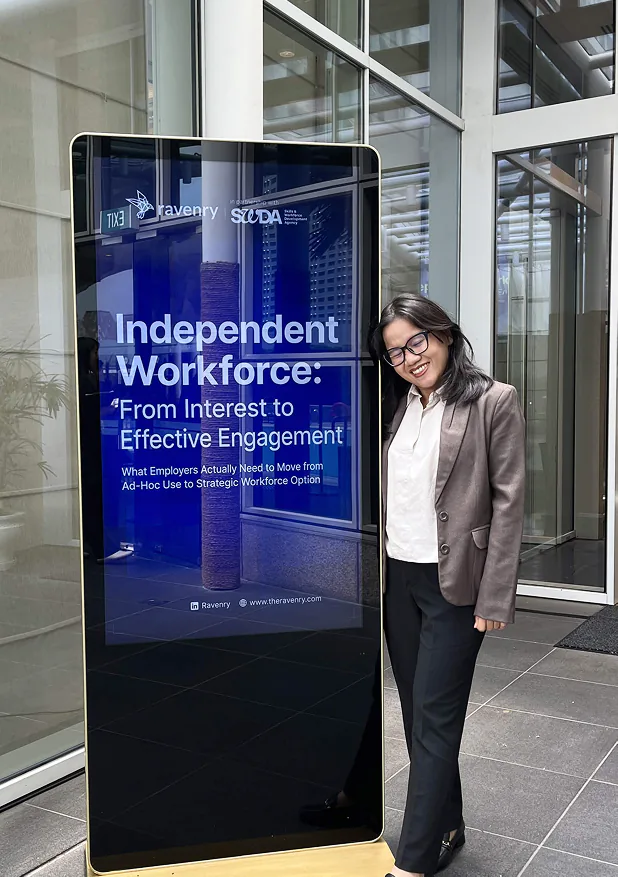
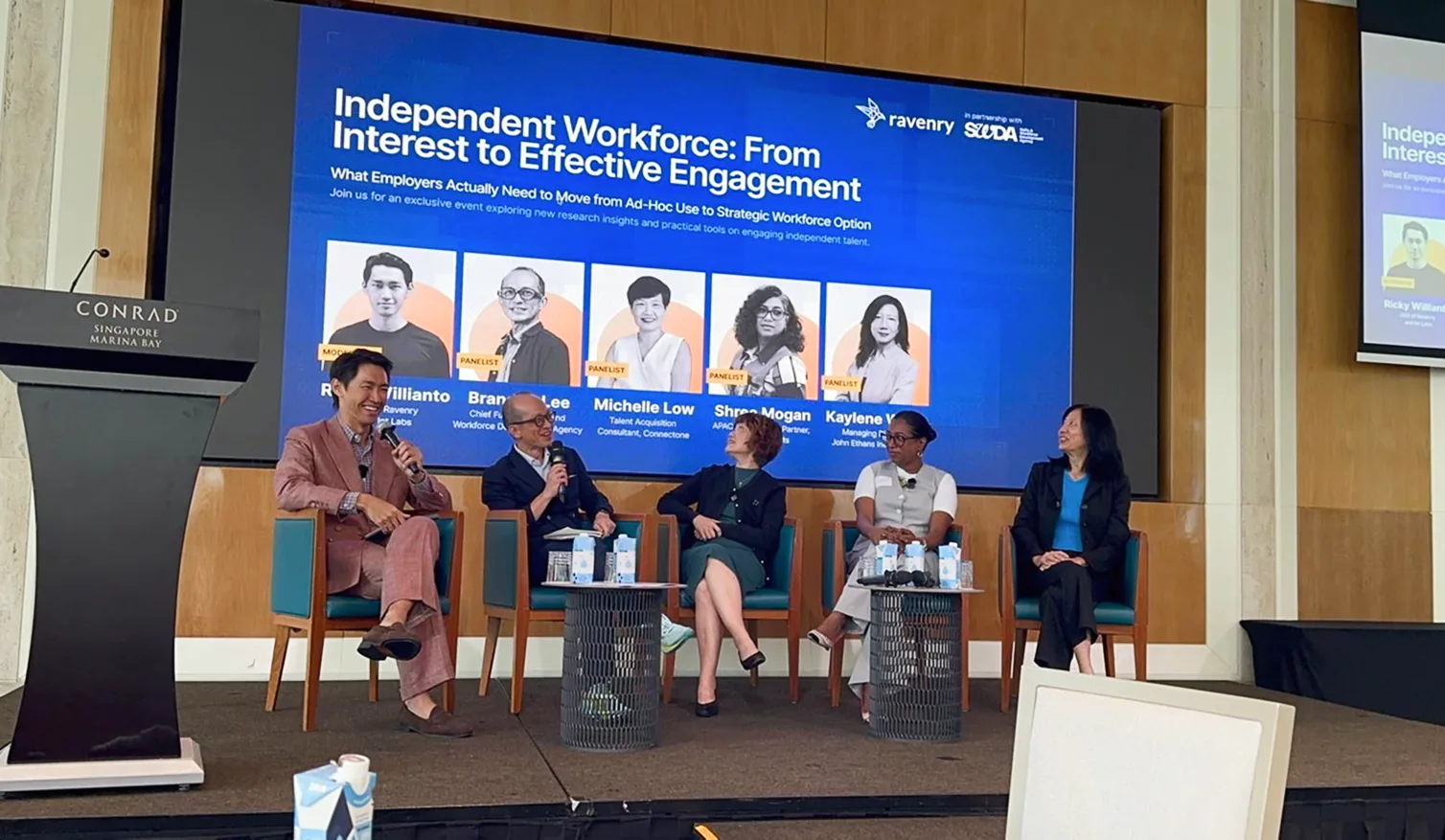
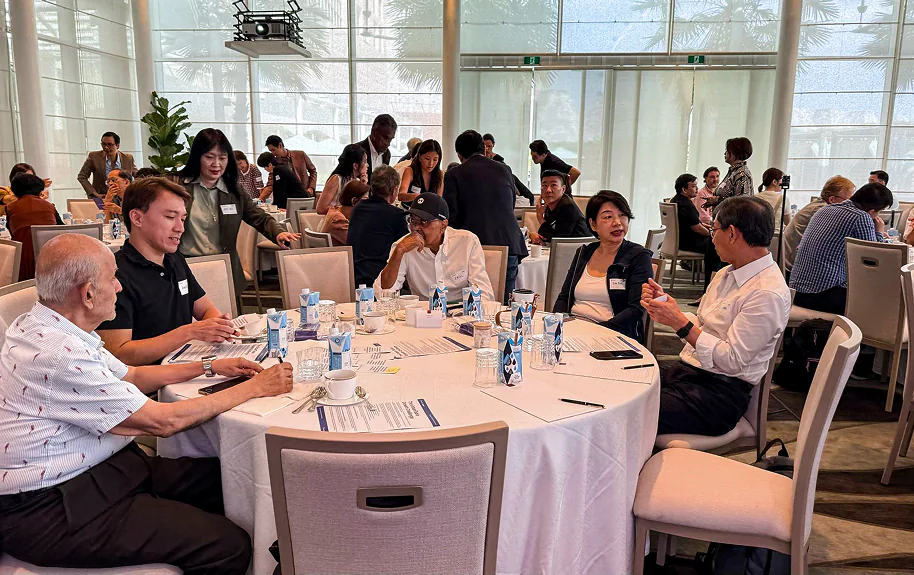
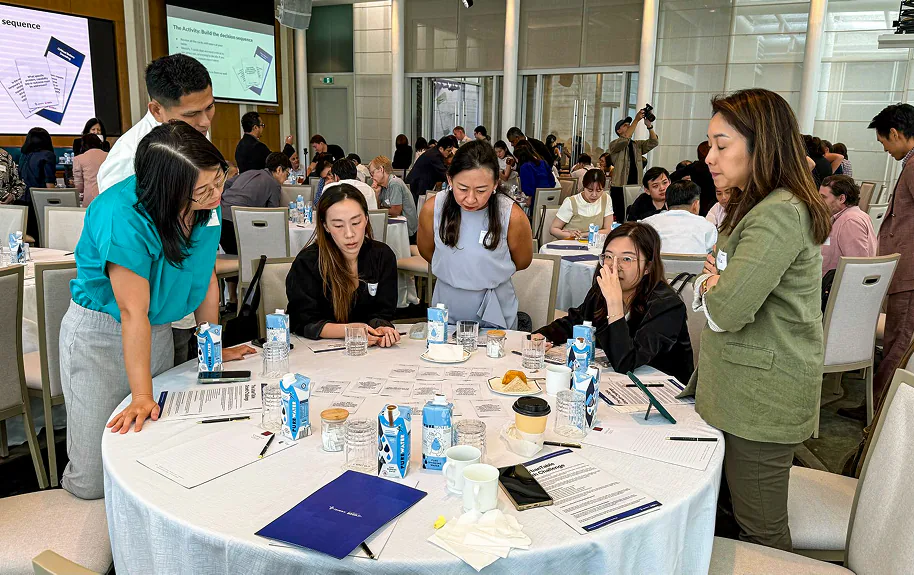
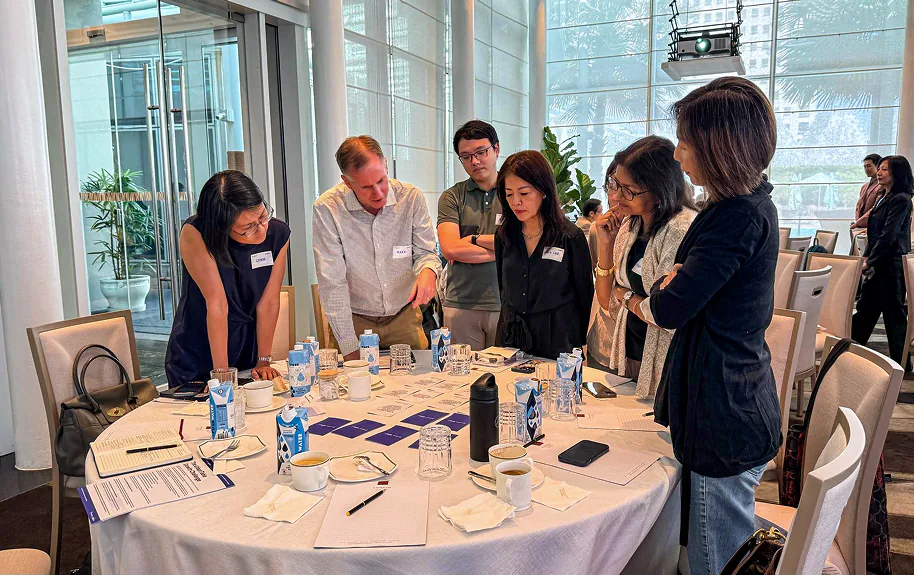
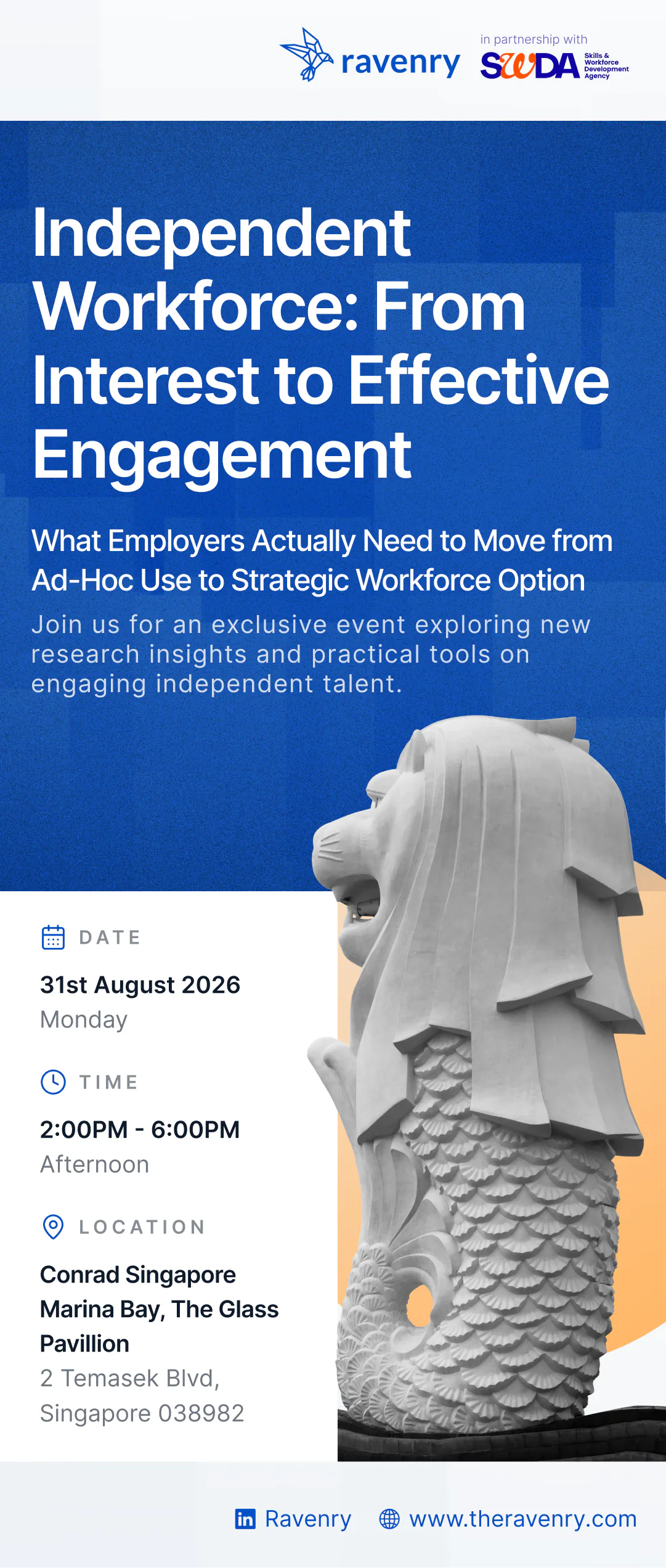
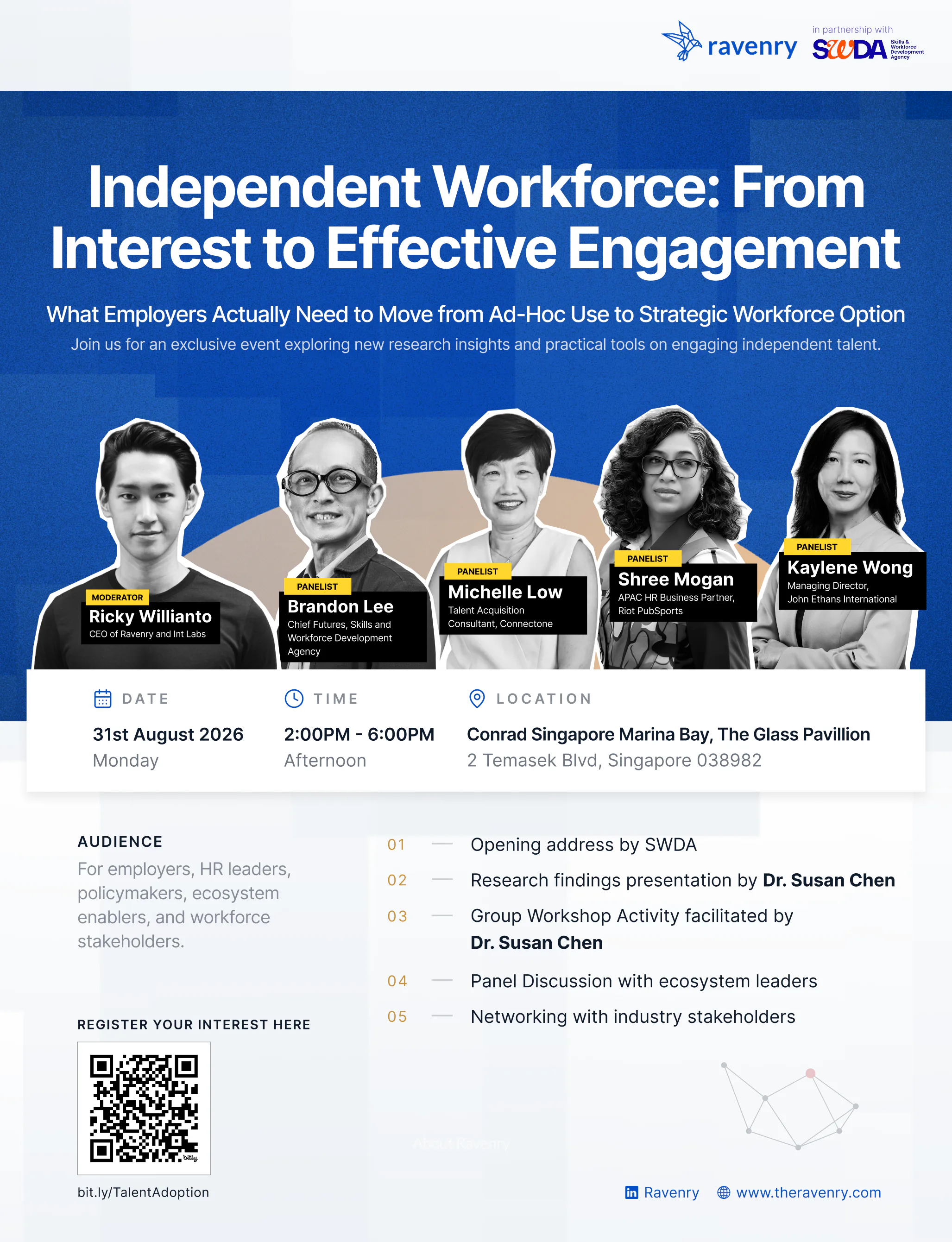
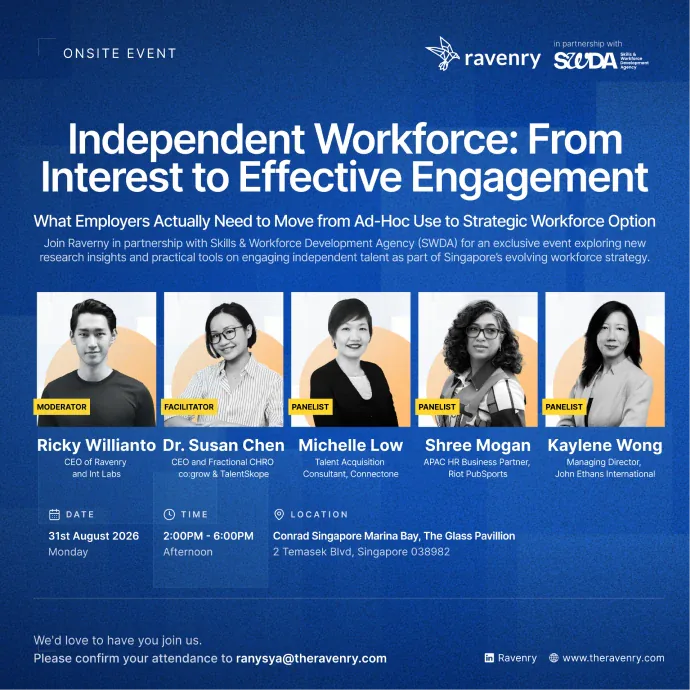
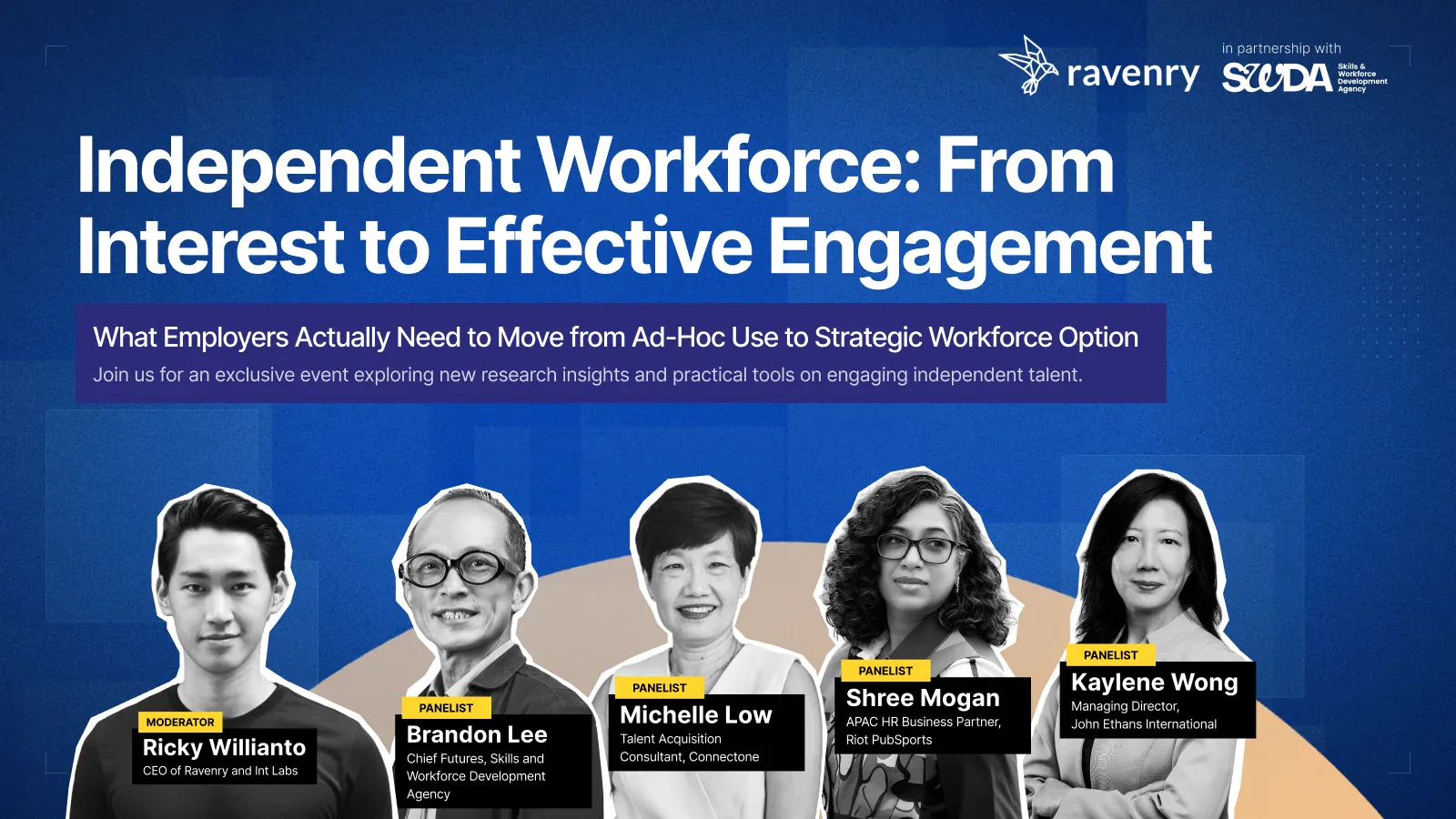
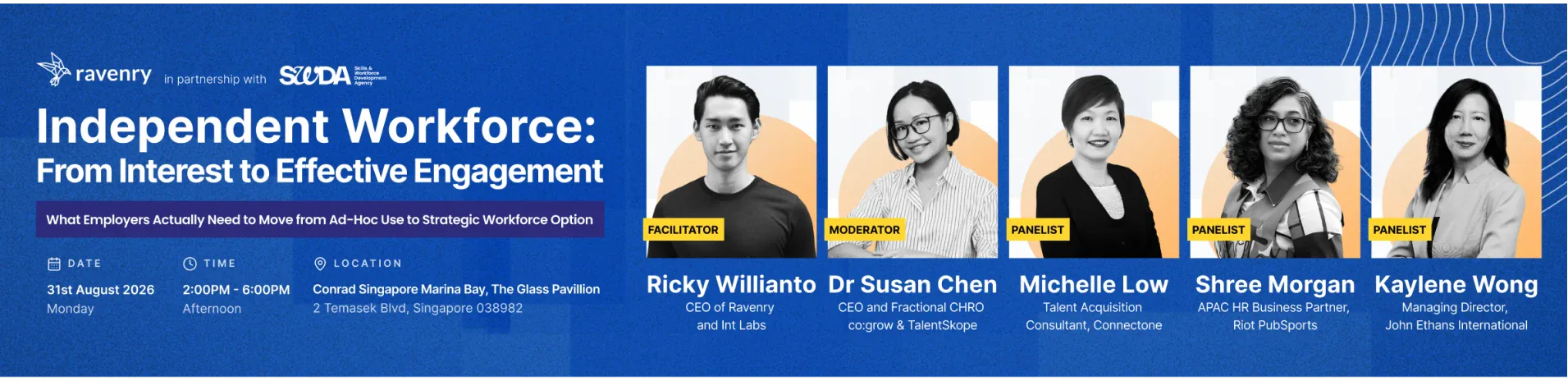
Two days after the page went live, on 31 August 2026, the study went in front of a room at Conrad Singapore Marina Bay. "Independent Workforce: From Interest to Effective Engagement" ran from 2 to 6 pm for employers and HR leaders: SWDA's opening address, the findings, a group workshop at round tables and a panel of four with a moderator.
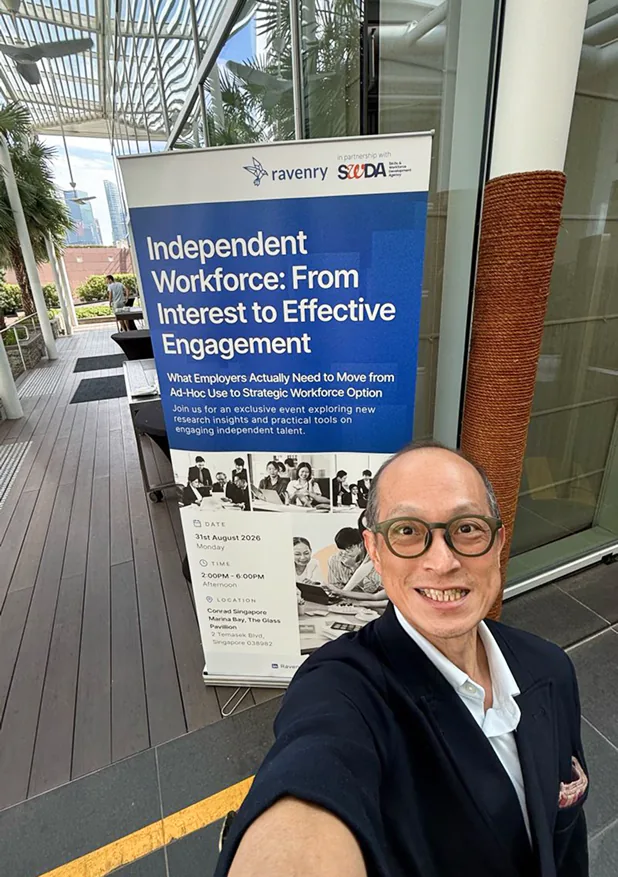
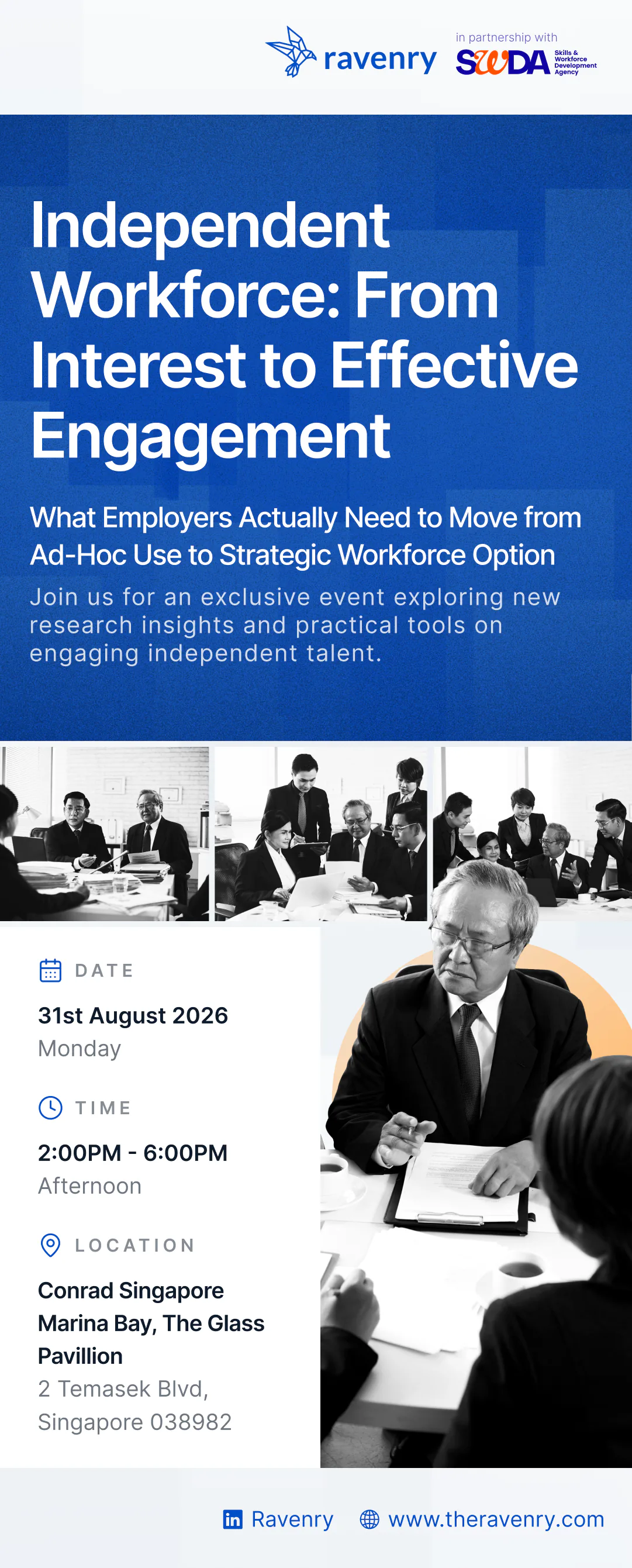
The page's colours were sampled from this event's key visuals, so the standee, the roll-up and the stage screen wear the same blue as the page. The address shared that afternoon still redirects to it.
Made for the Day
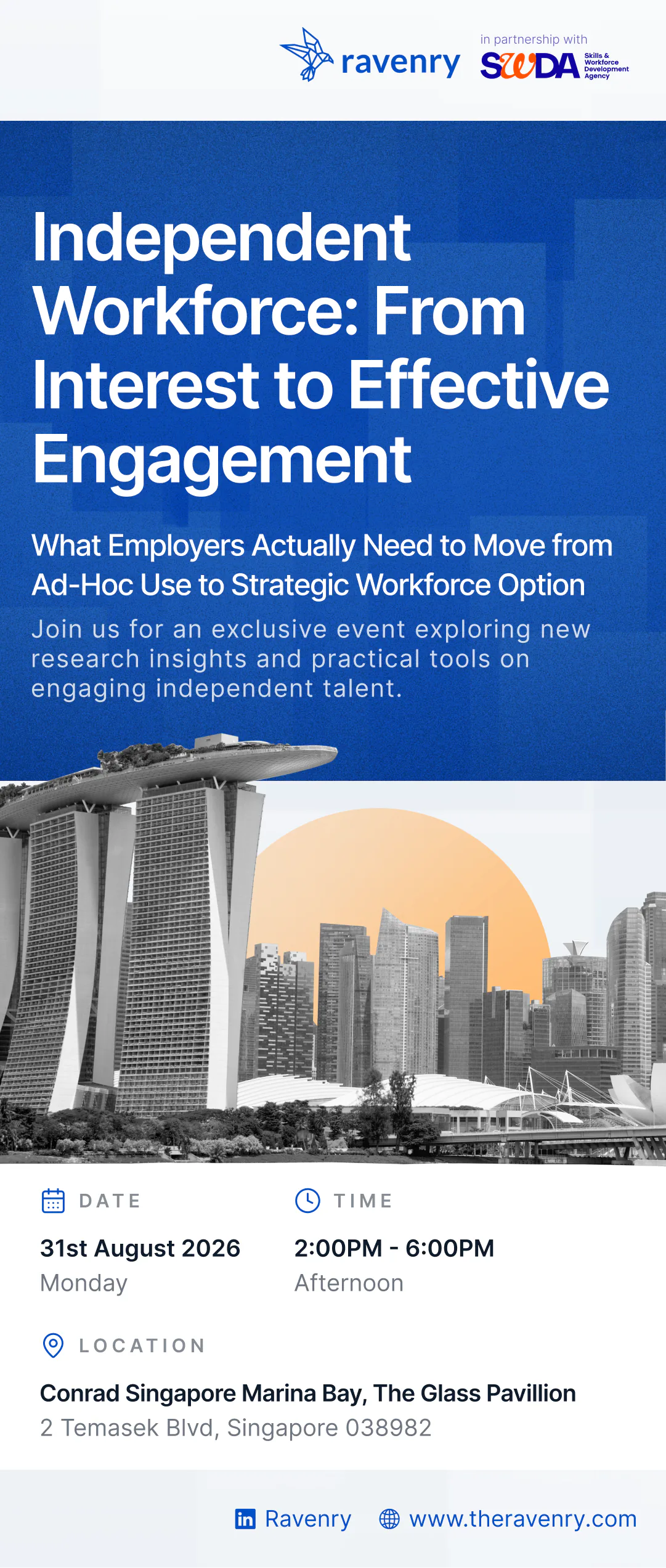
The event's print and screen pieces come from the same design work as the page: three roll-up banners, a poster with the programme and a sign-up code, a square invitation, a 16:9 screen and a wide banner. The roll-up with the photographs is the one in the selfie above.
Live, Indexed, and Campaign One
The page has been live and open to search engines since 29 August 2026. Lead capture was checked end to end against production at launch, 11 of 11: a valid submission accepted, invalid answers refused against their own fields, consent required where it must be, the row scoped where the admin finds it, the honeypot flagged rather than trusted, and every test row removed. On 15 September it became campaign one of Ravenry's campaigns platform, proven by nine pixel captures at 0 px, and every Ravenry campaign since has been built on what it left behind.
The lesson is about checks: most of what went wrong passed a check that measured the wrong thing. A check now has to prove that it can fail.
Known limits: improvements already built, among them a stronger focus ring on dark grounds and the consent record, wait for the platform's next release, and the thank-you email stays off until a campaign asks for it.
Gallery